The short answer
- Didymo, or rock snot, is an invasive microalga that can cover wide areas of river and lake beds.
- Sernapesca reports it at points of river sub-basins from the Biobío Region to Tierra del Fuego.
- The official protocol: remove visible algae, wash gear for 1–2 minutes in detergent solution, dry for at least 48 hours.
- Sernapesca asks anglers to avoid felt soles and absorbent waders: didymo survives for months in damp conditions.
- Never pour the washing water back into the river.
What is didymo?
Didymosphenia geminata, called didymo or moco de roca (rock snot) in Chile, is a microalga. According to Sernapesca, Chile's National Fisheries and Aquaculture Service, it can form large masses that cover wide areas of the beds of rivers and lakes. It can survive for months in damp conditions, which is why wet boots, waders and nets can carry it from one river to the next. The gin-clear water anglers come to Chilean Patagonia for is exactly what it can smother.
Where is didymo found in Chile?
Sernapesca reports didymo at points of river sub-basins from the Biobío Region to Tierra del Fuego, in Magallanes, a range that includes Chilean Patagonia. The service declares the official plague and risk areas by resolution; the current one is Exempt Resolution 493 of 25 February 2026. Because the list changes, the habit that matters is the same everywhere: clean between waters.
How do you clean your gear? The official protocol
- Remove. Before leaving the river, stream or lake, inspect your boots, clothing and fishing gear and remove all visible algae.
- Wash. Submerge clothing and gear for 1 to 2 minutes in a bucket with 10 liters (about 2.6 US gallons) of water and 2½ cups (500 ml) of dish detergent, a 5% solution. Vehicles and boats that touched the water are cleaned with a disinfectant solution. Do not pour the washing water back into the river.
- Dry. Let everything dry completely for at least 48 hours before using it again.
Should you bring felt-soled wading boots?
No. Sernapesca's guidance asks anglers to avoid felt-soled boots and footwear or waders made of absorbent material. The reason is the alga's survival in damp conditions: felt and absorbent fabric hold water long after the day ends. It is a recommendation in Sernapesca's prevention guidance, and the easy one to follow: pack rubber-soled wading boots. Our packing list also asks you to clean and fully dry any used wading gear before the trip.
Why does it matter on a trip here?
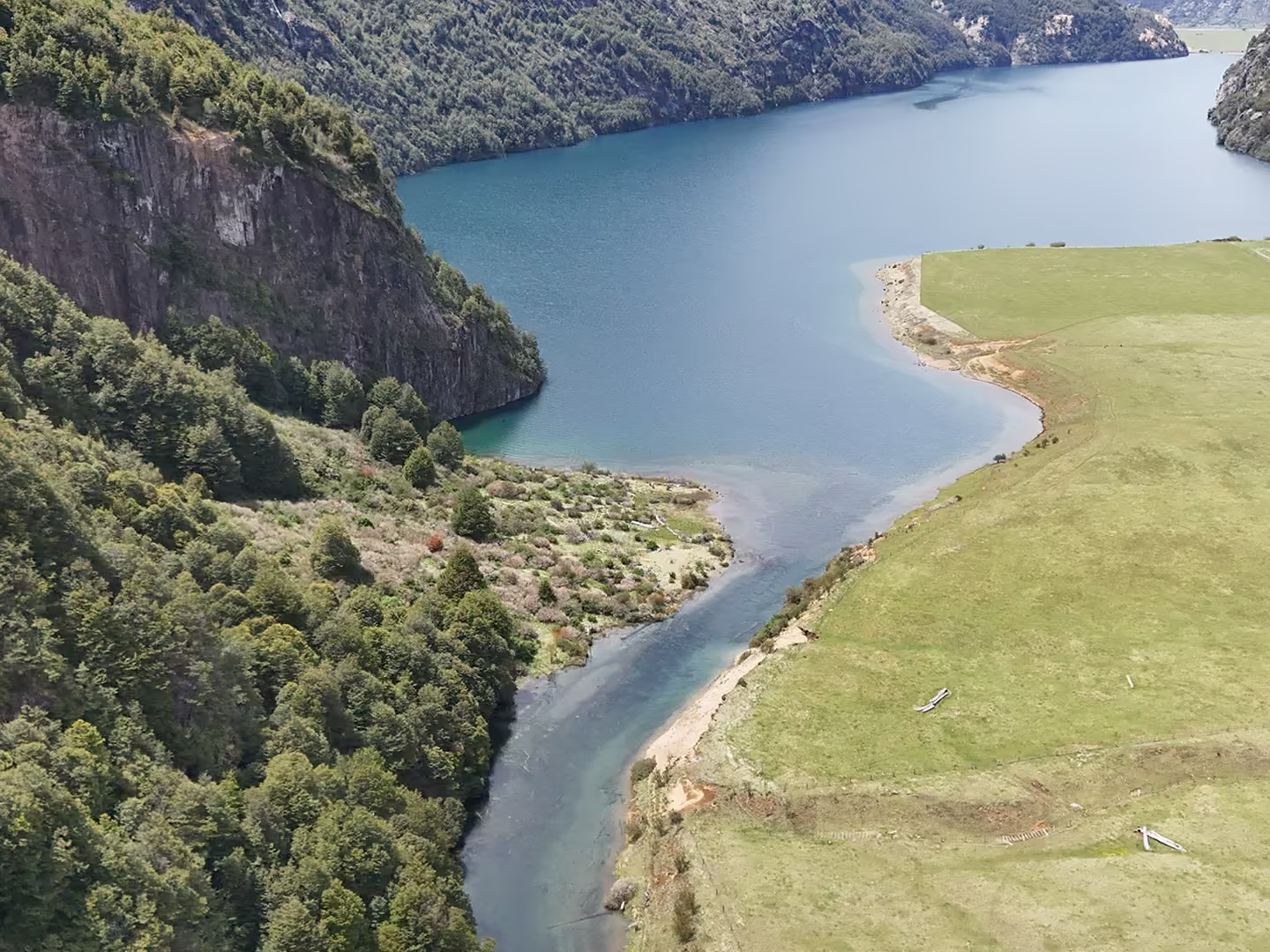
A trip out of Coyhaique can take you across several rivers and lakes in one week, from the Simpson to the Ñirehuao, and every move between waters is a chance to carry something along. Cleaning and drying gear is the angler's part in keeping these waters as clear as they are. The fishing rules that apply on top of this are in our guide to Aysén fishing regulations.
Sources
- Servicio Nacional de Pesca y Acuicultura (Sernapesca). Didymo: what it is, where it is and how to prevent its spread. Official information page. Read the source (Spanish)
- Sernapesca (16 November 2020). Sernapesca inspects recreational fishing areas and calls on anglers to follow the disinfection protocol to prevent the spread of didymo. Read the source (Spanish)