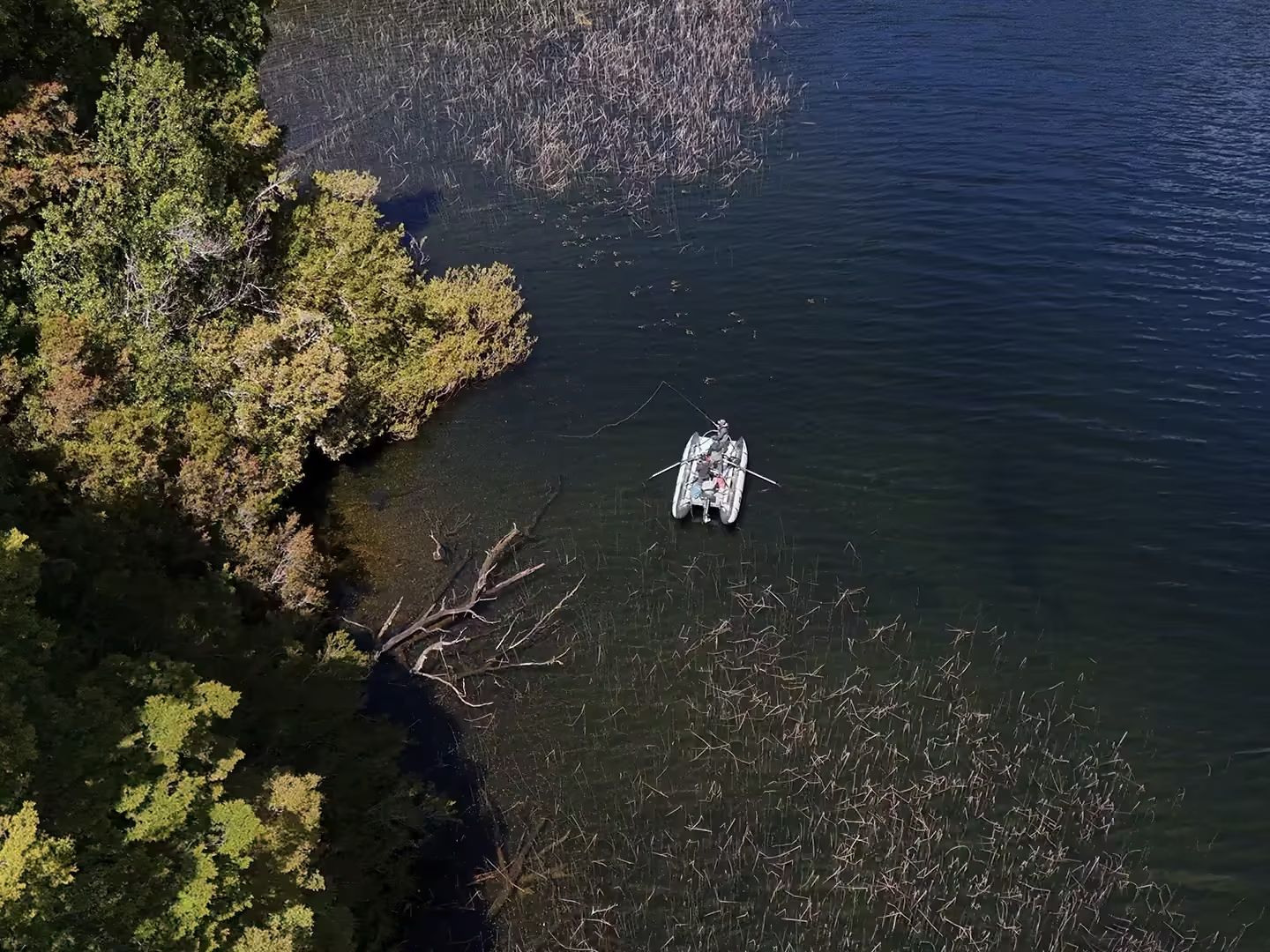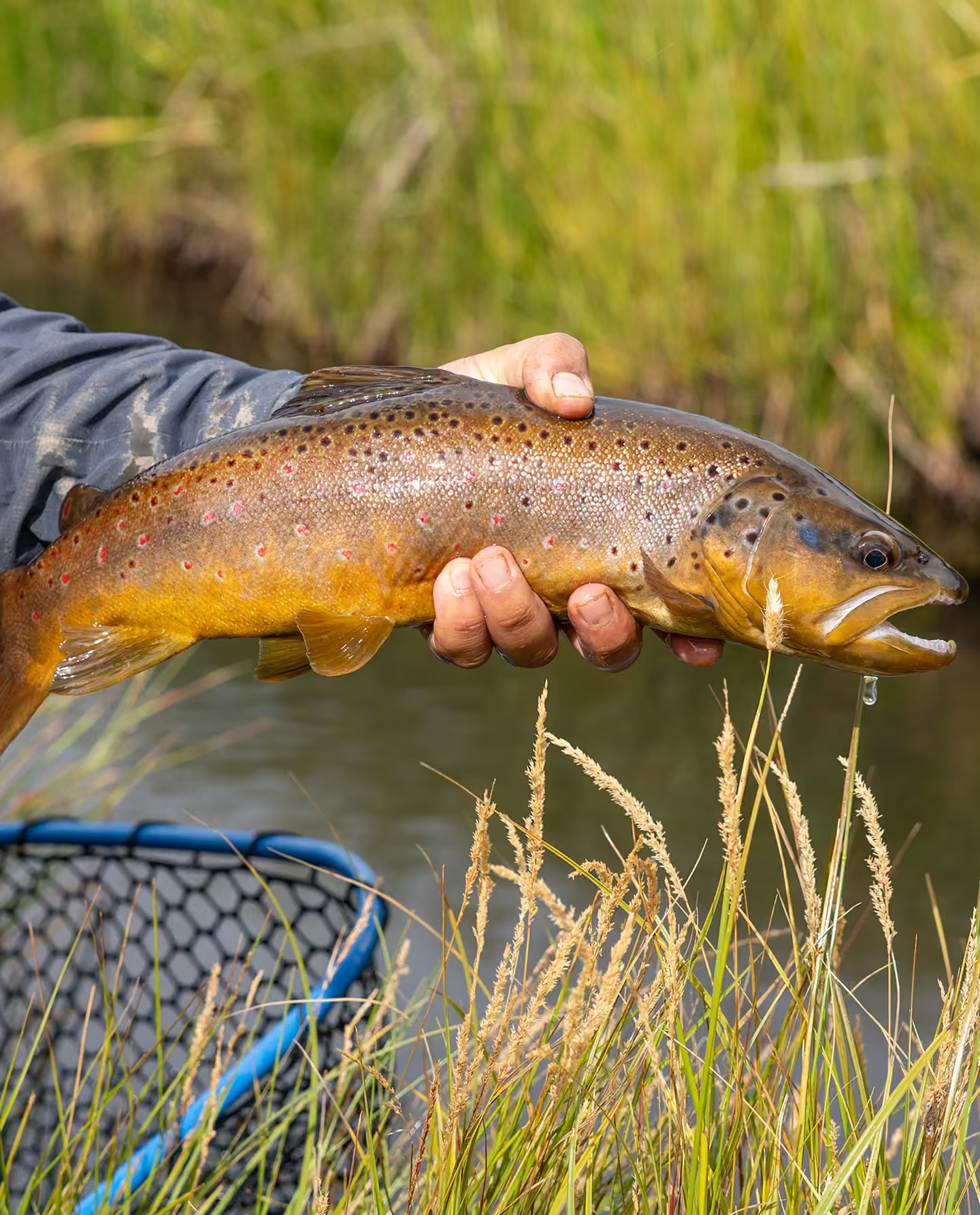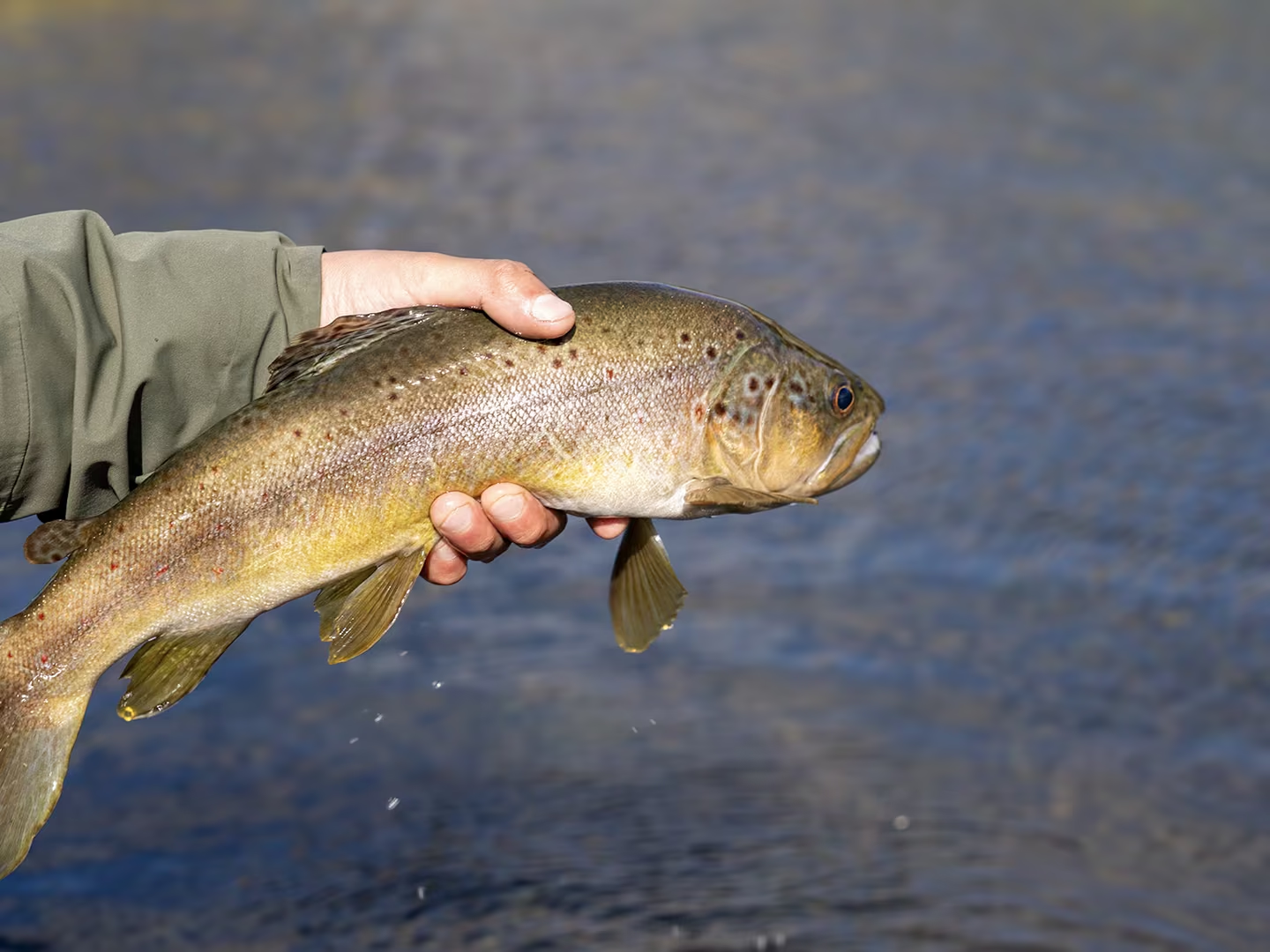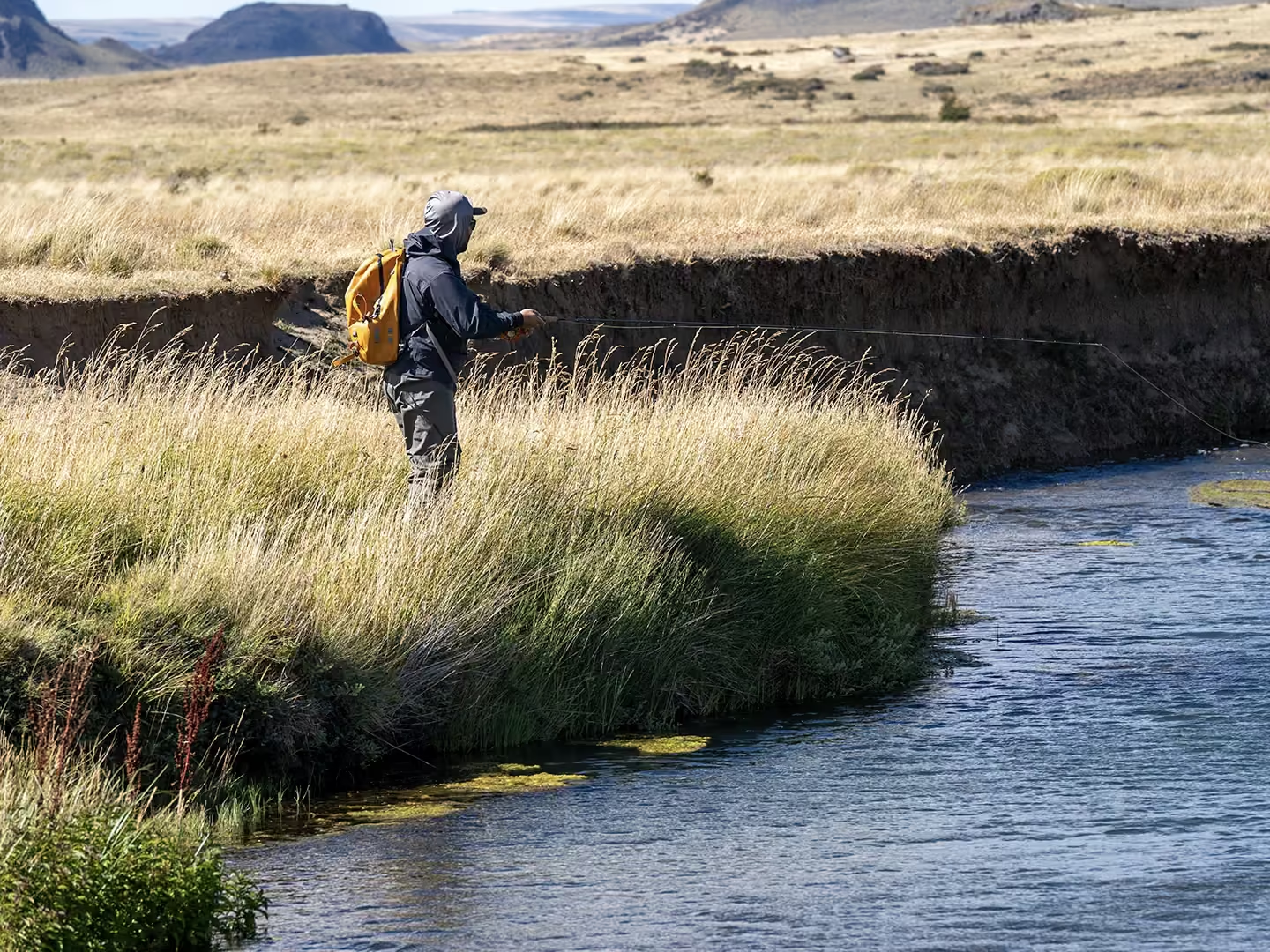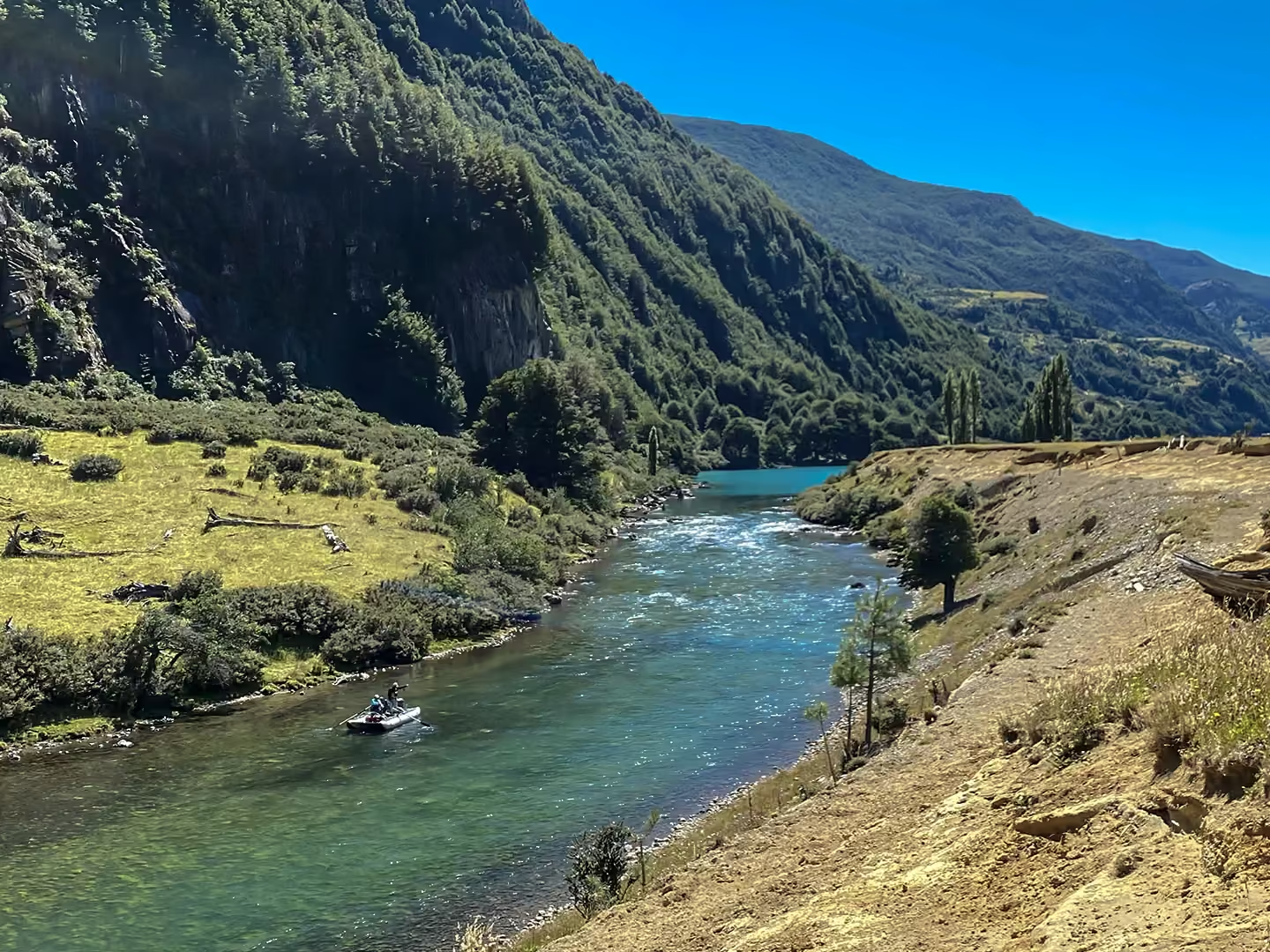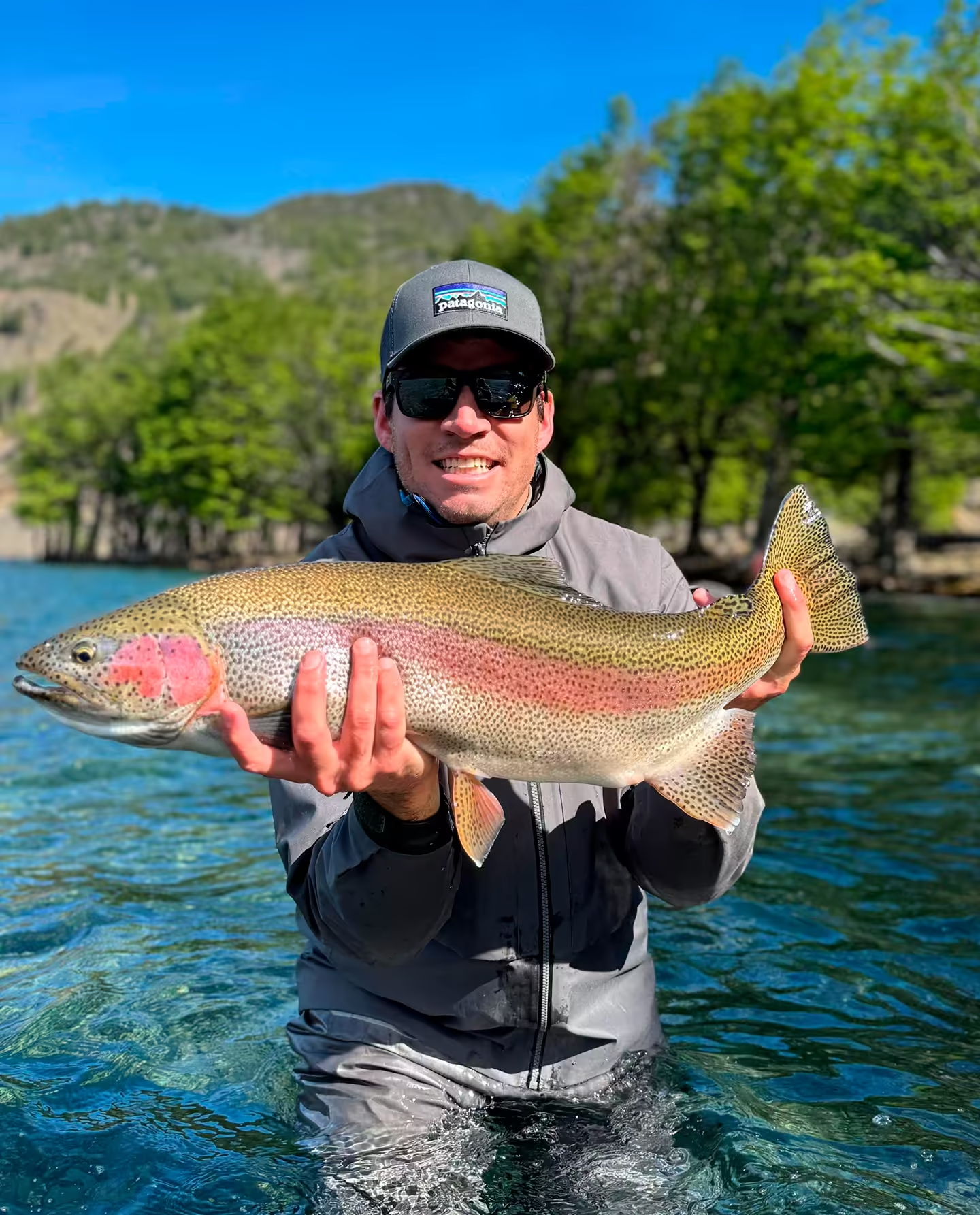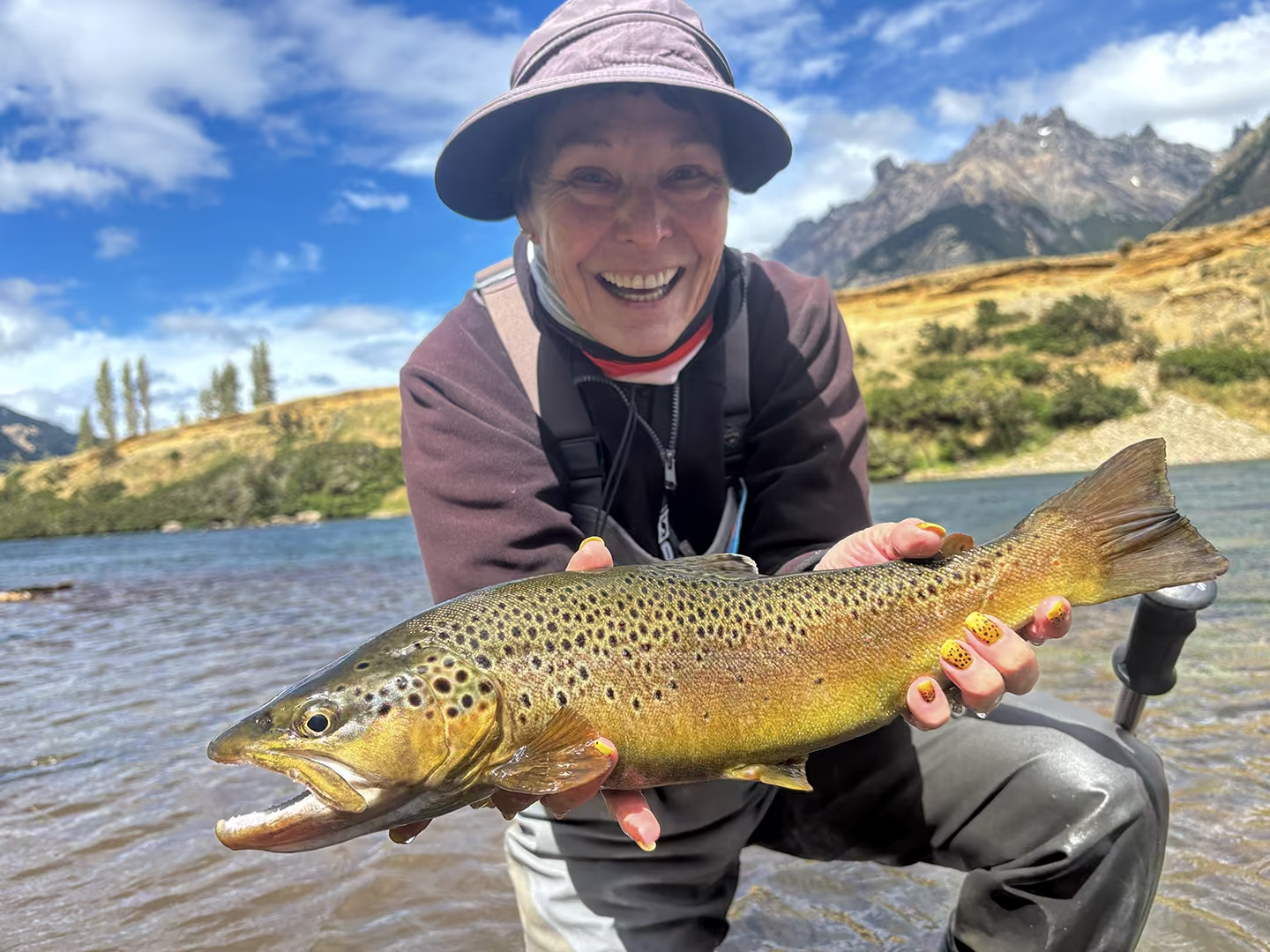
Brown and rainbow trout are introduced species in Chile, and naturally reproducing populations now inhabit many Patagonian waters. Our guided fishing focuses on wild fish around Coyhaique.
Wild fish respond to real food, pressure and changing flow rather than a brochure schedule. A natural drift and a careful approach help, but neither guarantees a take. We keep private access points out of public copy and confirm the actual water only in the trip plan.
Brown trout: the technical one
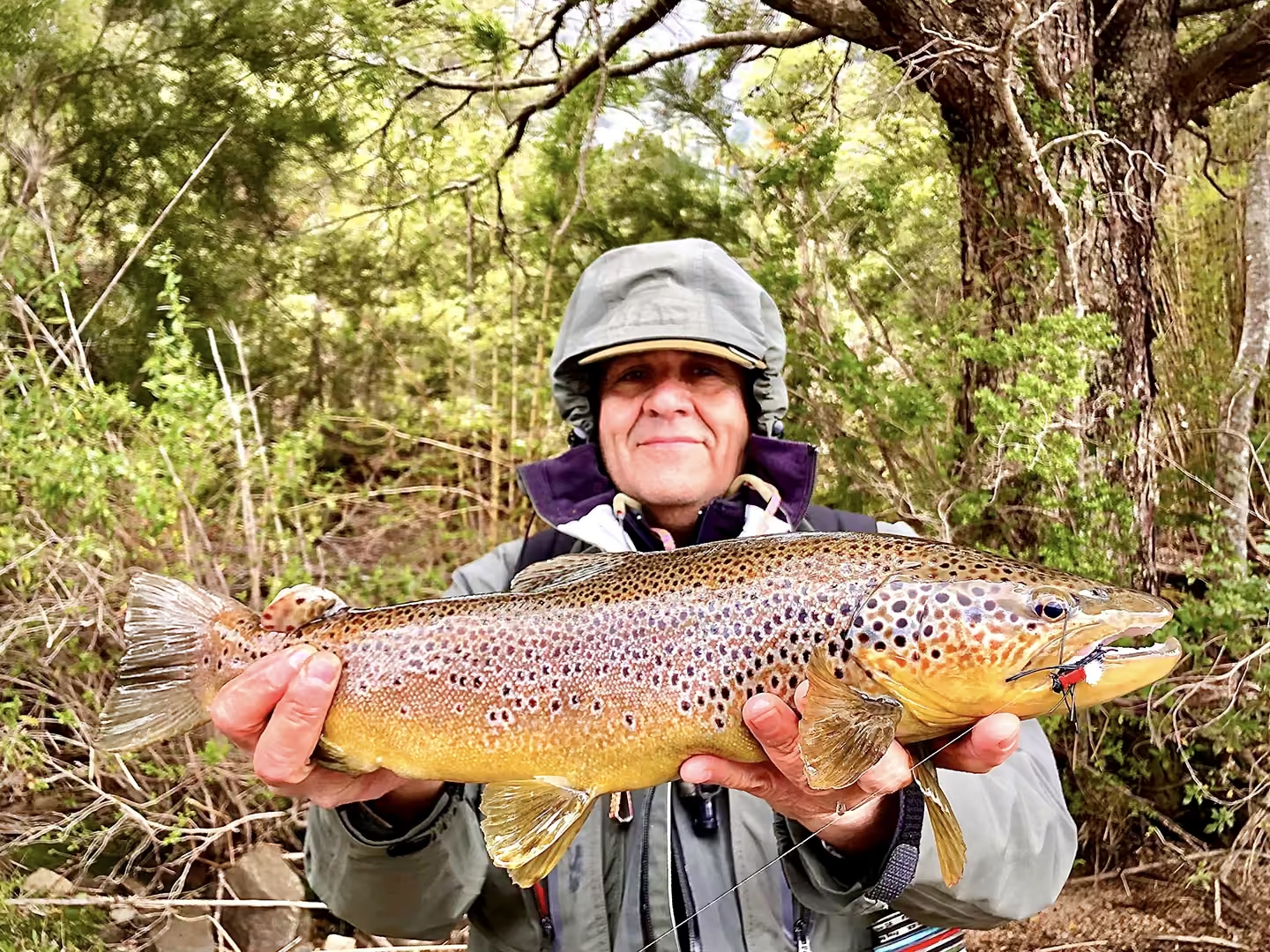
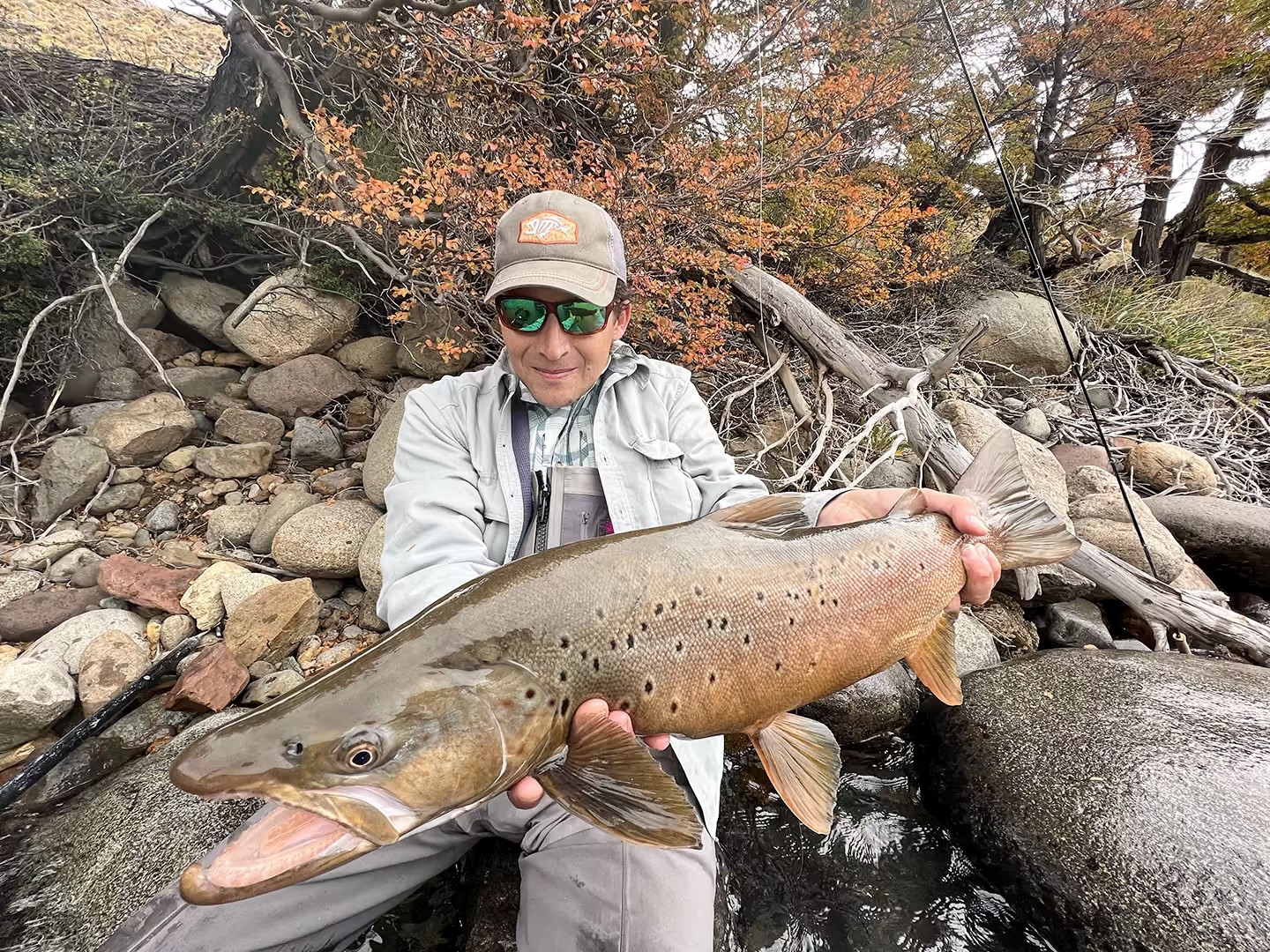
Brown trout often use undercut banks, structure and softer current seams. On clear water they may reward a quiet approach and a clean drift, though behaviour varies from one fish and day to the next.
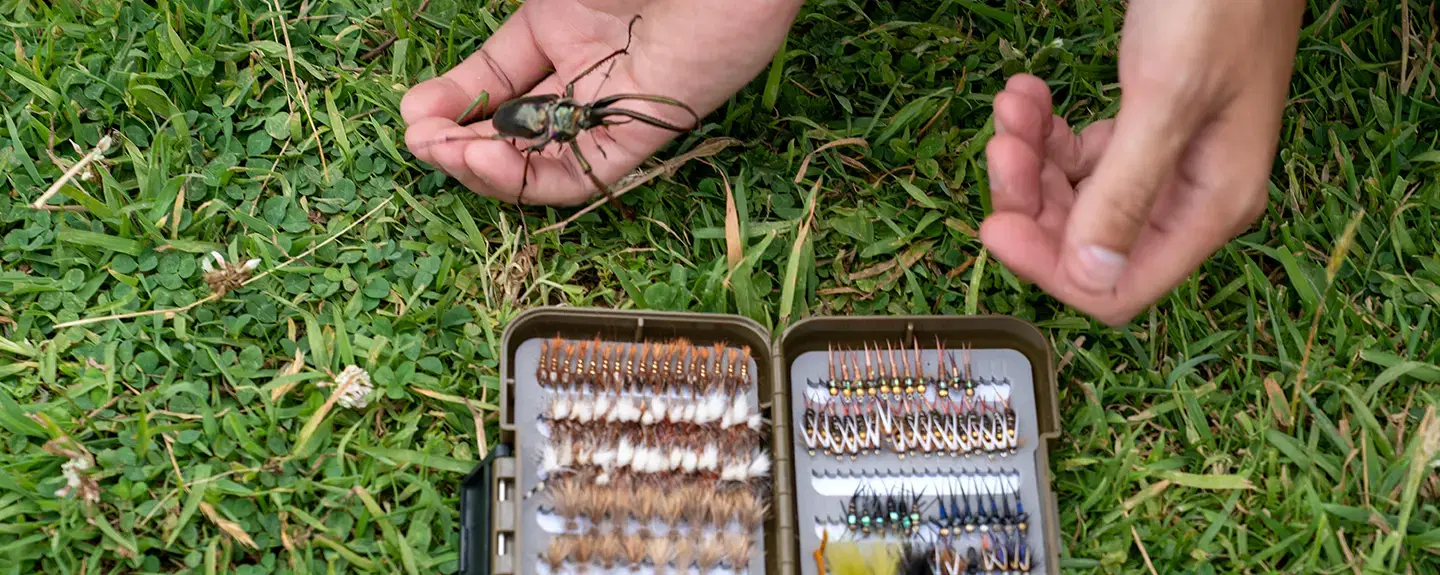
January and February are usually the strongest terrestrial and dry-fly window. In March and April, cooler water and pre-spawn movement can make streamers useful. Wind, flow and temperature still decide whether those broad patterns apply on the day.
Rainbow trout: the early season fish
Rainbow trout can use banks, structure and current breaks when early-season water runs higher. Their position and activity still vary with flow, temperature and the water chosen.
Nymphs and streamers are common early-season options. Line density and fly weight are matched to the rod and current; there is no mandatory grain number for every river or angler.
What size to actually expect
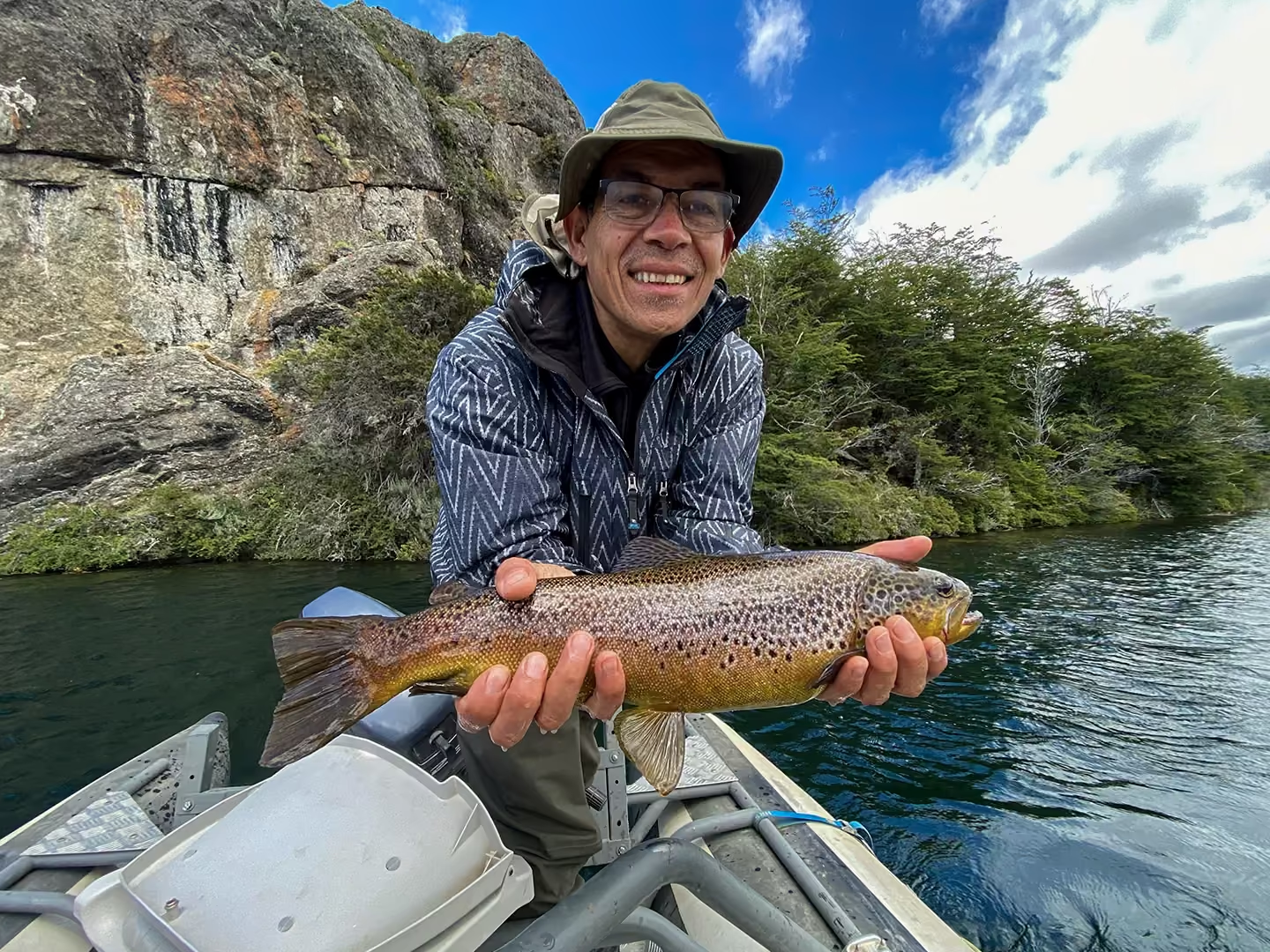
There is no responsible single average for the varied lakes, freestone rivers and spring-fed water around Coyhaique. Size changes with habitat, season and the individual fish.
Larger fish exist, but photographs are evidence of past catches—not a prediction. We would rather explain the water and method than attach a promised size to a future day.
Everything is released
We practise catch and release, keep handling brief and follow the rules that apply to the selected water. The all-inclusive expedition includes the Sernapesca licence; full-day guests confirm their licence with the team before arrival.
If you want the month-by-month version of this — hatches, water levels and which technique fits when — that is on the fishing season page. For the wider picture of the country, see fly fishing in Chile.