The short answer
- The cantaria is Chiasognathus grantii, a giant stag beetle of Chilean Patagonia's beech forests.
- Adults fly in midsummer — roughly late December through February around Coyhaique.
- Warm, settled weather gets them flying; wind through the forested banks puts them on the water.
- Trout treat it as the biggest surface meal of the year, and the takes are violent.
- We fish it with large dark foam beetles, sizes 4–8, cast with a deliberate plop near the trees.
What the cantaria is
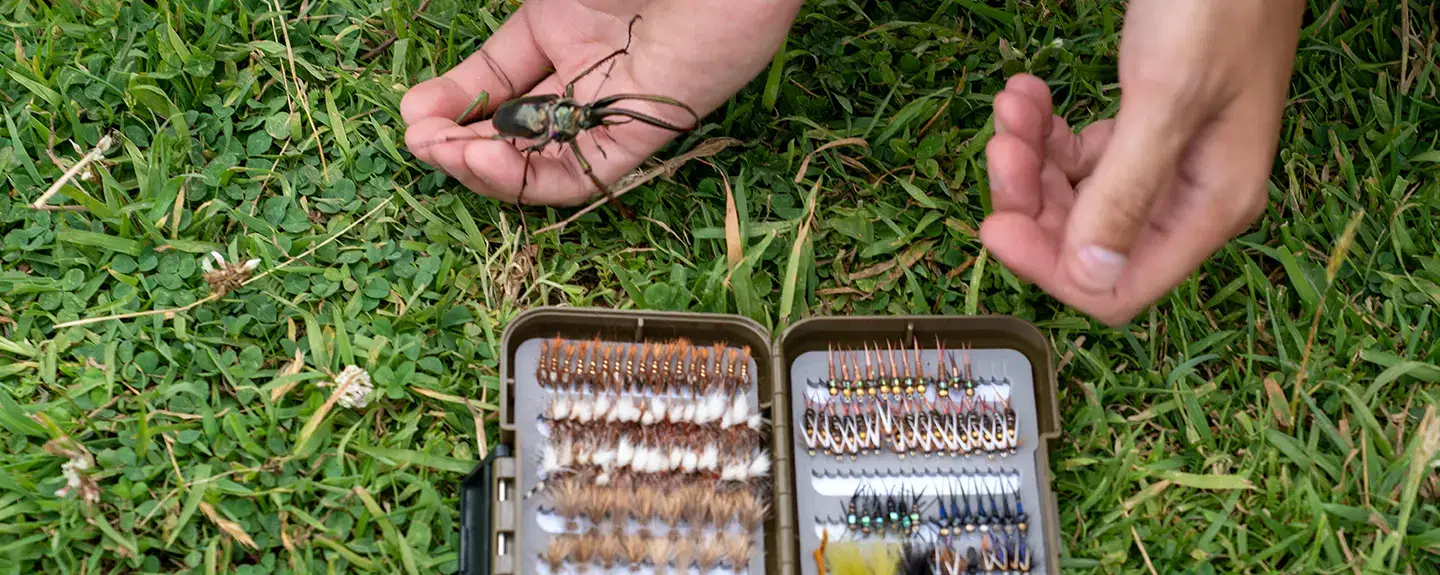
Chile's southern beech forests hide a beetle that looks invented: Chiasognathus grantii, the cantaria, a stag beetle whose males carry mandibles nearly as long as their bodies. Charles Darwin collected it when the Beagle reached these latitudes, and naturalists have called it Darwin's beetle ever since. It spends most of its life unseen — the larvae develop for years inside decaying beech wood — and then, for a few weeks of summer, the adults take to the air among the lenga and ñirre.
When it appears, and why some summers are better
Around Coyhaique the flight happens in midsummer, roughly from late December through February, and it peaks in warm, settled spells: heat is what gets a heavy beetle airborne. Because each generation spends years underground before emerging, the density of the flight varies from one summer to the next — some years the forest hums with them, others they come in pulses. That variability is part of the game, and it is why the guide's read of the last few days of weather matters more than any calendar.
How it reaches the water
The cantaria is a poor pilot. It flies between trees with the grace of a thrown boot, and where the forest leans over trout water, wind and bad luck deliver a steady trickle of beetles onto the surface. The landing is loud — a plop a trout can hear from a long way off. Where that happens repeatedly, fish stop treating it as an accident and start treating it as a hatch.
What it does to the fishing
A cantaria is too many calories to refuse. Brown trout that sip size 16 mayflies all spring will slide a meter off their line to crush a beetle, and fish that never show on the surface — the big, structure-hugging ones — look up during these weeks. This is a different register of dry-fly fishing: one fly, fished with conviction along the treed banks, and takes you will replay for years. It is the headline act of the wider summer terrestrial window, alongside the hoppers of the open grass banks.
Fishing it well
Imitations are simple: a big dark foam beetle or rubber-legged foam attractor, black to claret, sizes 4 to 8, on 2X or 3X tippet and a 5- or 6-weight rod. Do not aim for a delicate landing — the plop is the trigger. Cast tight to the wood, let it sit, give it one twitch, and hold your nerve: big fish eat a beetle slowly, and the strike comes a beat later than your reflexes want. The guide chooses which water has beech on the banks and beetles in the air that week.