The short answer
- Mayflies: the Parachute Adams and the Comparadun, sizes 12 to 18, best in January and February.
- Caddis: the X-Caddis in sizes 14 to 16 and the Streaking Caddis in 12 to 14, best in December and January.
- Stoneflies: the Madam X and the Fat Albert, sizes 8 to 12, peaking in November and December.
- Hoppers: foam patterns in sizes 6 to 10, from January into early March.
- Cantaria beetle: big dark foam beetles, sizes 4 to 8, from late December through February.
- Flies are included in both of our programs: bring your own only if you enjoy fishing them.
The Coyhaique dry-fly box at a glance
Eight patterns cover the dry-fly fishing around Coyhaique, in the order the season brings them. The sizes are ranges: the hatch, the water and the light decide the exact fly on the day.
| Pattern | Imitates | Hook size | Peak months | Season |
|---|---|---|---|---|
| Madam X | Stoneflies | #8–12 | November–December | Early into High Season |
| Fat Albert | Stoneflies and hoppers | #6–12 | November–early March | Early to early Close Season |
| X-Caddis | Caddis | #14–16 | December–January | High Season |
| Streaking Caddis | Caddis | #12–14 | December–January | High Season |
| Foam beetle | Cantaria stag beetle | #4–8 | Late December–February | High Season |
| Parachute Adams | Mayflies | #12–18 | January–February | High Season |
| Comparadun | Mayflies | #12–18 | January–February | High Season |
| Foam hopper | Grasshoppers | #6–10 | January–early March | High into Close Season |
Patterns, sizes and months for stoneflies, caddis and mayflies follow the hatch chart of an Aysén guide (Heinonen, Kalakamu); hoppers and cantaria beetles are our own season notes. Peak months, not guarantees: water temperature, flow and wind move them.
How do dry-fly hook sizes work?
A fly's size is the size of its hook, and the scale runs backwards: the bigger the number, the smaller the hook. A size 18 Parachute Adams is one of the smallest flies in the box; a size 4 foam beetle is one of the biggest dry flies you will fish all season. Sizes are not identical across hook makers, so treat every number on this page as a range rather than an exact length.
A common rule of thumb for tippet is to divide the hook size by three. It is a starting point, not a rule: big, wind-resistant foam flies usually need heavier tippet than the math suggests, and on calm, clear water guides often go longer and finer, as our spring creek guide explains.
| Size | Tippet | For example |
|---|---|---|
| #18 | 6X | Parachute Adams |
| #16 | 5X | X-Caddis |
| #12 | 4X | Madam X, Streaking Caddis |
| #6 | 2X | Foam hopper |
Which dry fly for which insect?
Each group has its own field note with the science behind it. This is the short version, in the order the season brings them.
Stoneflies: Madam X and Fat Albert
Sizes 8–12 · November–December
Chile's stoneflies belong to southern families shared with Australia and New Zealand: there are no salmonflies here. Near Aysén most species emerge between October and February, and guides report the peak in November and December, the first big-dry window of the season. Both patterns are high-floating foam attractors built for broken water.
Caddis: X-Caddis and Streaking Caddis
Sizes 12–16 · December–January
In the Palena River diet study, caddis were 21% of the prey items of adult brown trout, second only to snails. Around Coyhaique the best hatches come in December and January, often in the evening, and in midsummer the evening rise can run until about 10 pm. One Aysén guide prefers these lower-riding patterns to the classic Elk Hair Caddis.
Cantaria beetle: Big dark foam beetle
Sizes 4–8 · late December–February
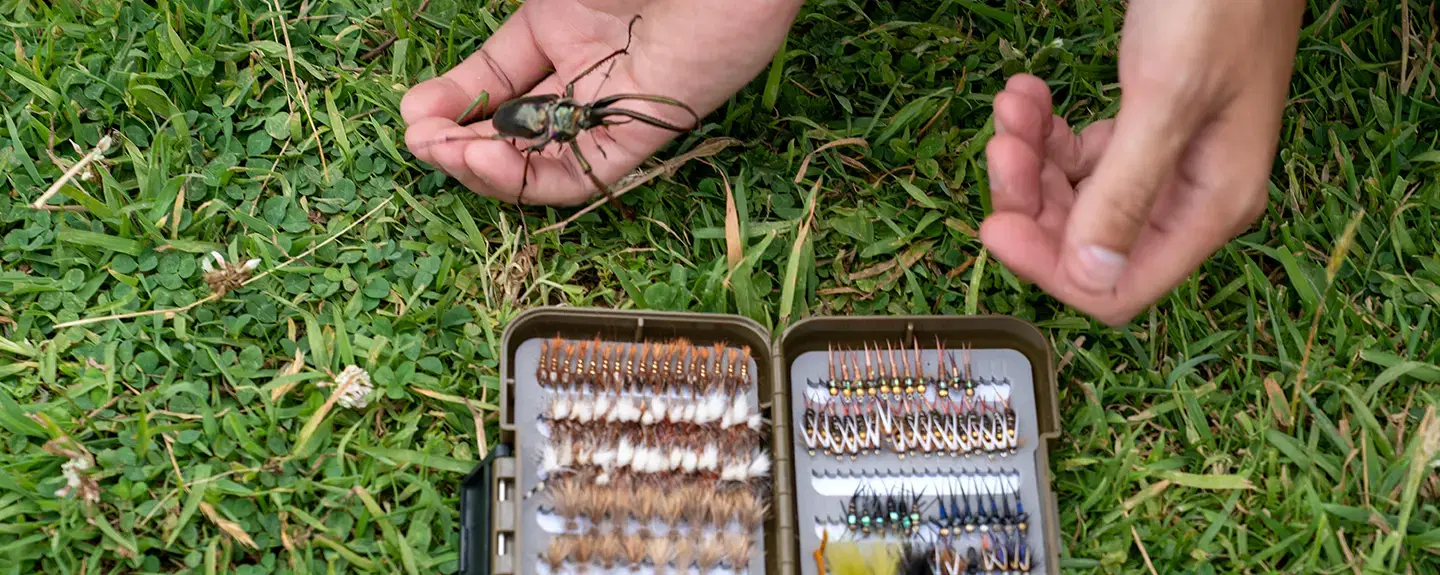
The cantaria is Chiasognathus grantii, a giant stag beetle of the southern beech forests. When warm, settled weather gets it flying and wind puts it on the water, trout treat it as the biggest surface meal of the year. Fish it in black, brown or claret with a deliberate plop near the trees.
Mayflies: Parachute Adams and Comparadun
Sizes 12–18 · January–February
Chile has 57 described mayfly species, more than half of them found only in Chile. Guides match them with familiar patterns sized to the naturals on the water. The white post of the Parachute Adams is easy to follow on broken water; the hackle-less Comparadun sits low on flat, clear water.
Hoppers: Foam hoppers and Chubby-style attractors
Sizes 6–10 · January–early March
Hopper season starts in January, peaks through February and can stretch into early March. Grass to the waterline and an afternoon wind are the whole recipe: fish tan, yellow or pink foam tight to the bank with a plop and a twitch, or hang a beadhead nymph under it. An Aysén guide's terrestrial list adds the Stimulator and the Chubby Chernobyl, from size 4 to 10.
Which dry flies for each season?
Early Season
October 12 – November 30
Stonefly dries come first: the Madam X and the Fat Albert, sizes 8 to 12, as the stonefly peak builds in November. On cold or high-water days, a nymph or streamer is often the better choice.
High Season
December 1 – end of February
The whole box. Caddis in the evenings of December and January, cantaria beetles from late December, mayflies in January and February and hoppers from January. January and February are usually the strongest dry-fly window of the year.
Close Season
March 1 – April 30
Hoppers and Fat Alberts can carry into early March. After that the season turns to technical dries and large streamers for migratory brown trout.
Do you need to bring your own dry flies?
No. Flies are included in both of our programs, and the all-inclusive expedition includes tying materials as well. If you enjoy fishing your own patterns, bring them: foam hoppers and big beetles earn their box space in summer. The rest of the kit is in our packing list, and why this water is worth a dry-fly trip in the first place is in why Coyhaique is famous for dry flies.