The short answer
- Hopper season runs from January, peaks through February and can stretch into early March.
- Grass to the waterline plus afternoon wind is the whole recipe: gusts feed the river.
- Foam patterns, sizes 6–10, fished tight to the banks with a plop and a twitch.
- The hopper-dropper rig turns the foam fly into an indicator for a beadhead nymph below.
- Wild browns eat a hopper with intent — the discipline is pausing before the set.
Why this is hopper country
Hopper fishing needs two things: grass full of grasshoppers and a mechanism that delivers them to the water. Around Coyhaique both are guaranteed. Steppe and pasture run right to the banks of rivers like the Ñirehuao, where the tall summer grass is literally jumping by January, and the wind — the one weather feature of Chilean Patagonia nobody has to go looking for — blows most afternoons. Every gust is a delivery. Trout that hold mid-river in spring move to the grass banks in summer because that is where the calories land.
How the trout respond
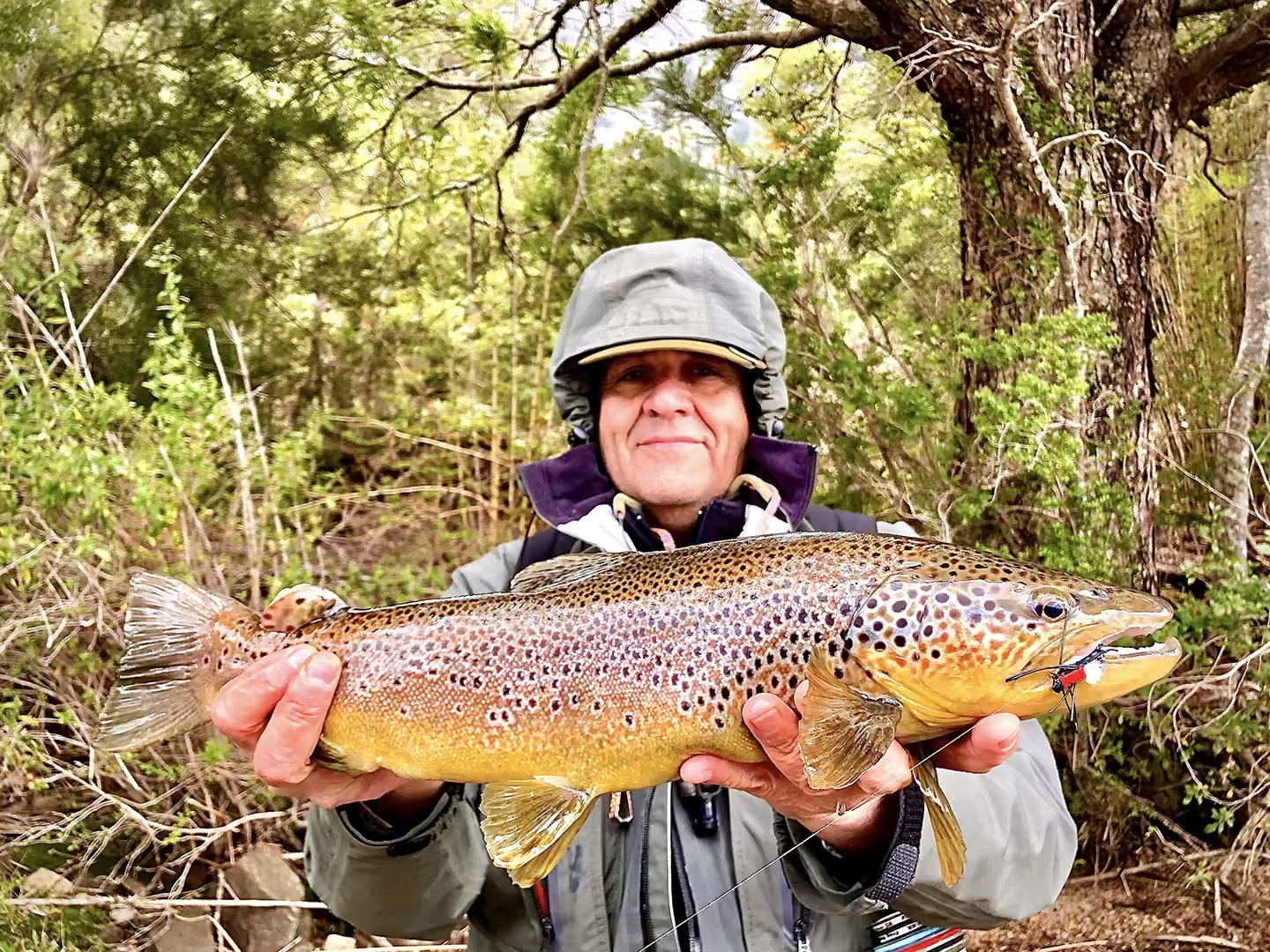
These are wild, lightly pressured fish, and their response to a hopper reflects it. They move real distances for one, they take it with the confidence of a fish that has never been fooled twice in a week, and the eat is often audible before it is visible. The fish you find on hopper banks are not the small ones, either: a big brown holding under a grass edge in February is there to work. Watching that fish rise through clear water to a foam fly is the image most anglers take home from a summer week here.
Patterns and rigs
Foam wins. Fat Albert-style flies, Chubby-style attractors and classic foam hoppers in tan, yellow and pink, roughly sizes 6 to 10, float low in the film, survive a dozen fish and land with the plop that calls trout over. On 2X or 3X tippet and a 5- or 6-weight rod, they turn over even in wind. When fish boil at the fly without committing, we hang a beadhead nymph off the bend — the hopper-dropper — and the foam fly becomes the most enjoyable strike indicator in fly fishing. The packing list covers what to bring and what we supply — flies included.
Reading a hopper bank
Not all grass is equal. The banks that produce have depth tight to the edge — a trout wants cover and a short commute — plus overhanging grass, and ideally the wind blowing from the grass toward the water. On a cataraft float down the Simpson or the Mañihuales you shoot the fly at that seam, bank after bank; wading the Ñirehuao you hunt it on foot, one grass edge at a time. Cast tight — a hopper ten centimeters off the bank is a different fly from one a meter out. Twitch once. Drift. Repeat until the water erupts.
The set, and the one mistake everyone makes
Big trout eat a hopper slowly. They rise, open, turn — and the angler, watching all of it in clear water, strikes at the rise instead of the turn and pulls the fly away. The fix is a spoken pause ("God save the Queen" works, any three words do) before lifting. Your guide will remind you. You will still do it once. Everyone does.