The short answer
- No stocking: the trout here reproduce naturally and have for generations.
- Cold, clean, food-rich water grows strong fish — pancoras, dragonfly nymphs, terrestrials.
- A short growing season makes refusing calories a losing strategy: they eat with intent.
- Almost nobody fishes these waters, so the fish have not learned to fear a fly.
- The result: harder to approach, easier to convince, and a much better fight.
No hatcheries: a century of wild reproduction
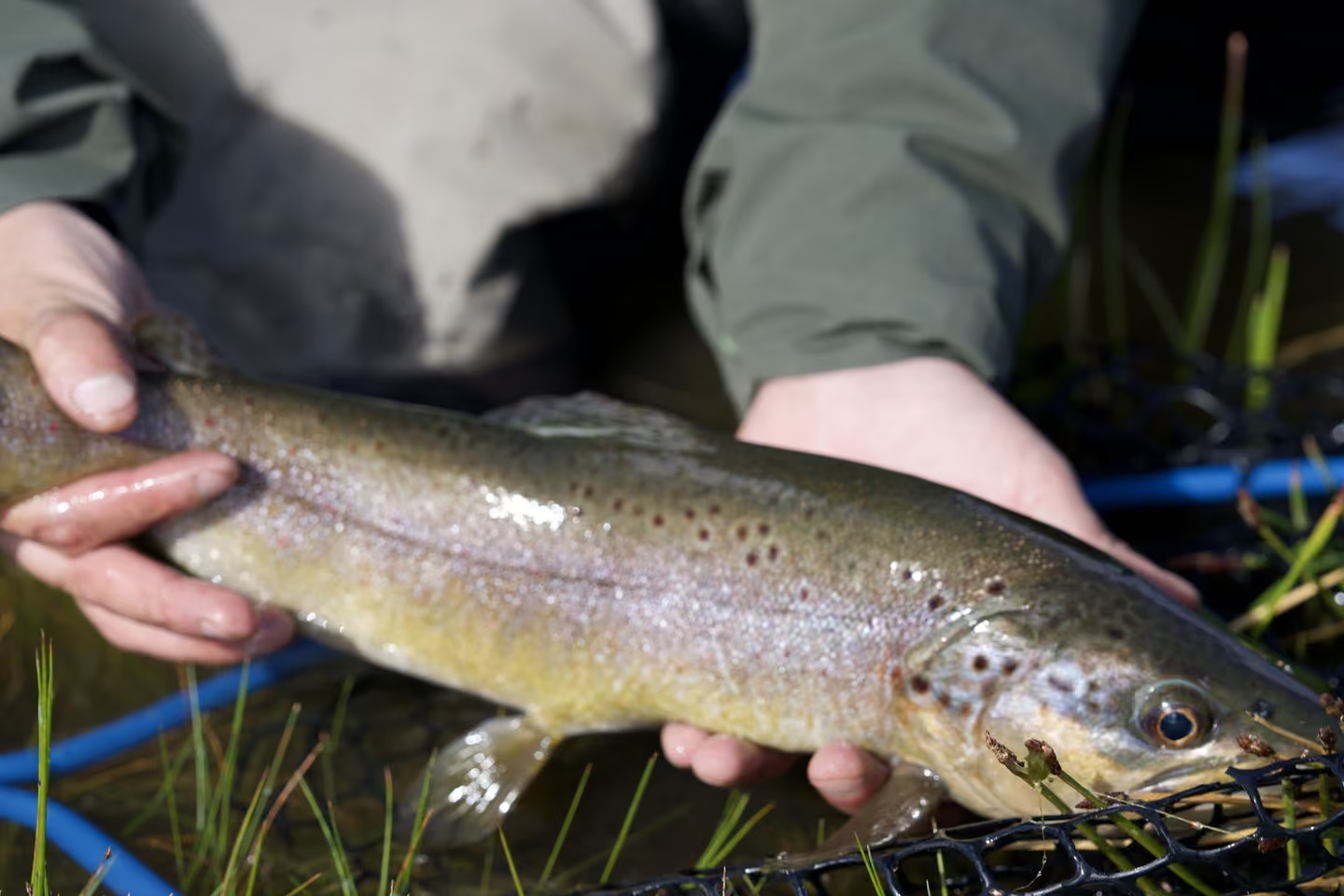
Brown and rainbow trout are not native to Chile — they were introduced a little over a century ago. What happened next is the interesting part: in the cold, clean rivers and lakes of the Aysén Region they established populations that reproduce entirely on their own. Nobody stocks the waters we fish. Every fish hatched from gravel its mother cut, survived as fry among predators and floods, and earned its place in the current. Generations of that selection produce the fish you see in the photographs: thick-shouldered, perfectly finned, colored like the river that made them. The species guide covers how browns and rainbows differ through our season.
A food supply that builds athletes
Wild is only half the story; the other half is groceries. These waters are dense with food: pancora crabs on the rocky bottoms — a protein bar with legs — plus dragonfly and damselfly nymphs in the lakes, steady mayfly and caddis activity, and in summer a rain of grasshoppers and cantaria beetles off the banks. Cold water, big meals, long summer days: it is a bodybuilding program.
The urgency of a short season
At 45° south the growing season is compressed. A trout has a handful of warm months to put on the year's weight before winter shuts the kitchen, and evolution has a clear opinion about fish that let calories drift past during those months. That is the root of the aggression anglers talk about: it is not anger, it is arithmetic. When the summer terrestrial window opens, a big brown that ignores a hopper is a big brown that stays small — and those are rare here.
Almost nobody fishes them
Pressure teaches trout. A fish that gets caught, or watches its neighbors get caught, becomes the inspector that Montana anglers know well. Around Coyhaique that education mostly never happens: the region is vast, the anglers are few, and we run one group at a time, capped at two rods. Many of the fish you cast to in a week have never seen an artificial fly. They read the world through real danger — birds, floods, bigger fish — not through hook memory. Get the drift right and they eat like nothing taught them otherwise, because nothing did.
What it looks like on the water
It looks like a brown charging a streamer three times in one retrieve. Like a fish moving a full meter sideways for a foam beetle. Like the autumn browns that hit out of pure territorial rage. And when the hook sets, the difference keeps showing: wild fish run farther and fight longer. We handle them fast, keep them wet and release every one — these populations are self-sustaining precisely because the adults go back. The rules help too: Aysén's regulations protect the spawning refuges all year.