The day in brief
- October 16, 2026, five days into our Early Season, which runs from October 12 to November 30.
- One of our clients on a Full Day: about eight hours on the water out of Coyhaique, Chilean Patagonia.
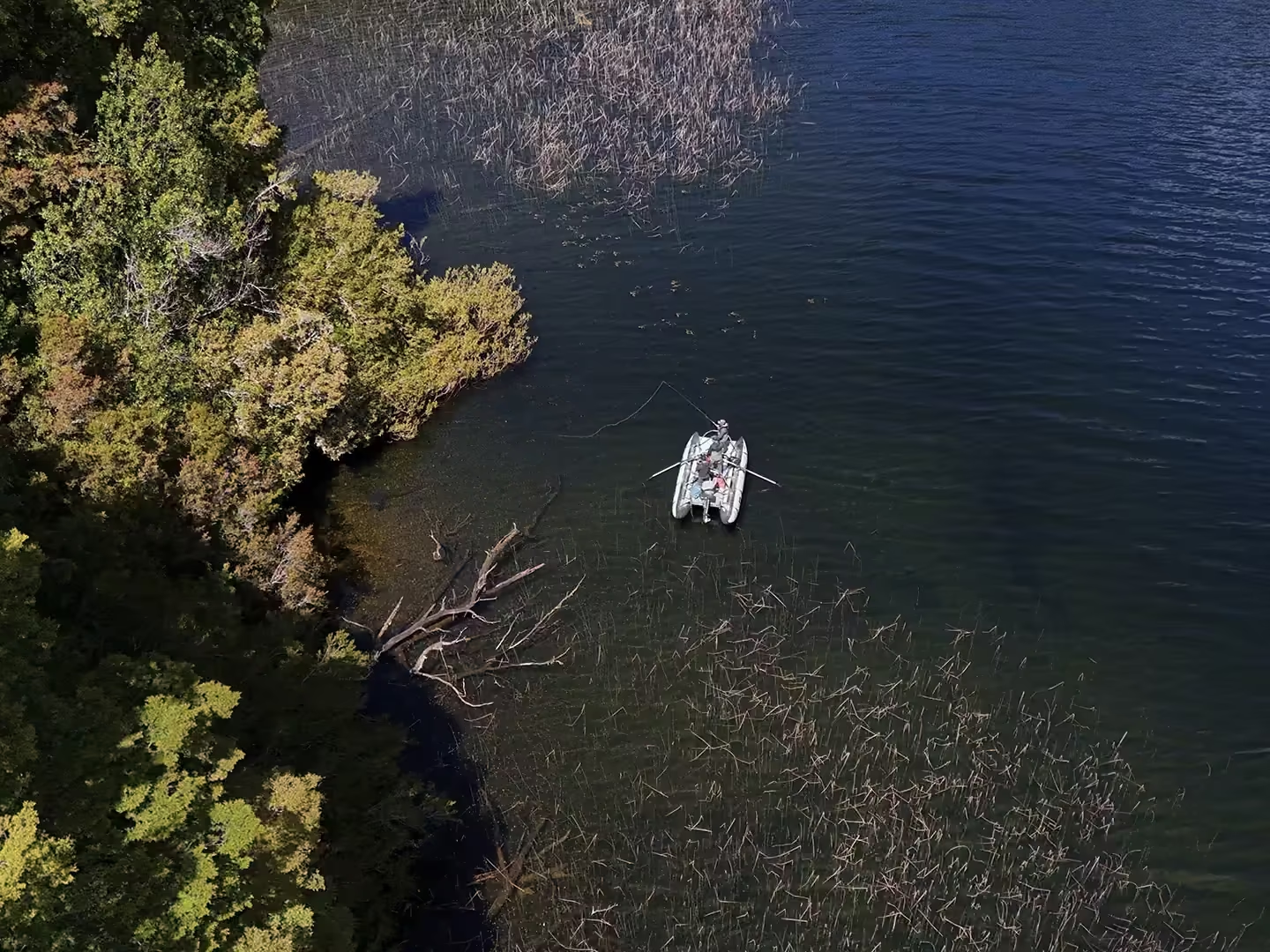
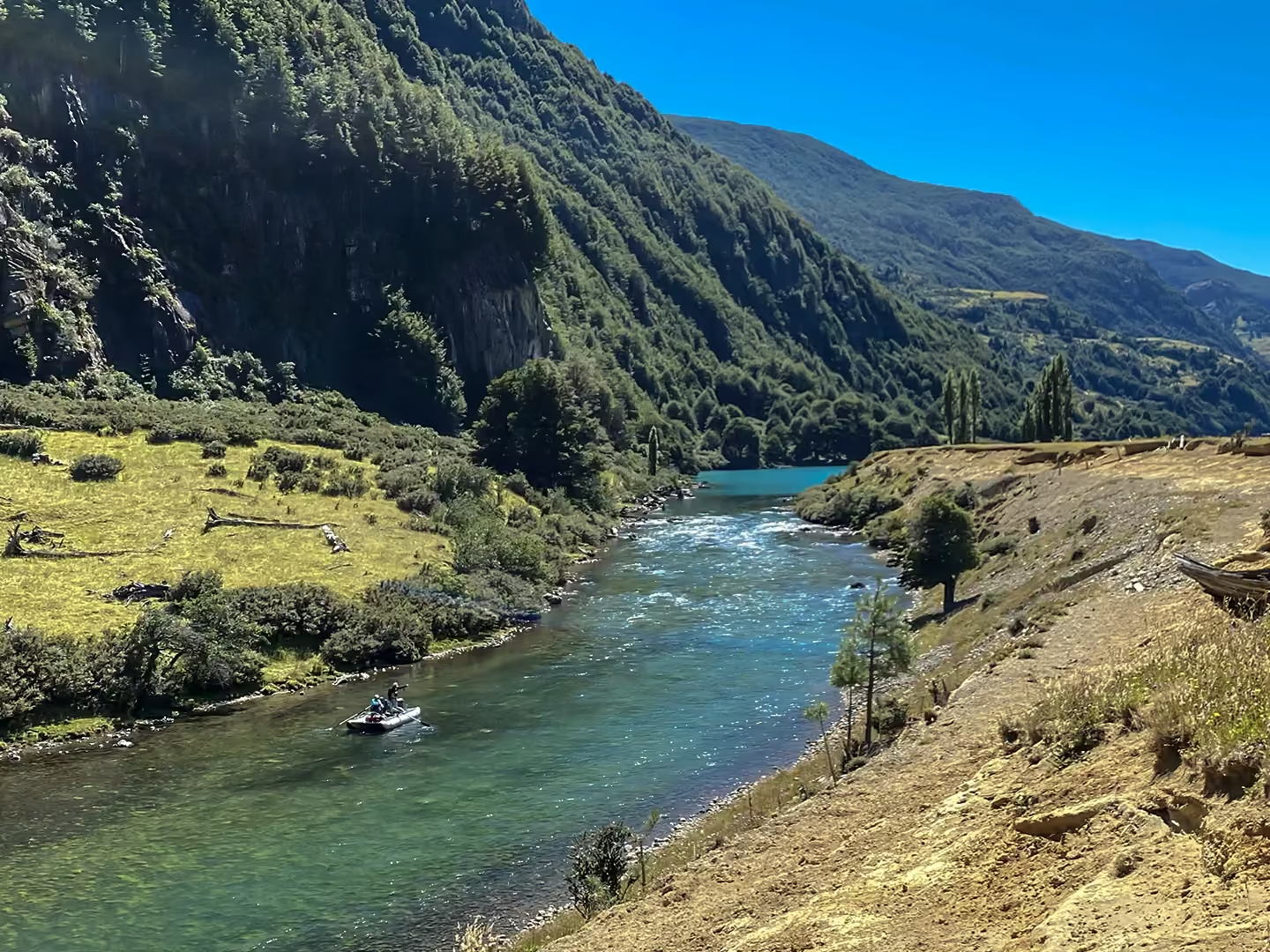
- Clear water on one of the most beautiful lakes in Chilean Patagonia. Like every access point we fish, its name stays private.
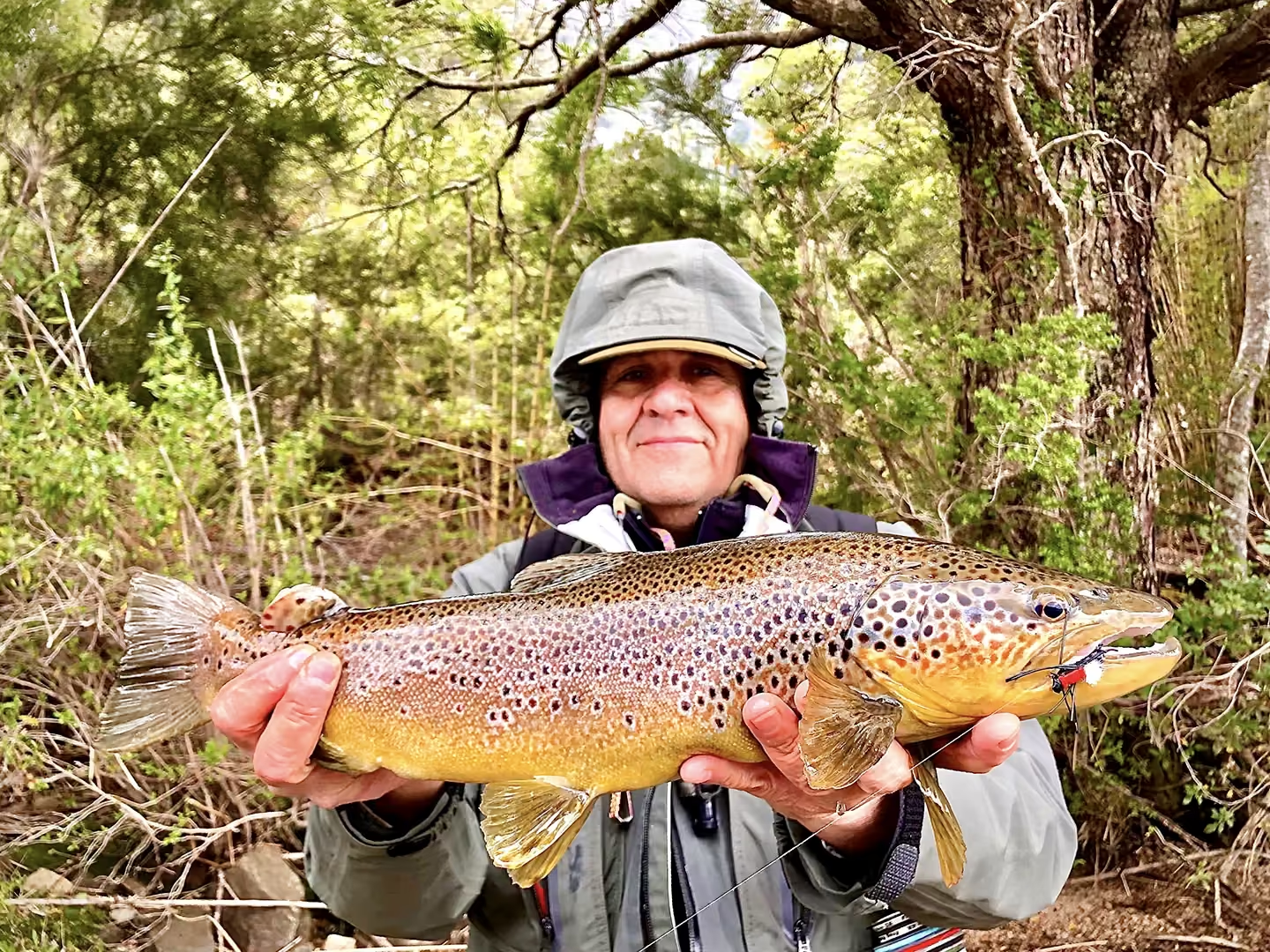
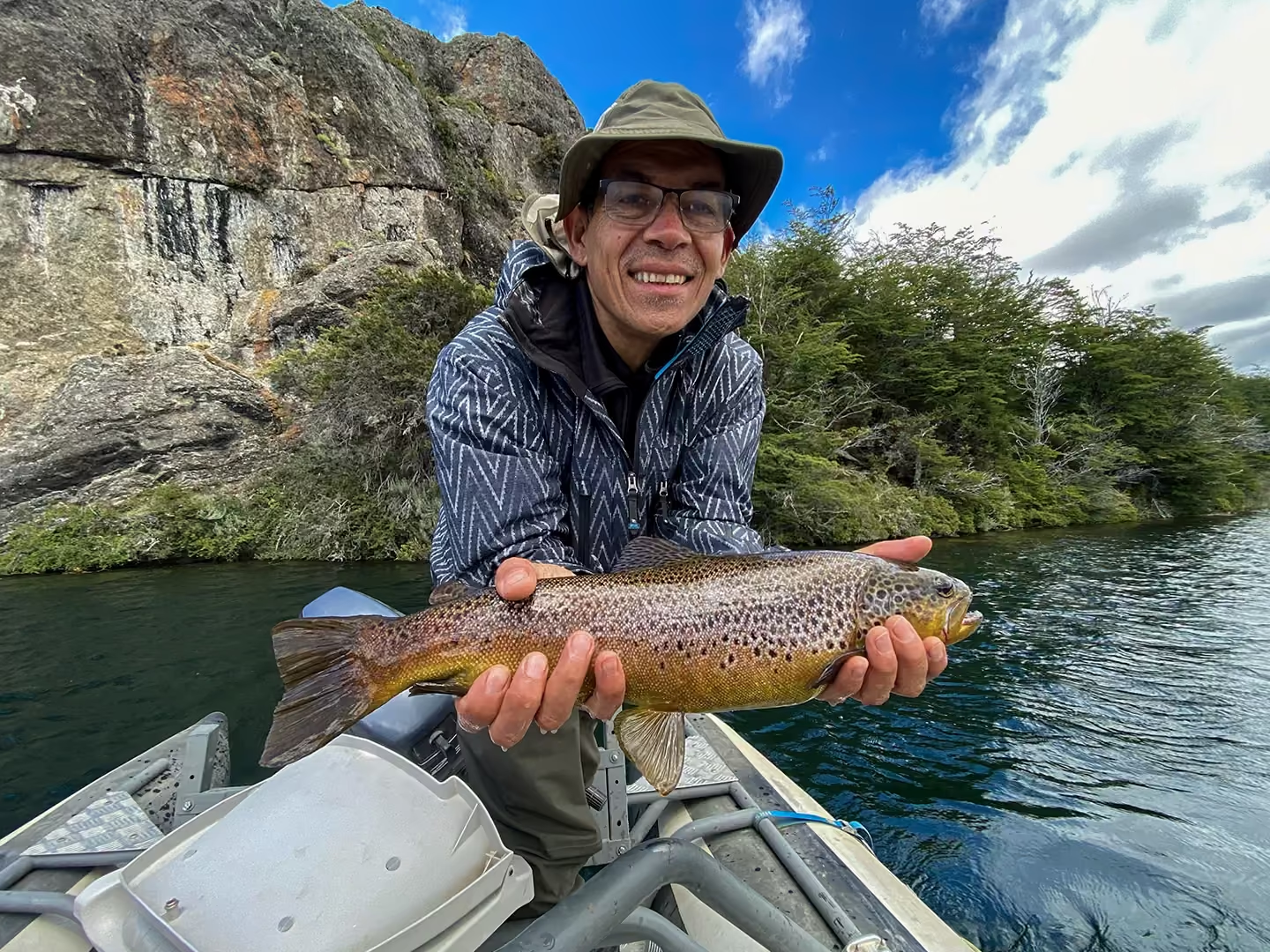
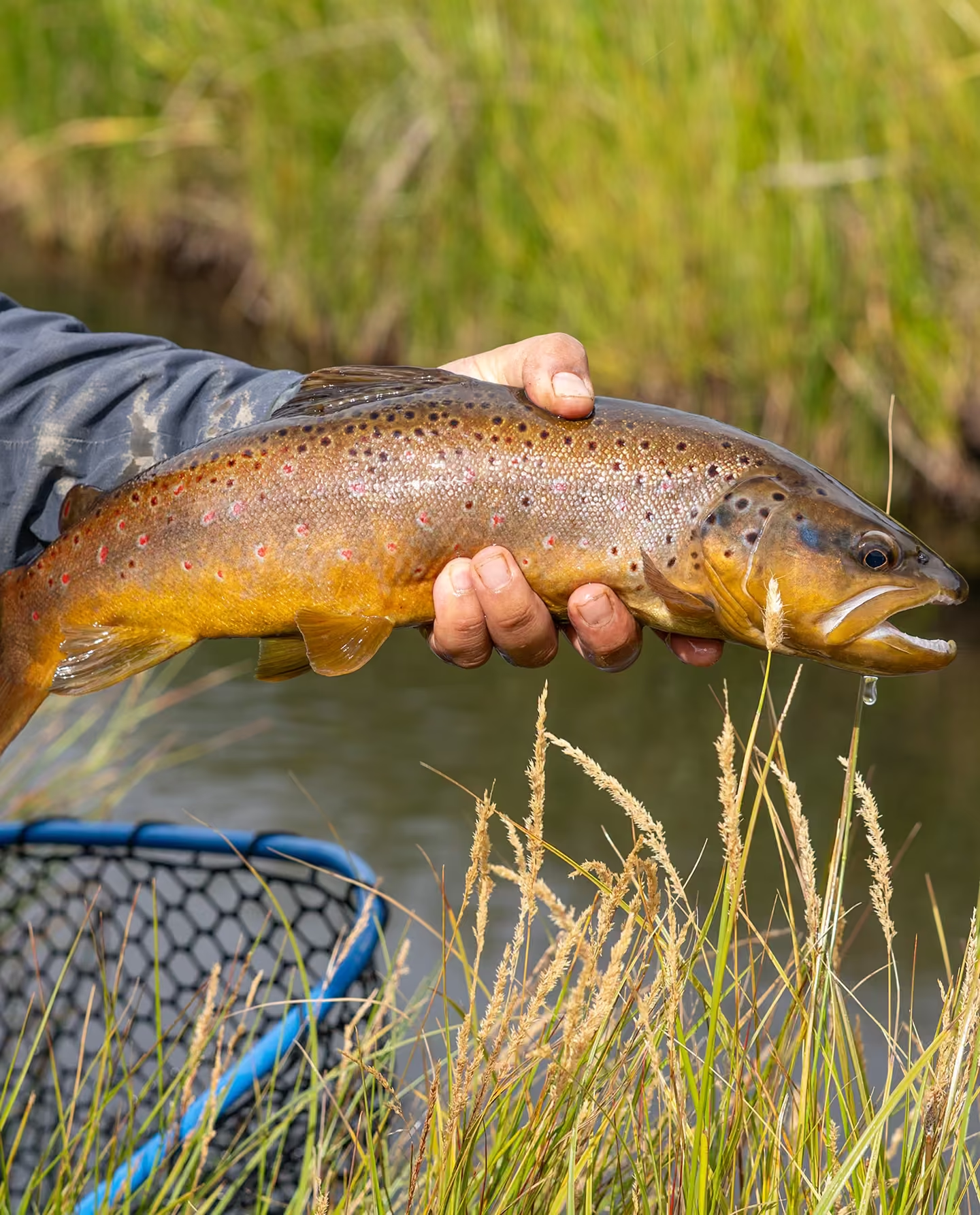
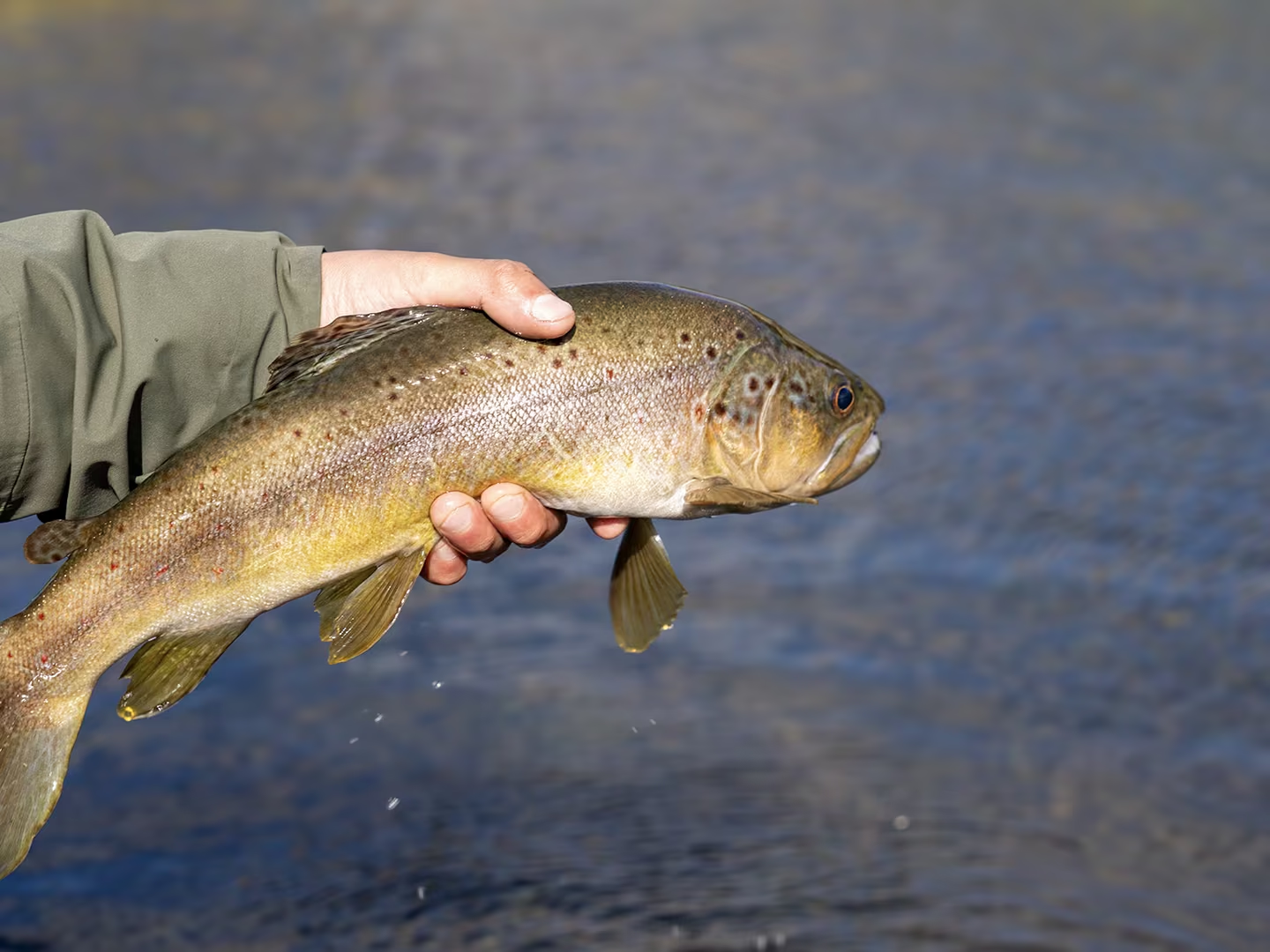
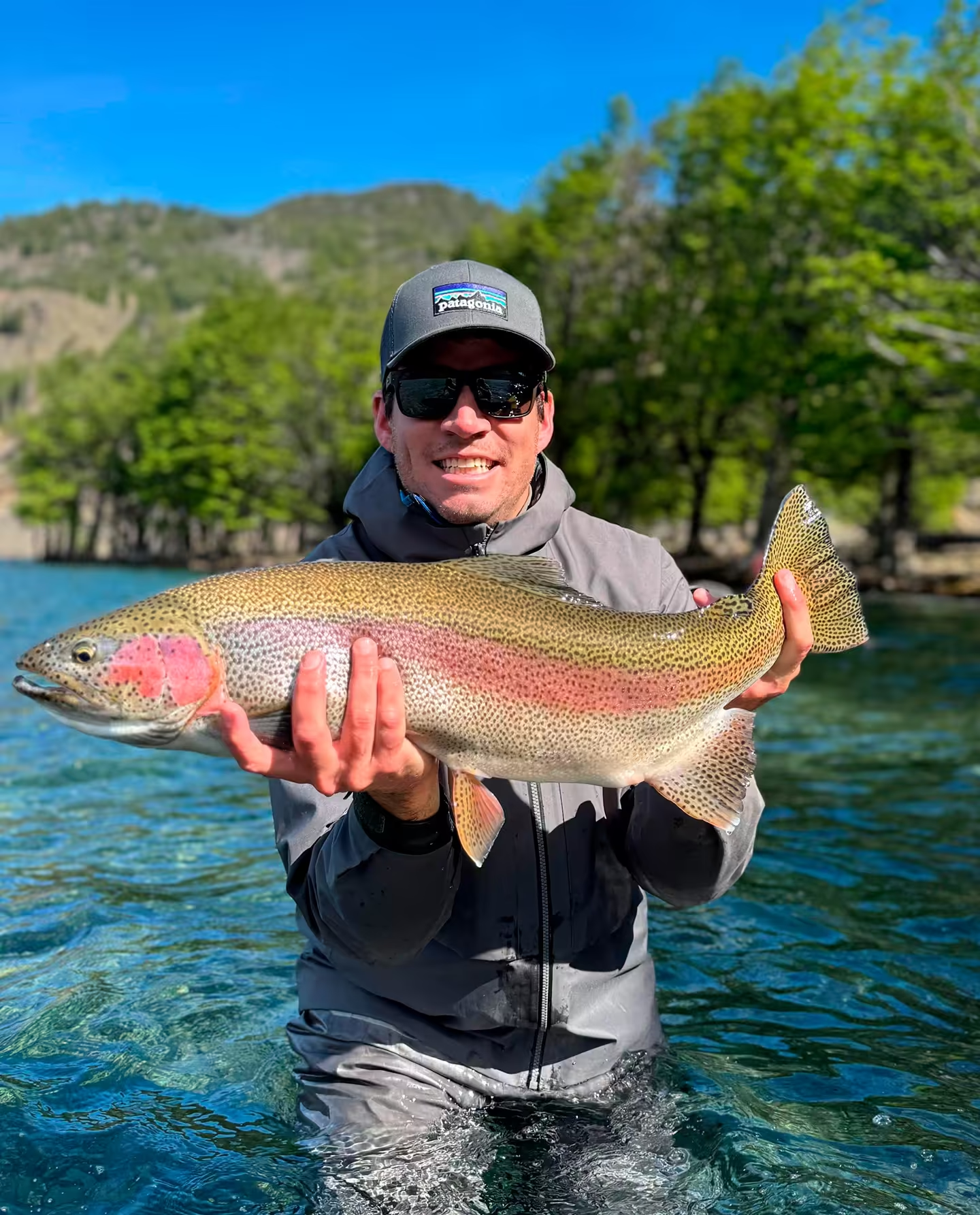
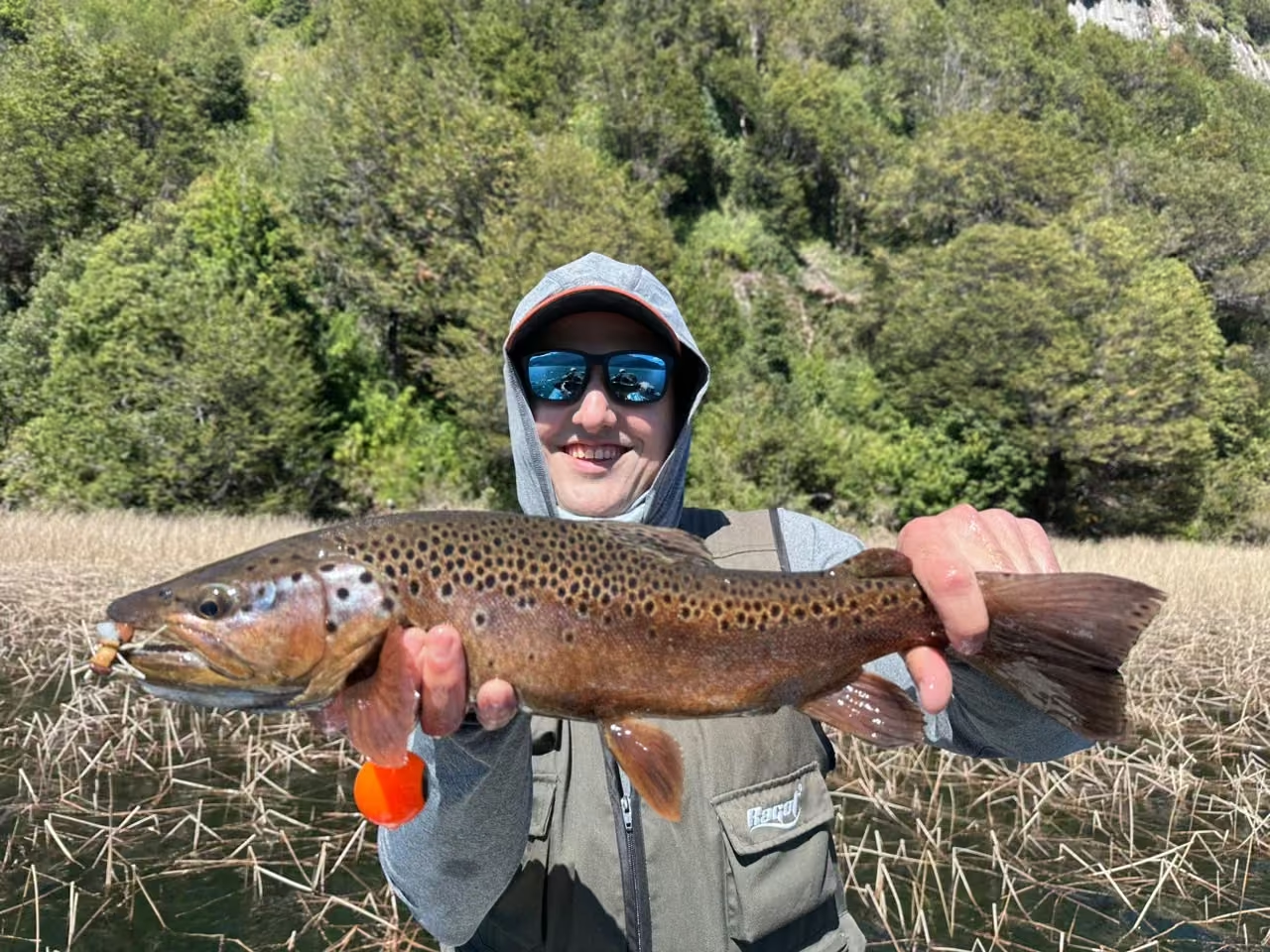
- Wild brown trout and a rainbow, spotted before the cast and taken on a foam dry fly.
- Sun and blue sky: the light that lets you see a trout in the water before it sees you.
- The lesson: Early Season is not only nymphs and streamers. When the day lines up, the dry fly works from the first week.
What is sight fishing with a dry fly?
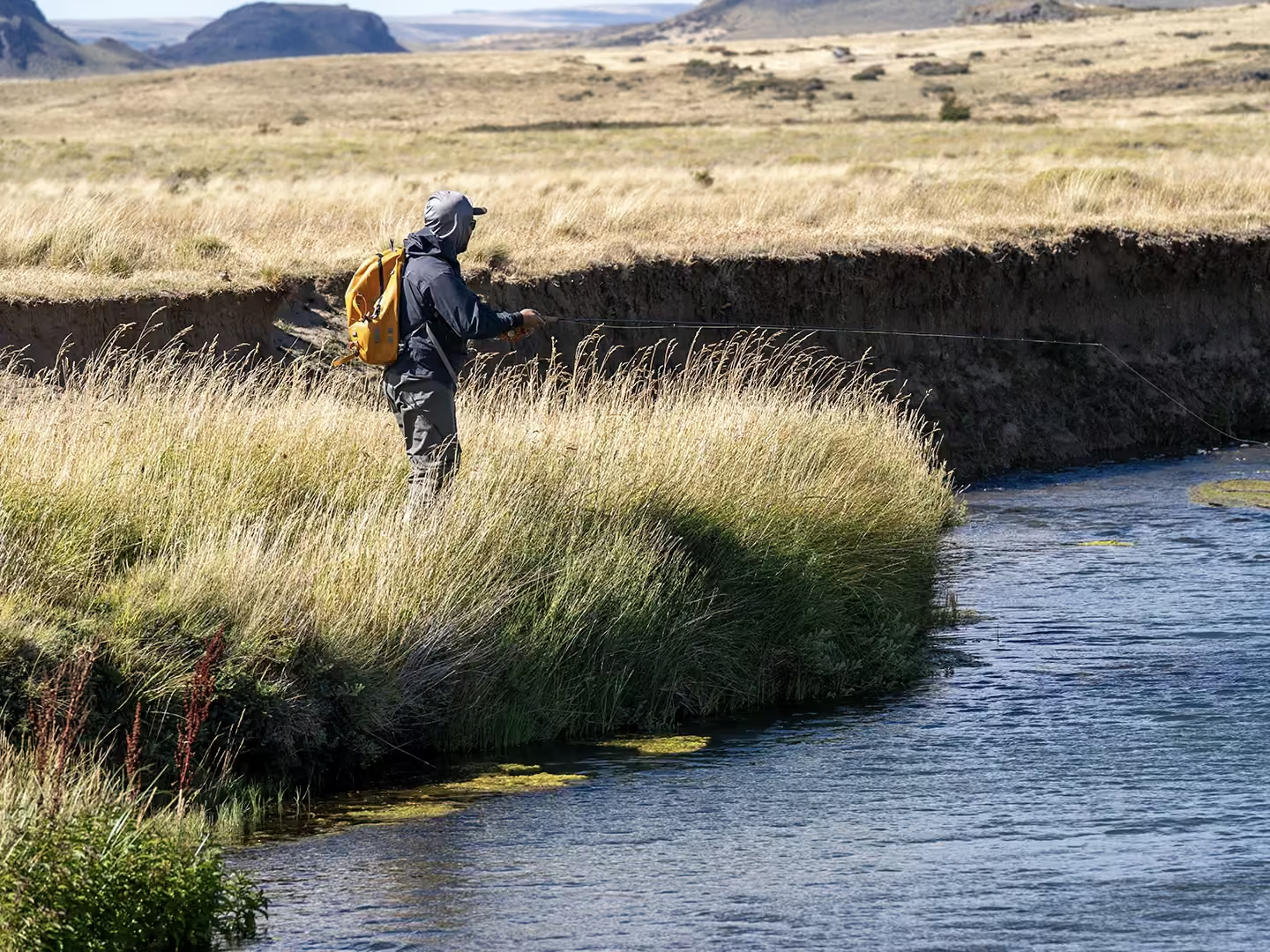
Sight fishing means finding the trout first and casting to that one fish, instead of covering water and hoping. With a dry fly, the fly floats on the surface and the whole take happens in plain view: the trout turns, rises and eats. On a river, the current carries the fly to the fish. On a lake there is no current, so the cast has to land ahead of a cruising trout, in its path, and the fly simply waits for it.
That is what made this day. Clear water, sun overhead, the forested shore and the reed beds around them: our client could see each fish, choose the cast and watch the rise. They loved it, and it is the reason we wanted to share this day.
What did they catch?
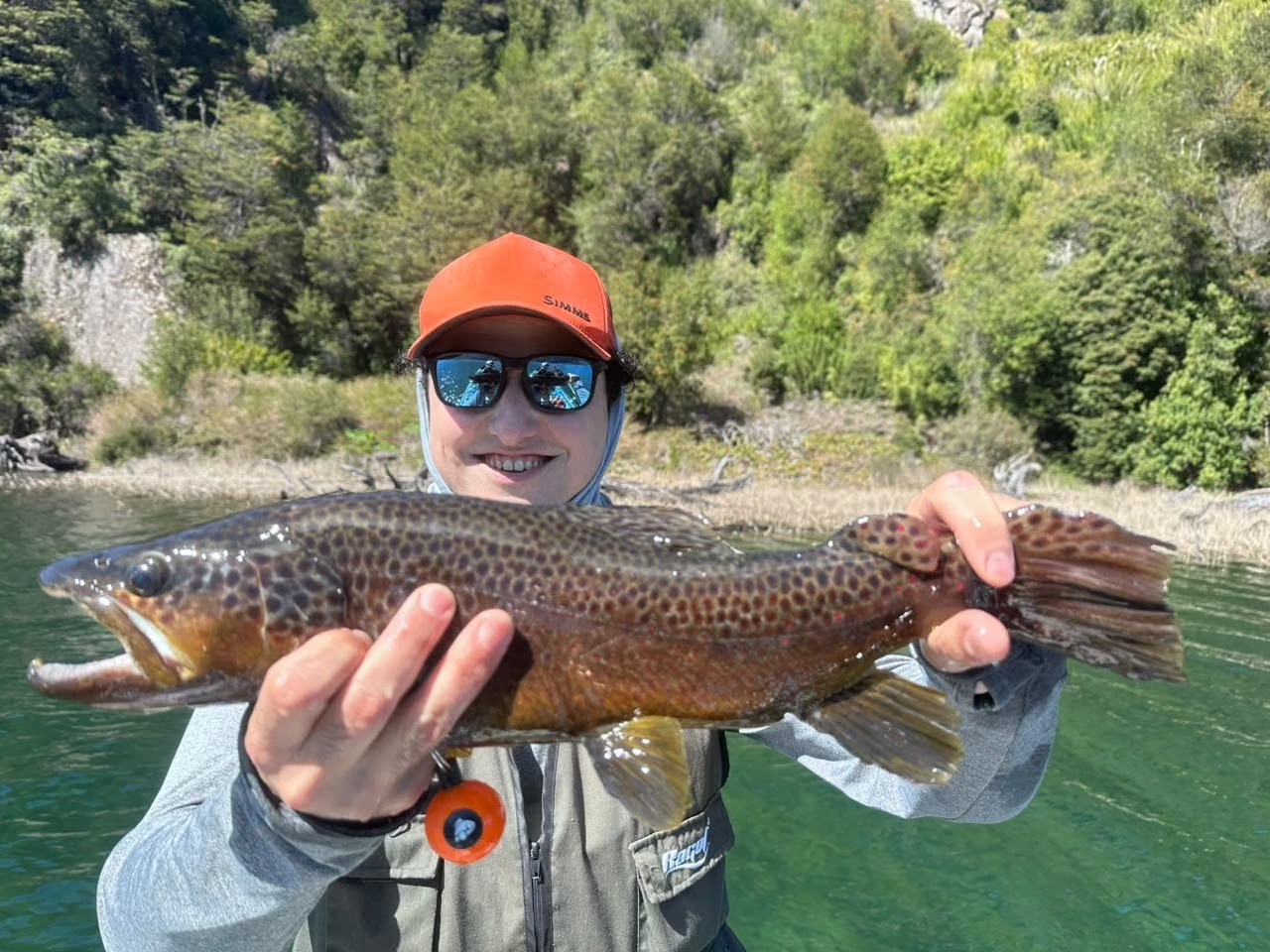
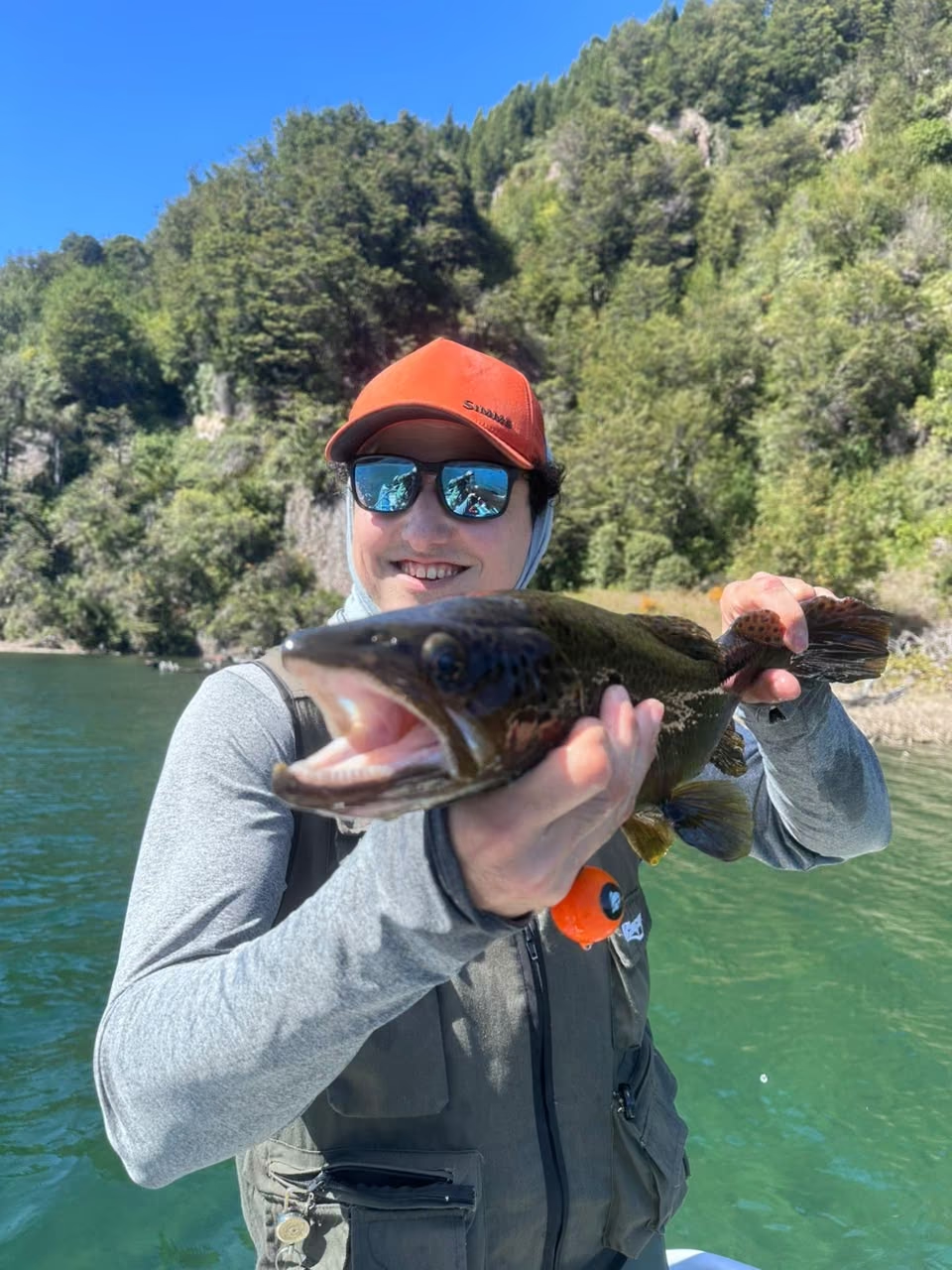
Wild brown trout, and a rainbow among them. Every trout around Coyhaique is born in the wild: there is no hatchery stocking in the waters we fish, which is why they eat with such aggression. Photos from the day.
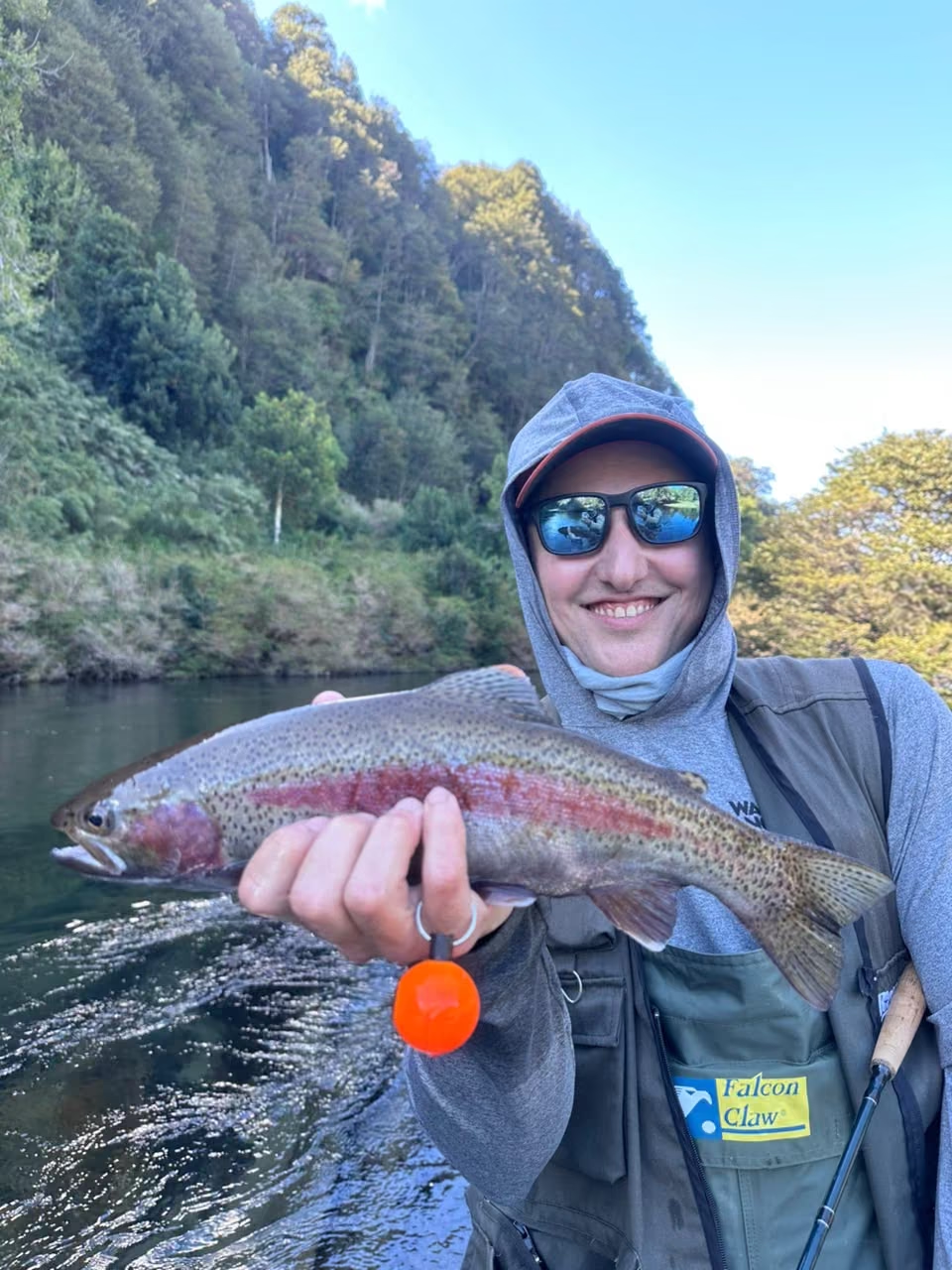
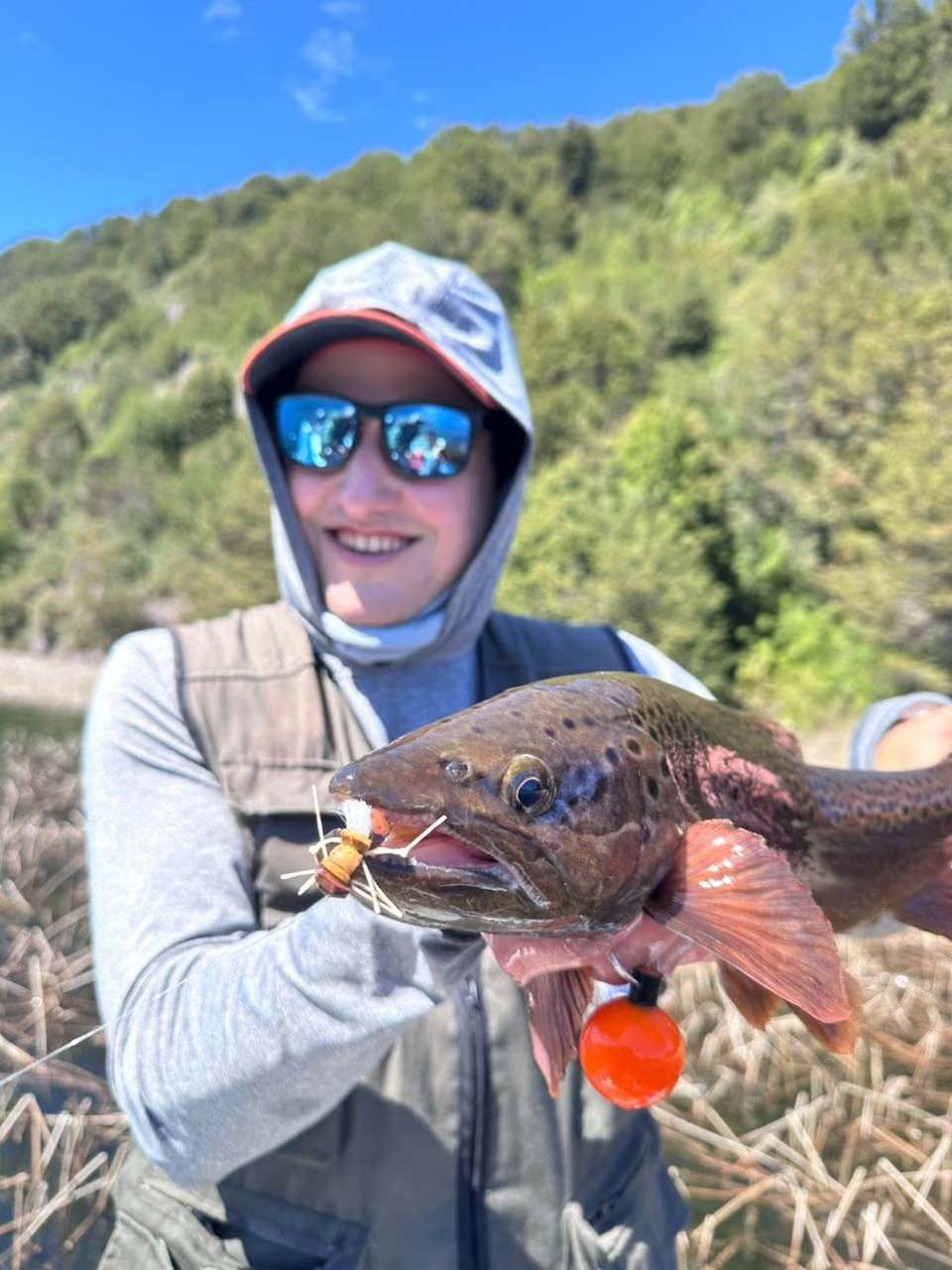
Why does clear water make a lake so good for dry flies?
Clear water works both ways: you can see the trout, and the trout can see you. Polarized sunglasses and a cap, worn in every photo from this day, cut the glare off the surface so the fish shows before the cast. The rest is a quiet approach and a soft landing, because a fly line slapping down over a cruising trout ends the chance.
The leader matters too. Our dry-fly guide gives the starting point for tippet by hook size, and why big foam flies need heavier tippet to turn over. To tell whether a trout is eating on the surface or just under it, see how to read a trout rise; for the same game on moving water, our spring creek sight-presentation guide.
Can you fish dry flies in October in Chilean Patagonia?
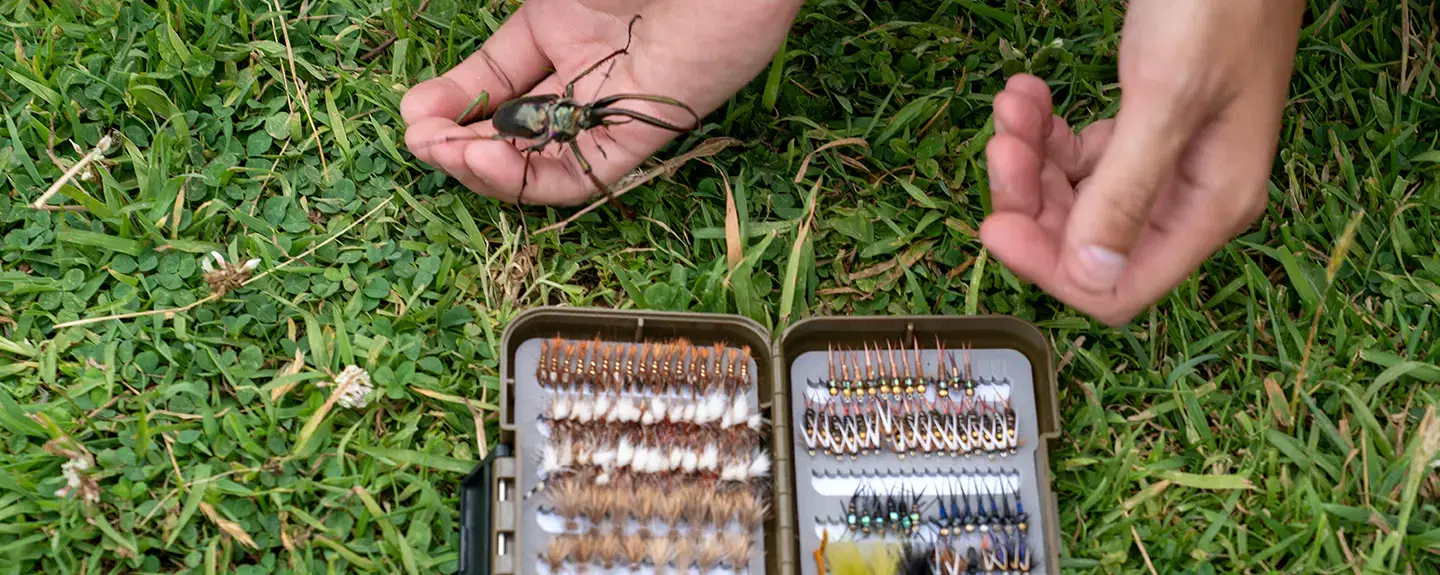
Yes, when the weather allows it. In our Early Season, stonefly dries come first, and our dry-fly guide lists foam attractors such as the Fat Albert from November; on cold or high-water days, a nymph or a streamer is often the better choice. This day had what dry flies need: sun, clear water and trout willing to look up. The fly was a foam dry with rubber legs, visible in the close-up above.
October is also when heavy spring rainbows group up in gin-clear water, which makes sight-nymphing to visible rainbows the other great game of the month. Season dates are October 12 - April 30, and the Aysén fishing rules explain when release is mandatory and what a foreign angler pays for a licence.
What does a Full Day include?
A guided day on the water, around eight hours of fishing, priced per day for up to two anglers. Book one day or several in a row. Includes guide, round trip transport, box lunch, drinks and flies. No accommodation. Price: USD 690 per day, for up to two anglers — not per angler. Rods, reels and lines are rented separately, subject to availability. Ask us.
- Guide
- Round trip transport
- Catarafts where the water calls for them
- Box lunch
- Drinks: water, beer or wine
- Flies
We fish rivers and lakes around Coyhaique, and from catarafts where the water calls for them. New to fly fishing? Read what a first trip here looks like.