The day in brief
- October 15, 2026, the fourth day of our Early Season, which runs from October 12 to November 30.
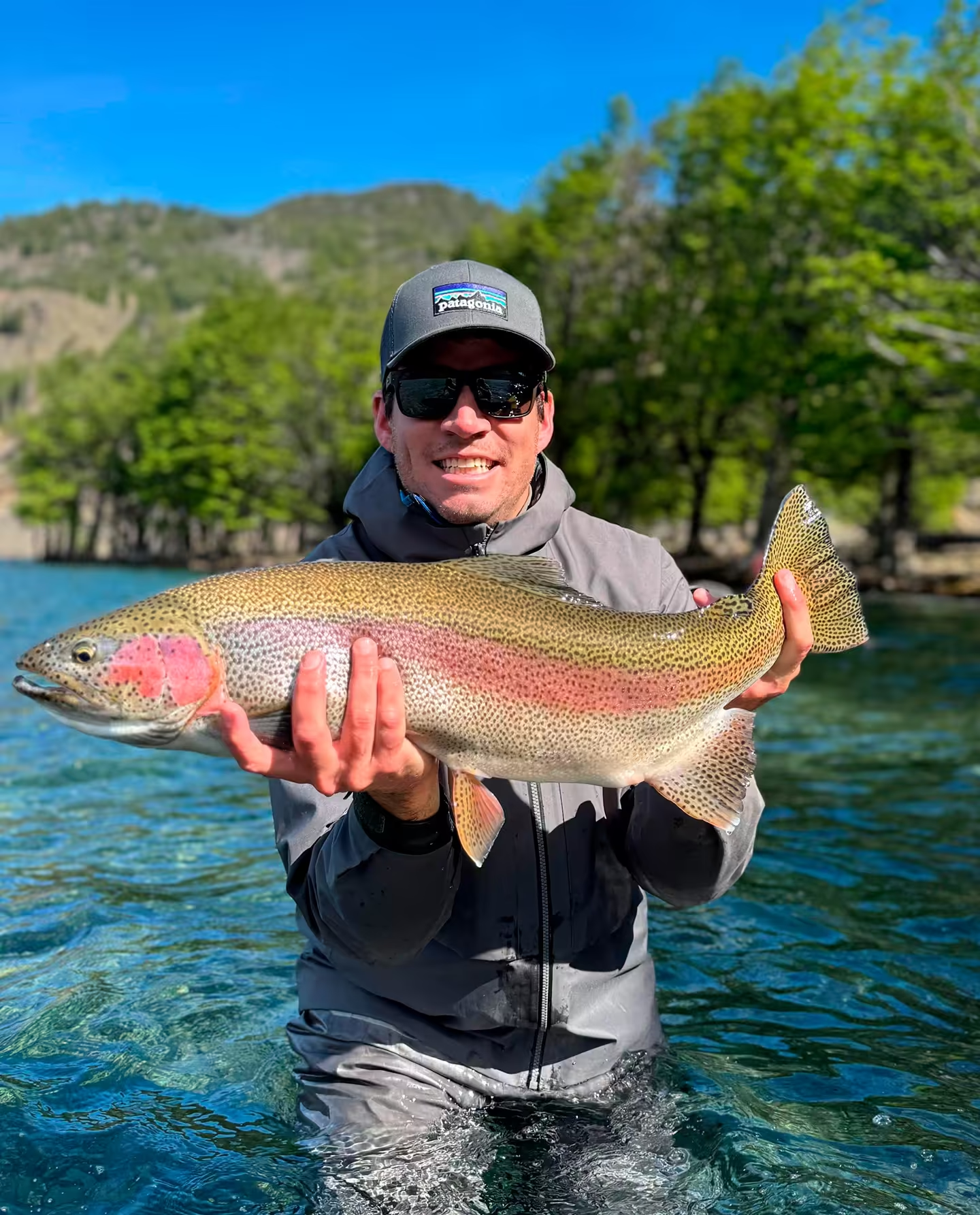
- One of our clients, wading a shore of rounded stones on a lake in southern Chilean Patagonia. Like every access point we fish, its name and location stay private.
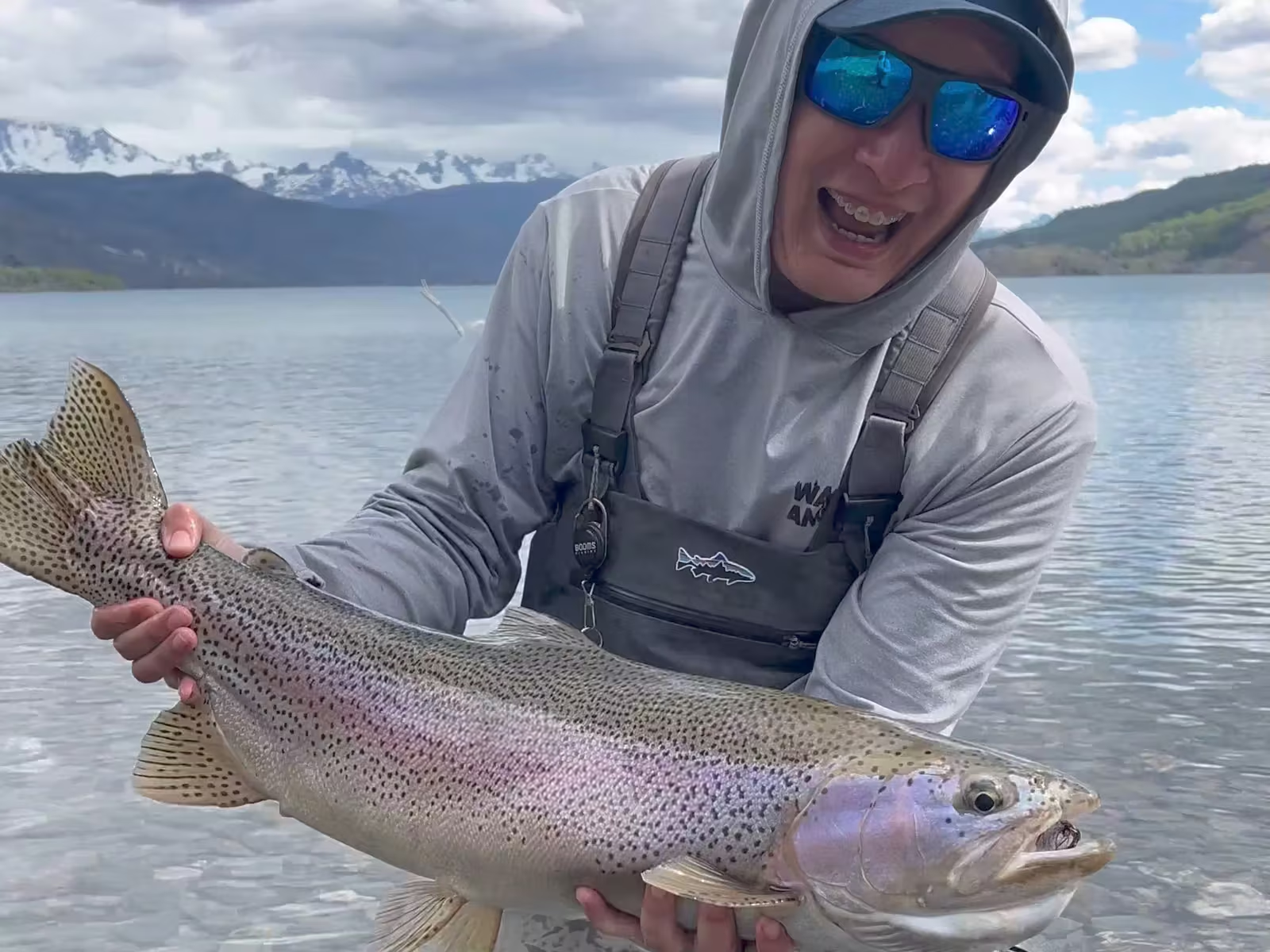
- Big rainbow trout over 30 inches (about 76 cm), at least two of them, in the afternoon.
- Fished with a nymph and a streamer, two tactics our season guide lists for Early Season water.
- The take came a few meters from the bank, where clear shallow water drops off into deep water.
- Every fish went back into the water after a brief photo.
What happened on October 15, 2026?
On October 15, 2026, the fourth day of our Early Season, one of our clients landed big rainbow trout over 30 inches (about 76 cm) from the shore of a lake in southern Chilean Patagonia, fishing a nymph and a streamer. It happened in the afternoon, and we know of at least two fish. Four days in, the season was already delivering.
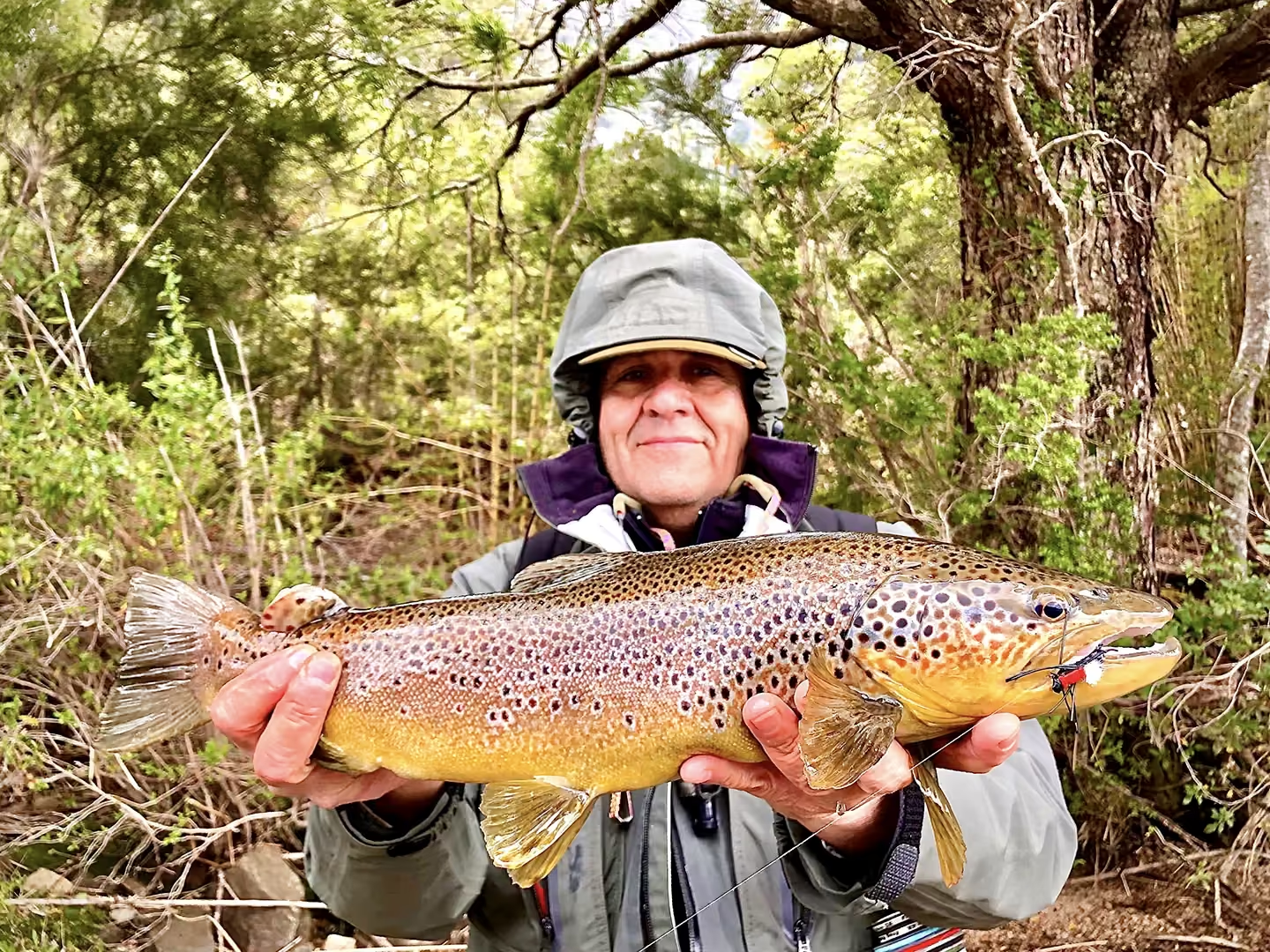
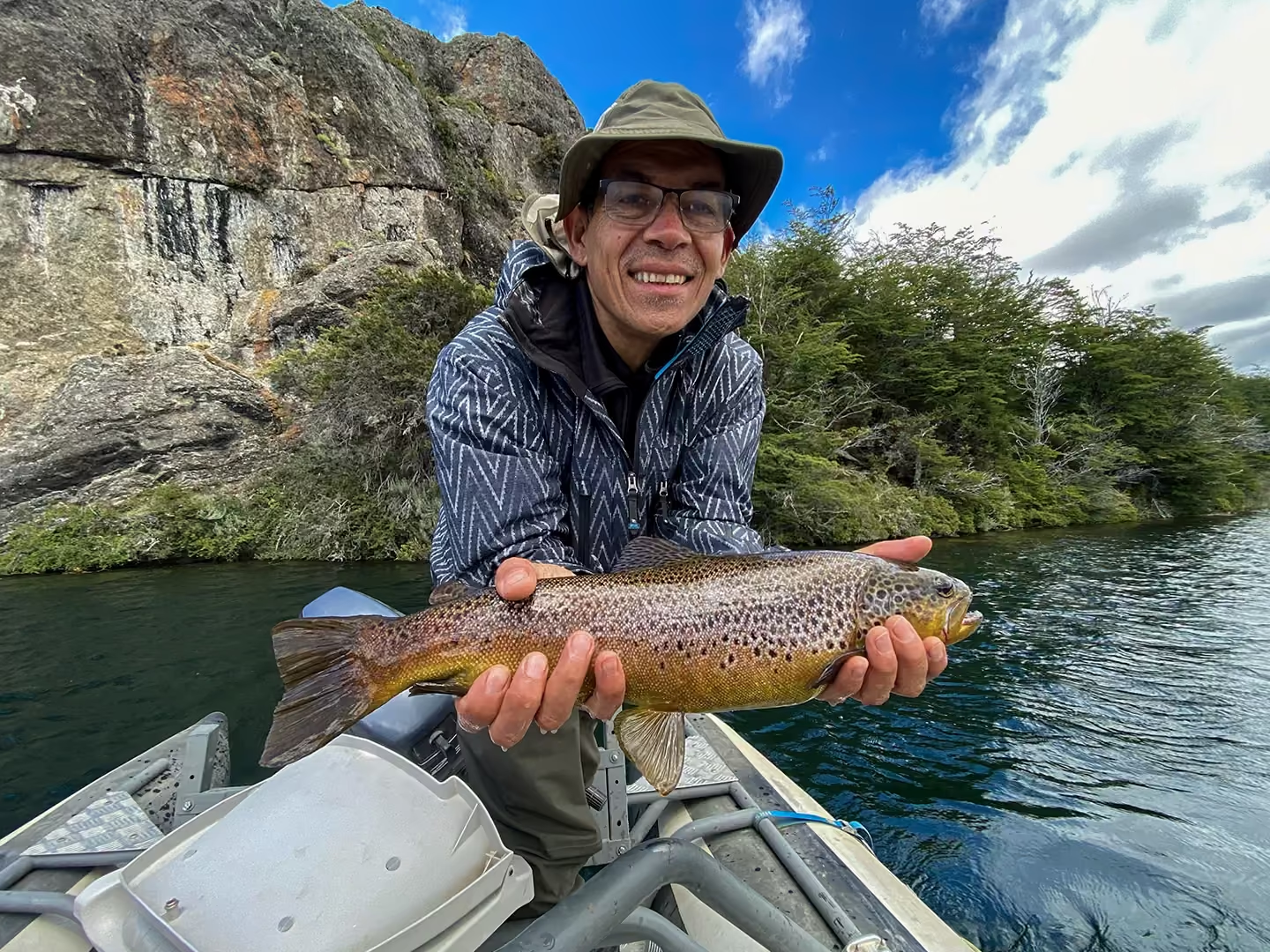
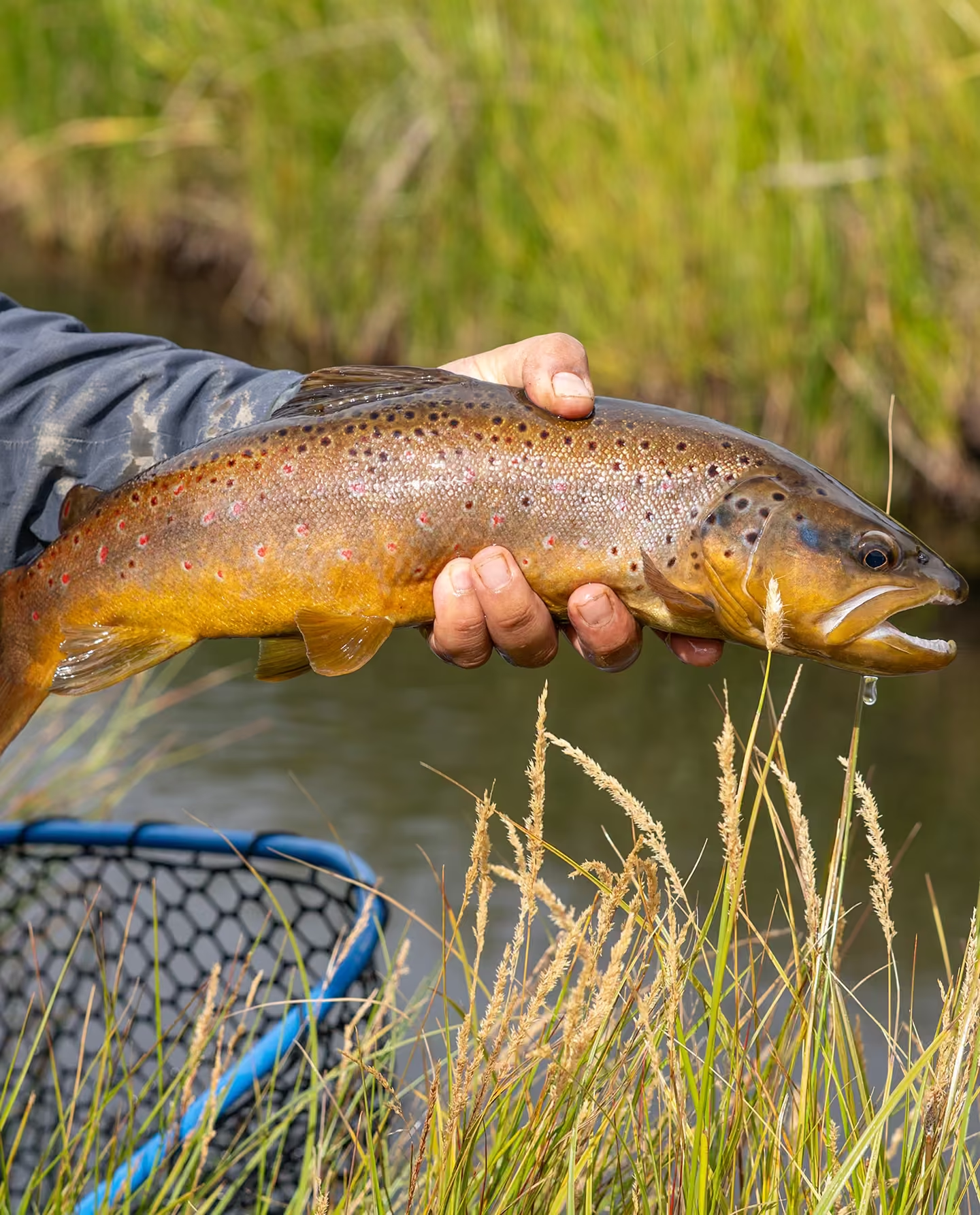
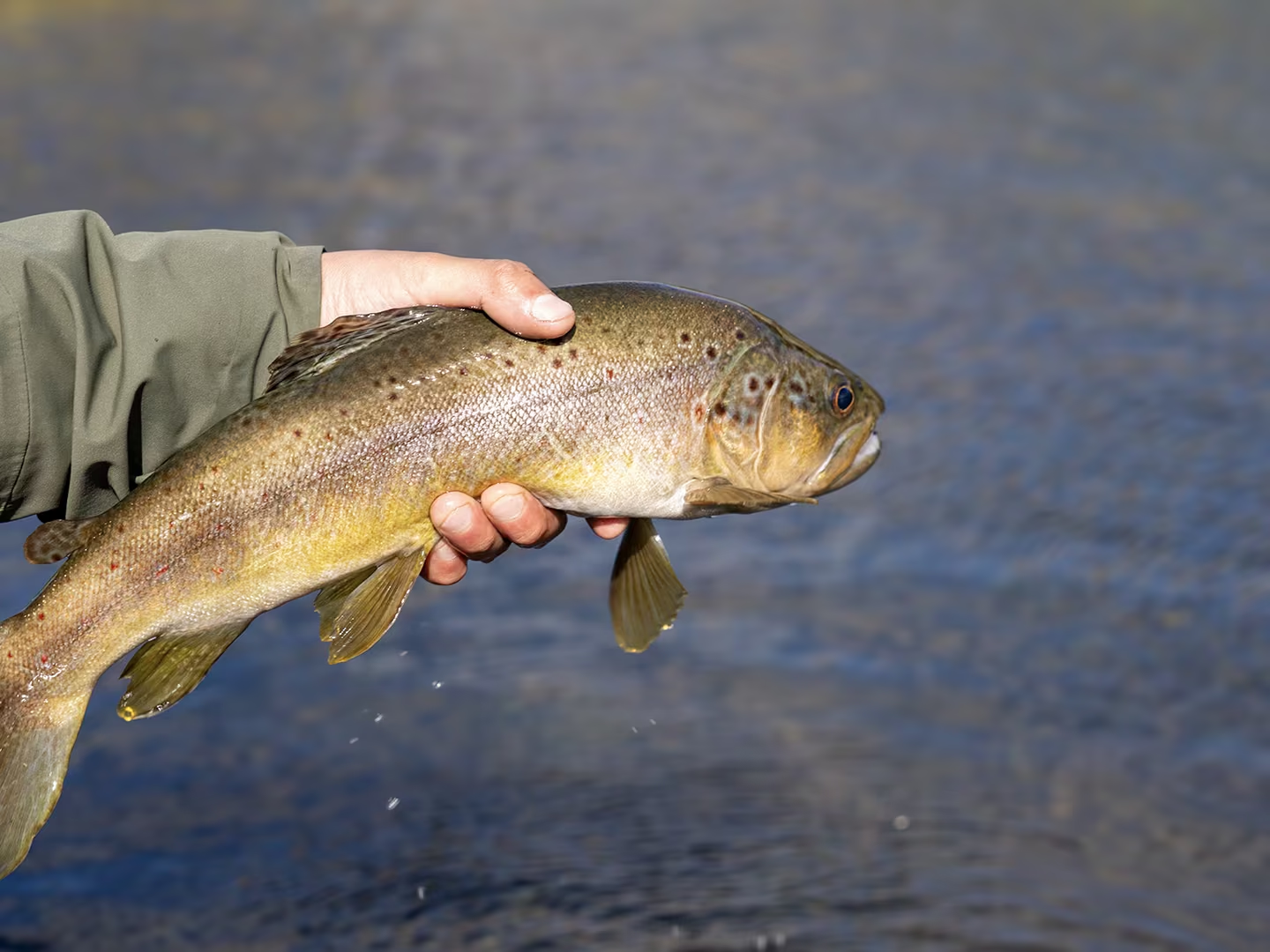
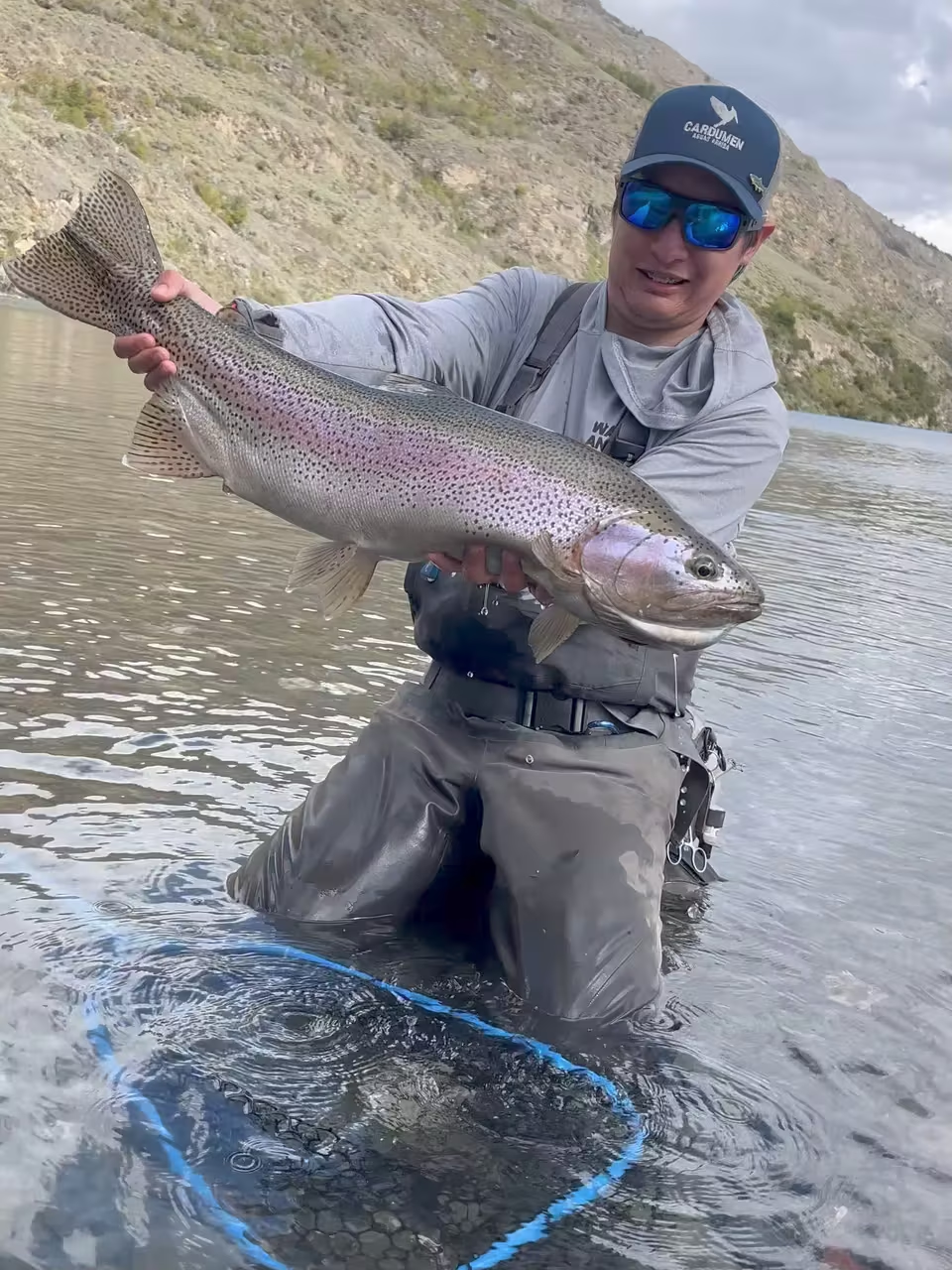
The photo at the top shows our client in the shallows, smiling behind polarized sunglasses and holding a huge rainbow level in front of them: a pink band along the flank, black spots, and snow-covered mountains behind the lake. A second large rainbow came to hand that afternoon, lifted while our client stood in the water up to the thighs, with a dry hillside behind.
“I’m shaking!”
“Look at this beast!”
What did the water look like?
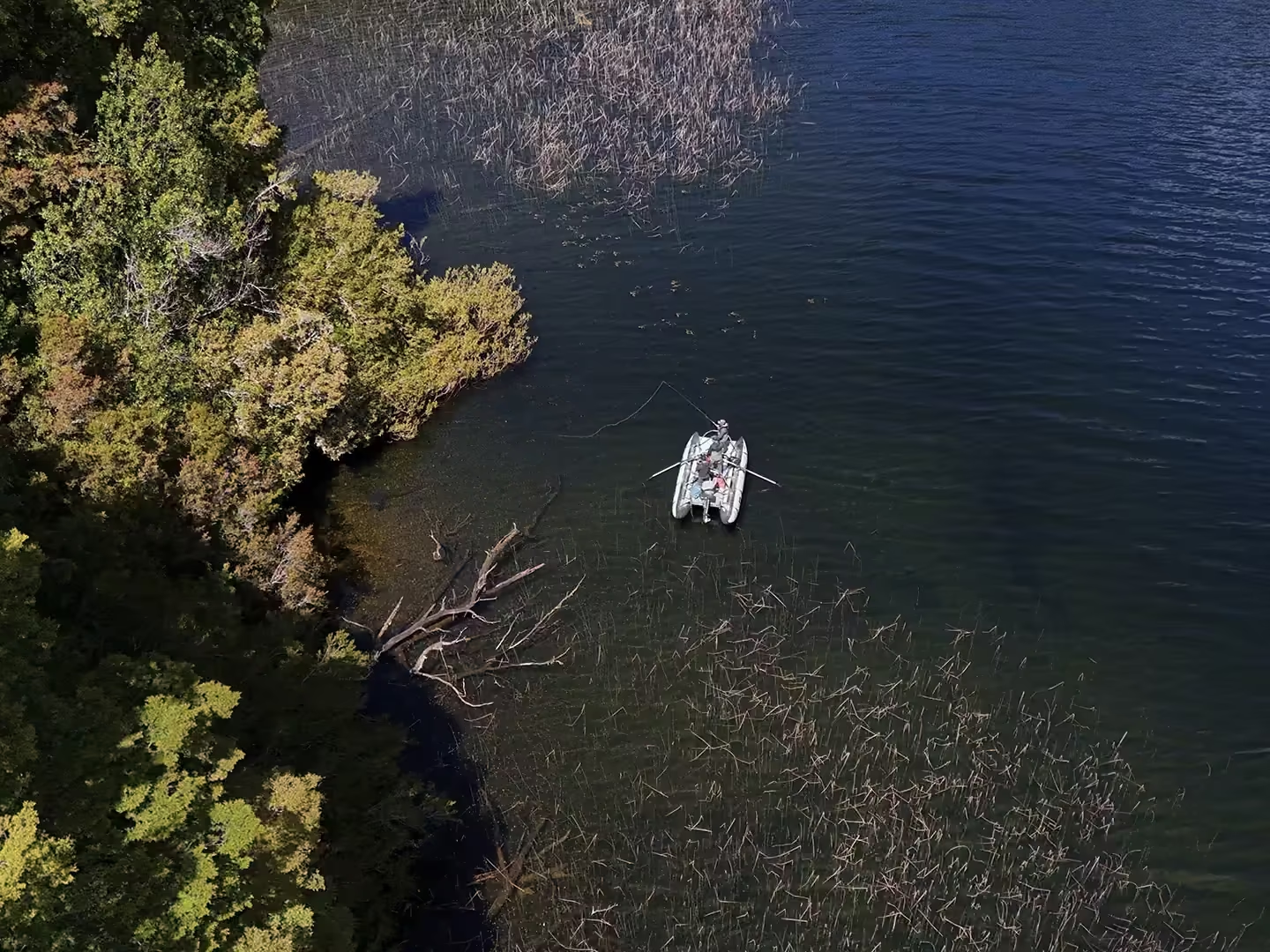
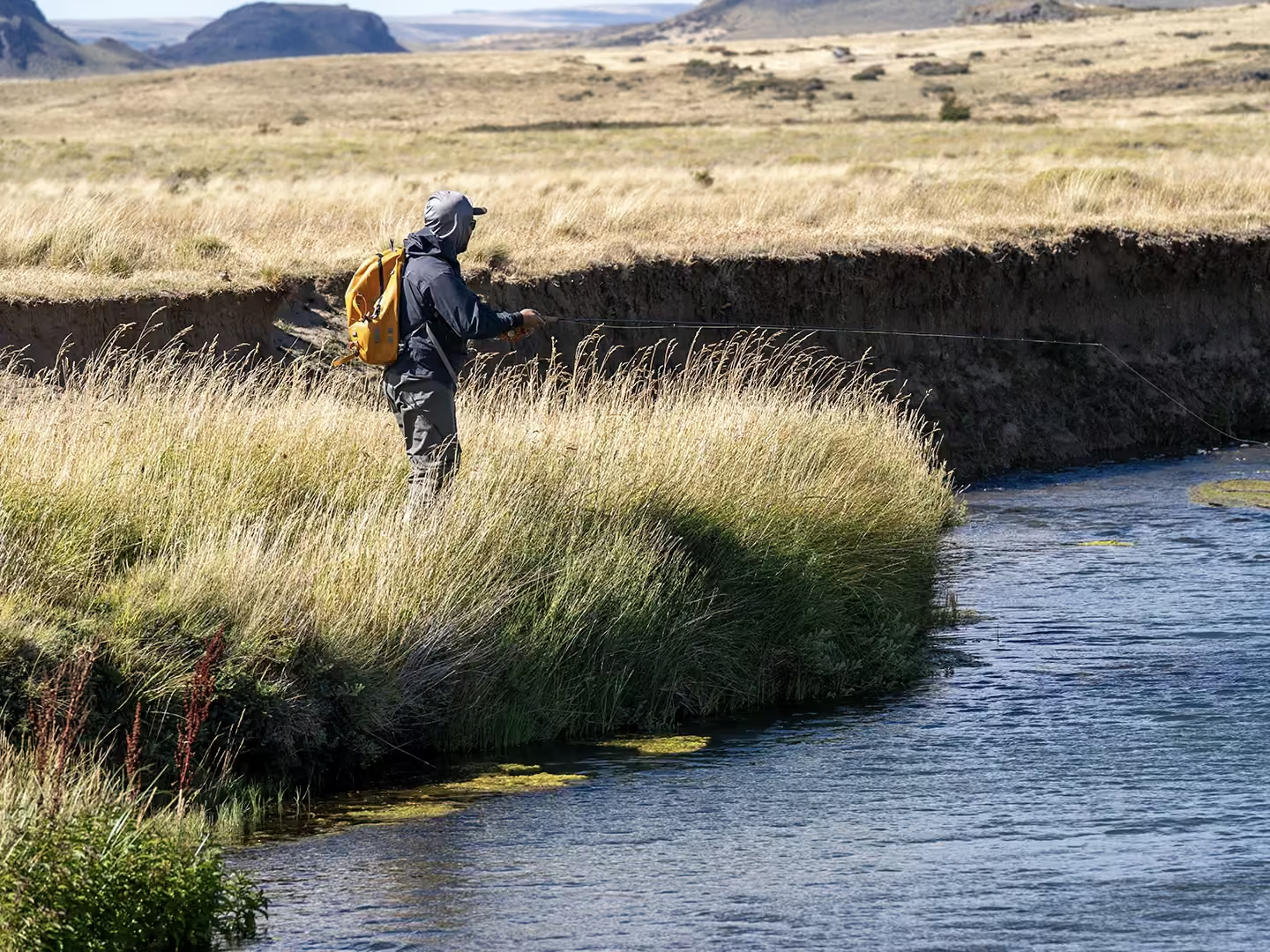
Very clear and stepped: a shelf of shallow water over rounded stones that drops suddenly into deep water, a few meters from the bank. The trout took right at that edge and fought on the surface in splashes. Our client waded in from that stony shore with a one-handed rod, wearing waders, a hooded sun shirt and polarized glasses, and landed the fish with a rubber net.
The sky was a mix of cloud and clear patches, snow still sat on the distant mountains, and the slope above the lake was dry. In water this clear you see the fish and the fish sees you; polarized lenses cut the glare so a trout shows before the cast. Our dry-fly sight-fishing story from the next day covers that side of the game.
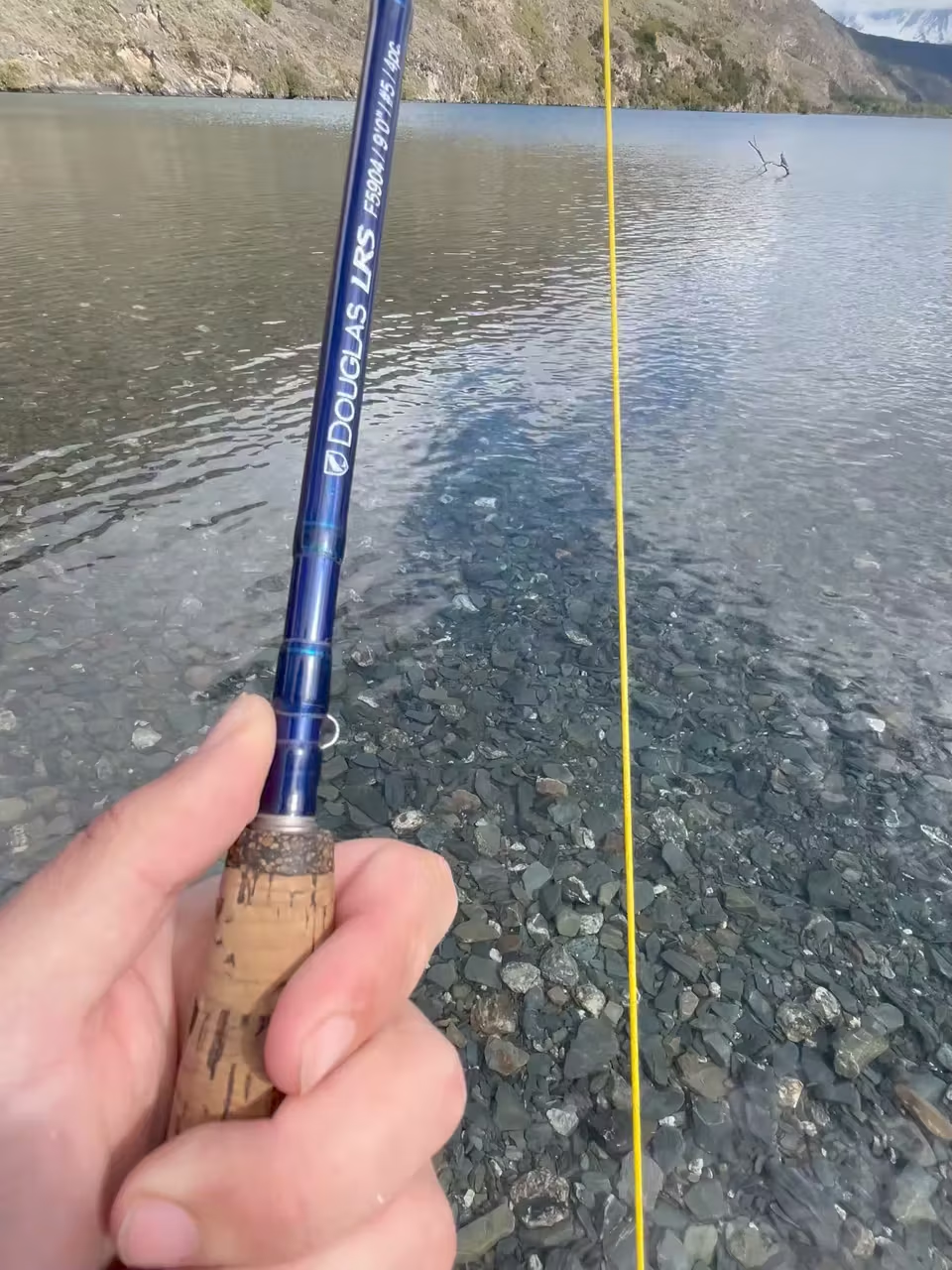
What the clip showsA first-person clip with no sound. Rings spread on the surface close to the shore. A rainbow trout then comes out of the water and splashes at the edge of the drop-off, fighting on the surface.
Why are big rainbows easier to find when the season opens?
Because rainbows here spawn in late winter and spring, so around the October 12 opening the adult fish are still grouped near inlets, outlets and drop-offs in clear water, feeding hard to recover, as our spring rainbow guide explains. Big fish that spend the summer scattered are, for a few weeks, together and hungry.
Sernapesca, Chile’s fisheries service, protects rainbow spawning areas in the Aysén Region from August into November, while the fish spawn. The spring thaw also muddies the rivers, while lakes and spring creeks stay clear: the clear water holds the fish and lets you see them.
We cannot say why these particular fish were at this particular edge. We can say that a shelf falling into deep water is the kind of structure the guide describes. There is no hatchery stocking in the waters we fish, and wild trout here eat and fight this hard because of a short growing season, plenty of food and very little angling pressure.
How do you fish a nymph and a streamer on a lake in Early Season?
You choose by the water of the day. After winter, Early Season water can be high and cold, and our season guide lists baitfish streamers, heavy nymphs and sinking lines as useful options, adjusted to the flow and the water chosen. This is the general approach, not a record of the rig used on October 15.
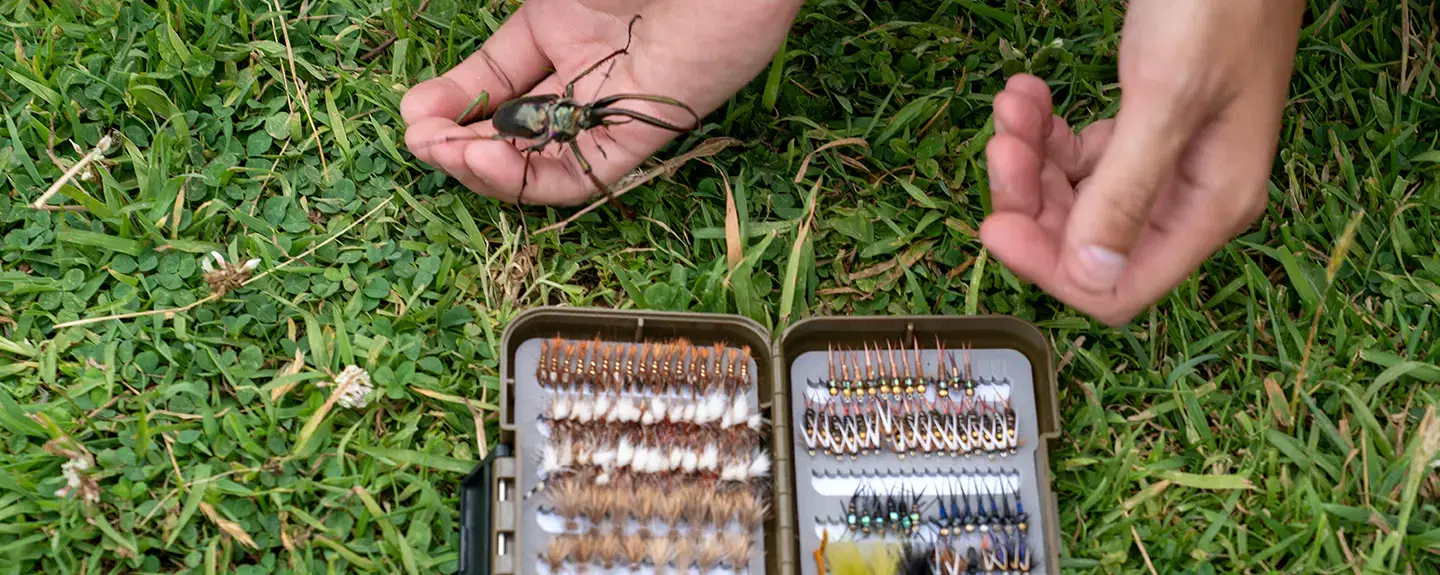
The nymph. Most of what a trout eats lives underwater: in the most complete diet study in Chilean Patagonia, 396 trout stomachs from the Palena River, adult trout had eaten mostly aquatic invertebrates, from mayflies and caddisflies to snails and crustaceans. With visible fish in clear water, the nymph becomes a sight-fishing tool: a long leader, a small nymph with little or no added weight, a soft cast ahead of the fish, and your eyes on the fish for the take. Patterns, hook sizes and depth are in our guide to the best nymphs for Coyhaique.
The streamer. A streamer imitates a small fish. The only fish found in those 396 stomachs was the native puye, usually under 8 cm (3 in), so a small, slim pattern matches it. Our packing list notes that a sink tip or an integrated sinking line helps on deeper streamer water, such as the far side of a drop-off.
On October 15 we did not note the pattern, size, line or leader, or which fly each fish took, so we will not guess. What the day does show is that both tactics were in play.
How do you release a rainbow this size?
Quickly, with the fish in the water or in the net almost the whole time. Each rainbow was photographed briefly and put back, and we release every trout. On lakes in the Aysén Region, Sernapesca also makes release mandatory from October 12 to November 9; the full rules are in our Aysén fishing regulations guide.
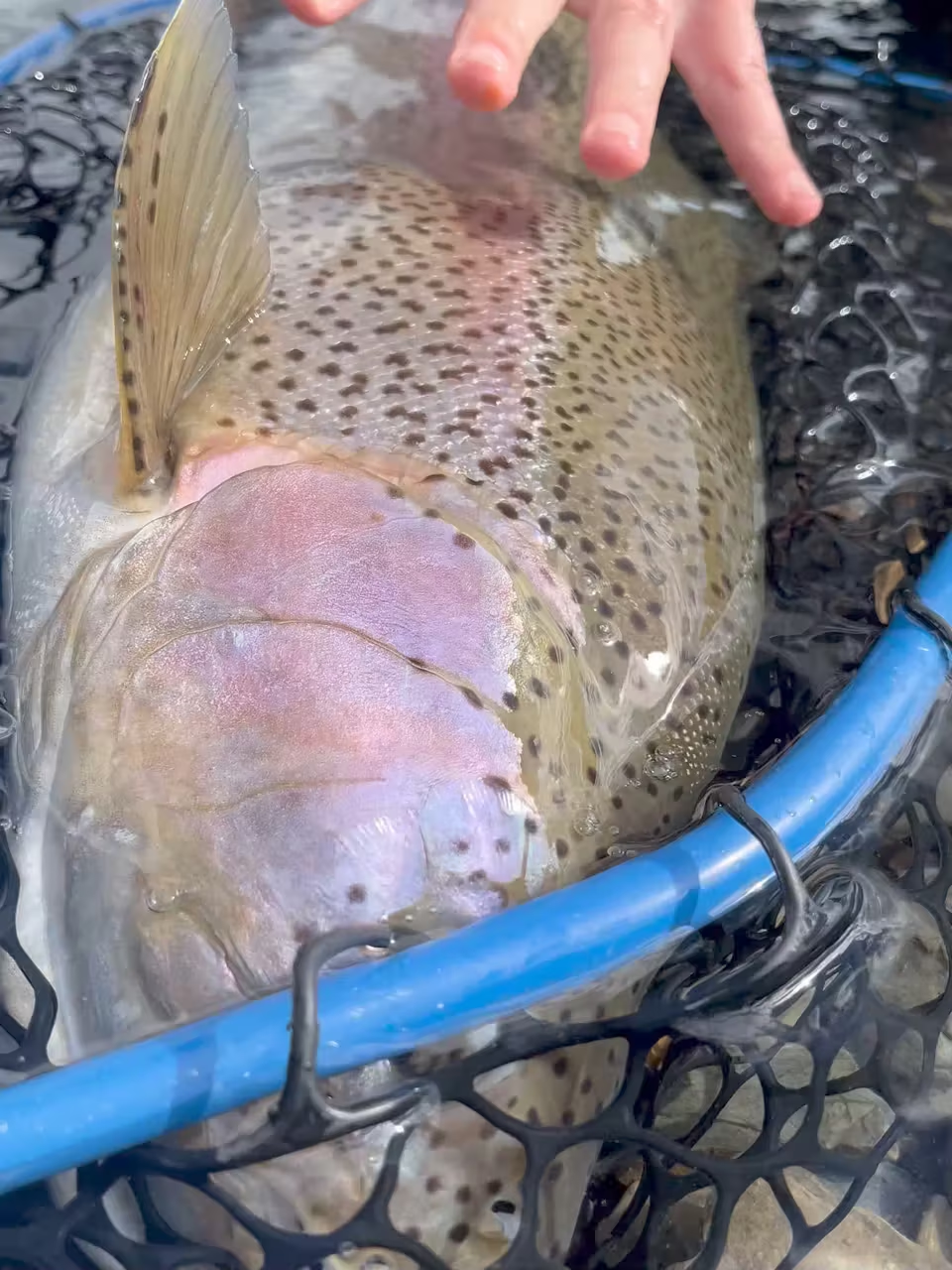
In the photo, two hands let go of a rainbow in clear water beside the net. In the clip, the fish is released next to the net and swims away. A wild fish this size has just fought hard, so we keep it wet and handle it fast: released in good shape, it spawns again and the population sustains itself.
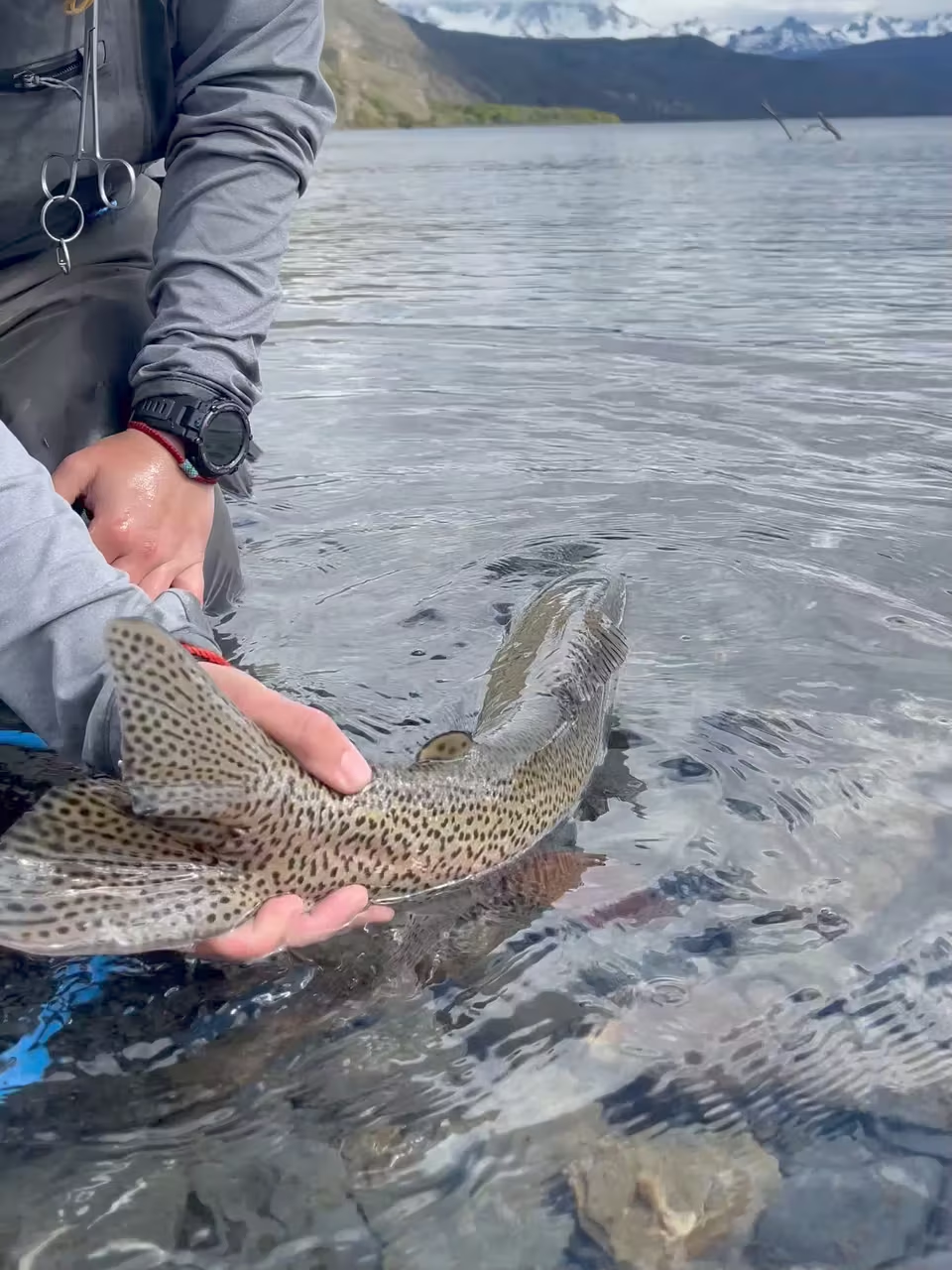
What the clip showsA clip with no sound. Hands release a large rainbow trout into clear water next to the landing net, and the fish swims away.
What does this day say about Early Season?
That Early Season can open big: rainbows over 30 inches on day four, in clear water, on the two tactics the season calls for. A photo is evidence of one day, not a promise, and our guide to Chile’s brown and rainbow trout explains why no honest guide can promise a minimum size.
It is not the only story of the week. The next day, October 16, another client fished dry flies on a clear lake, and that story shows that Early Season is not only nymphs and streamers. For how the seasons compare month by month, see the fishing season overview.