The short answer
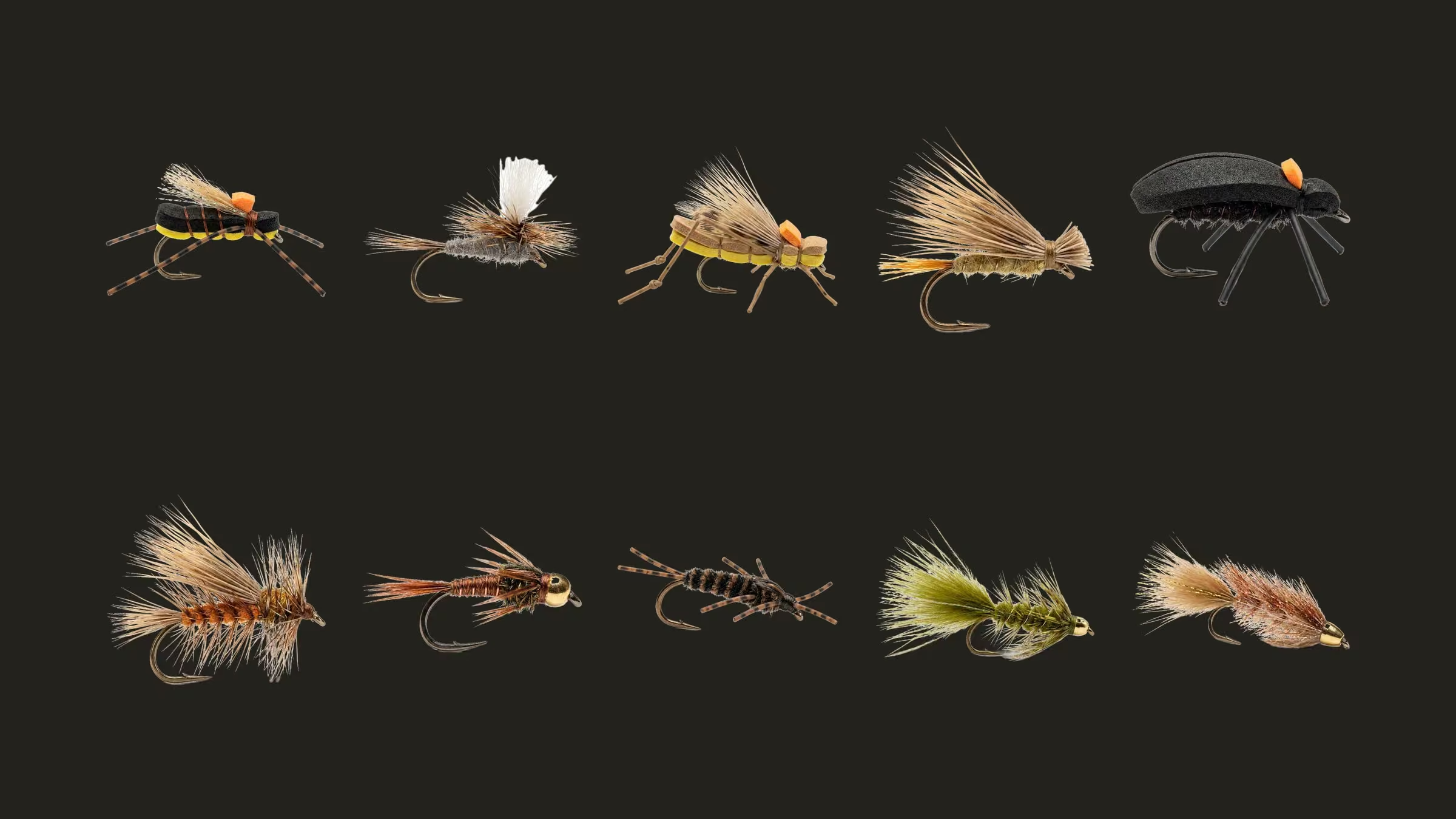
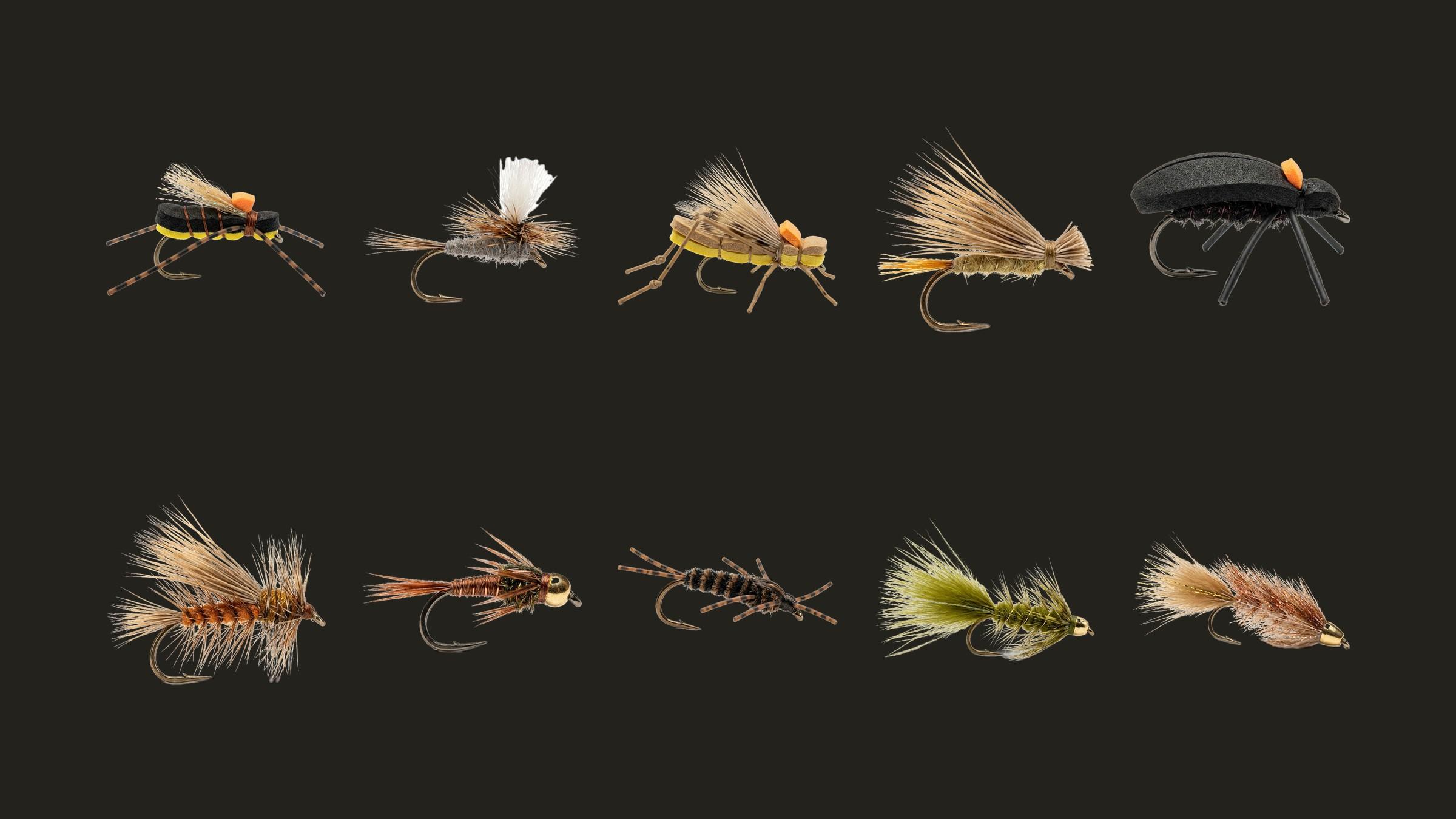
- Dry flies: the Fat Albert, the Parachute Adams, foam hoppers, the X-Caddis and the Stimulator.
- The local one: a big black foam beetle for the cantaria, from late December through February.
- Nymphs: the Beadhead Pheasant Tail and a rubber-leg stonefly nymph, all season.
- Streamers: the Woolly Bugger and the Sparkle Minnow, for the Early and the Close Season.
- Hook sizes run from 4 to 18; January and February are the strongest dry-fly months.
- Flies are included in both of our programs: bring your own only if you enjoy fishing them.
The 10 flies at a glance
Ten patterns cover most of the fishing around Coyhaique, for brown and rainbow trout, in rivers and lakes. The sizes are ranges: the hatch, the water and the light decide the exact fly on the day.
| Fly | Type | Imitates | Hook size | Best months |
|---|---|---|---|---|
| 1. Fat Albert | Dry fly | Stoneflies and hoppers | #6–12 | November–early March |
| 2. Parachute Adams | Dry fly | Mayflies | #12–18 | January–February |
| 3. Foam hopper | Dry fly | Grasshoppers | #6–10 | January–early March |
| 4. X-Caddis | Dry fly | Caddis | #14–16 | December–January |
| 5. Foam beetle (cantaria) | Dry fly | Cantaria stag beetle | #4–8 | Late December–February |
| 6. Stimulator | Dry fly | Stoneflies and terrestrials | #4–10 | Most of the season |
| 7. Beadhead Pheasant Tail | Nymph | Mayfly nymphs | #14–16 | All season |
| 8. Rubber-leg stonefly nymph | Nymph | Stonefly nymphs | #6–10, long shank | All season, best in Early Season |
| 9. Woolly Bugger | Streamer | Leeches and small fish | #4–8 | Early and Close Season |
| 10. Sparkle Minnow | Streamer | Small fish | #4–6 | Early and Close Season |
Sizes and months for the dry flies and nymphs are the same as in our dry-fly guide and nymph guide, based on the hatch chart of an Aysén guide (Heinonen, Kalakamu) and our own season notes. Peak months, not guarantees: water temperature, flow and wind move them.
The 10 flies, one by one
In the order a season around Coyhaique brings them to the water: dry flies first, then the nymphs and the streamers that fish below them.
1. Fat Albert
Dry fly · Size 6–12 · November–early March
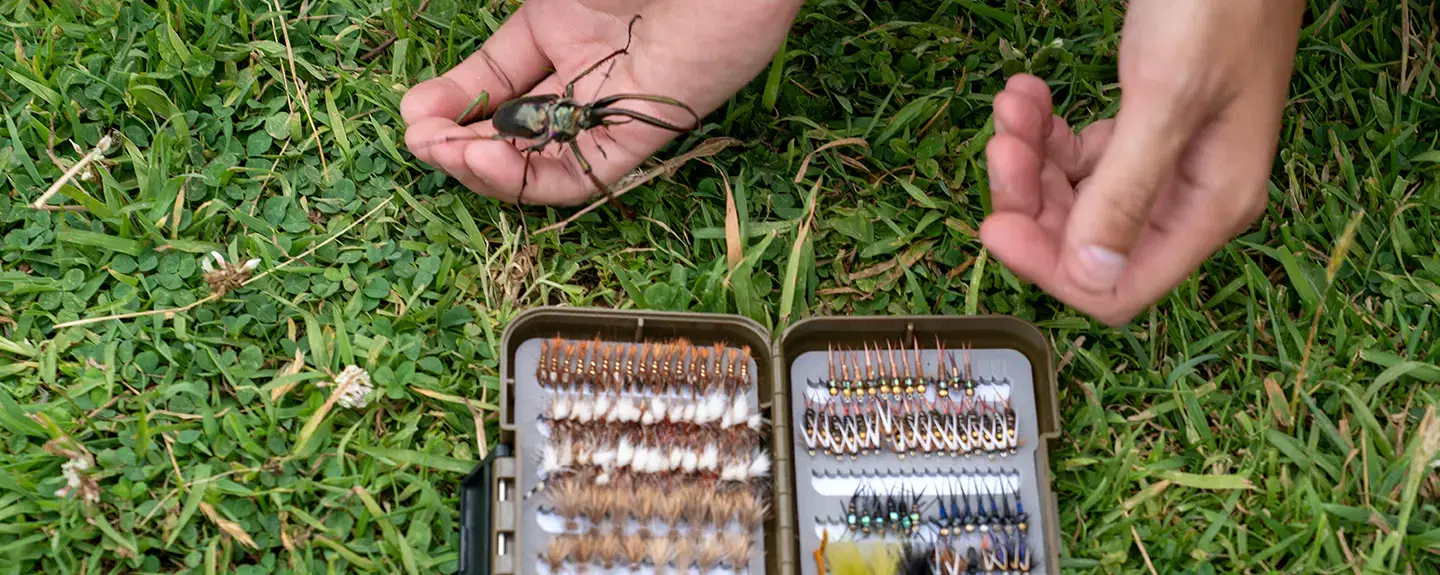
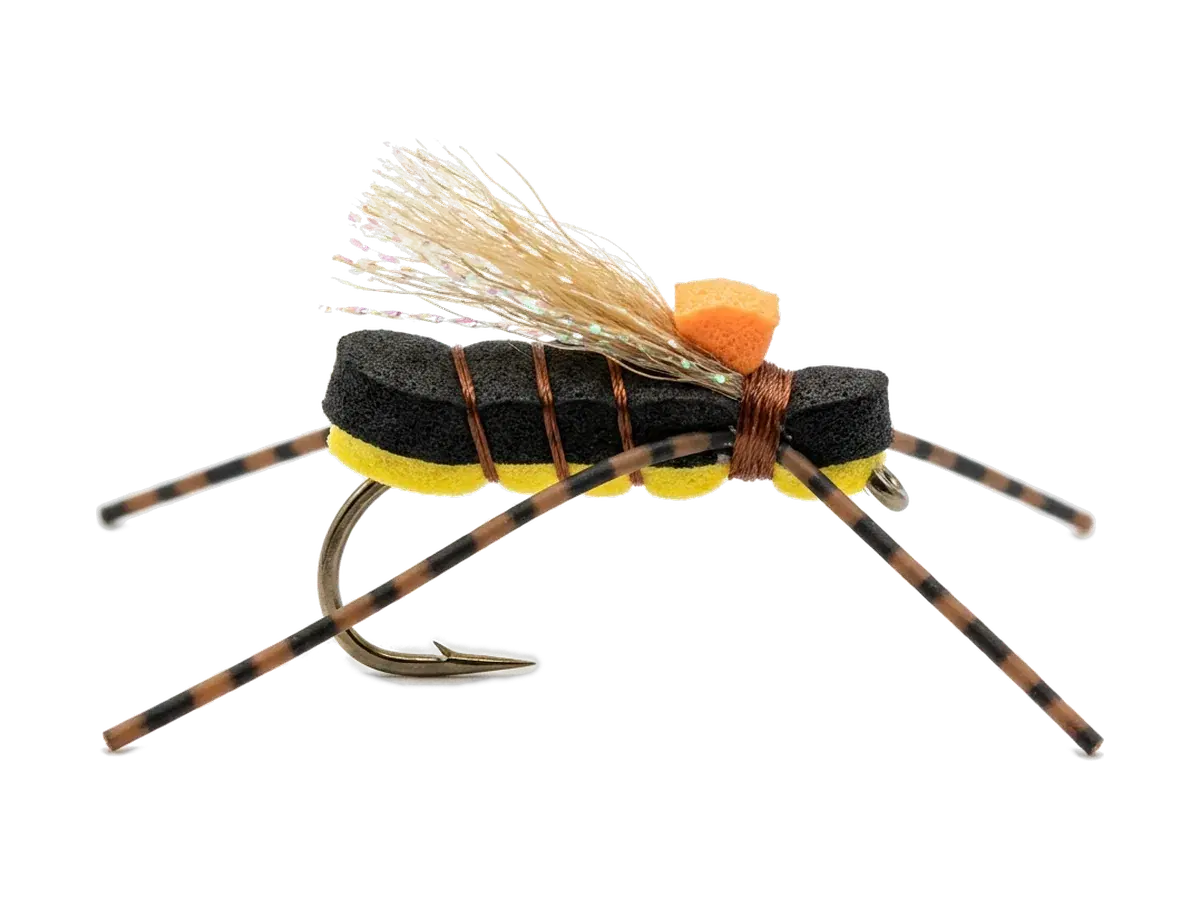
The foam workhorse of the Coyhaique box. It rides high on broken water, matches the big stoneflies of November and December and the hoppers of late summer, and is buoyant enough to hold a small beadhead nymph under it. Tan and black are the everyday colors; the black one doubles as a cantaria beetle.
2. Parachute Adams
Dry fly · Size 12–18 · January–February
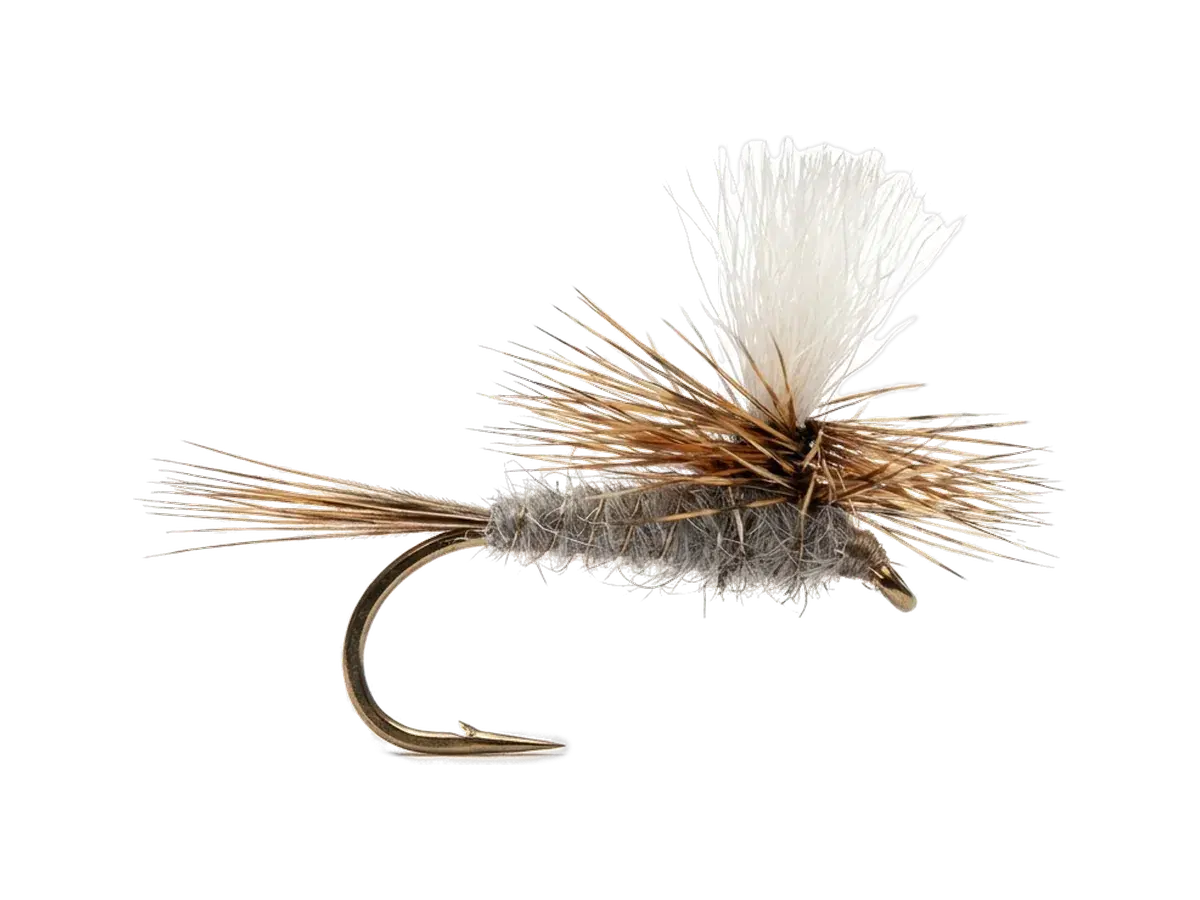
Chile has 57 described mayfly species, more than half of them found nowhere else, and the Parachute Adams covers most of them in gray. The white post is what sells it: you can follow a size 16 on a riffle when every other fly disappears.
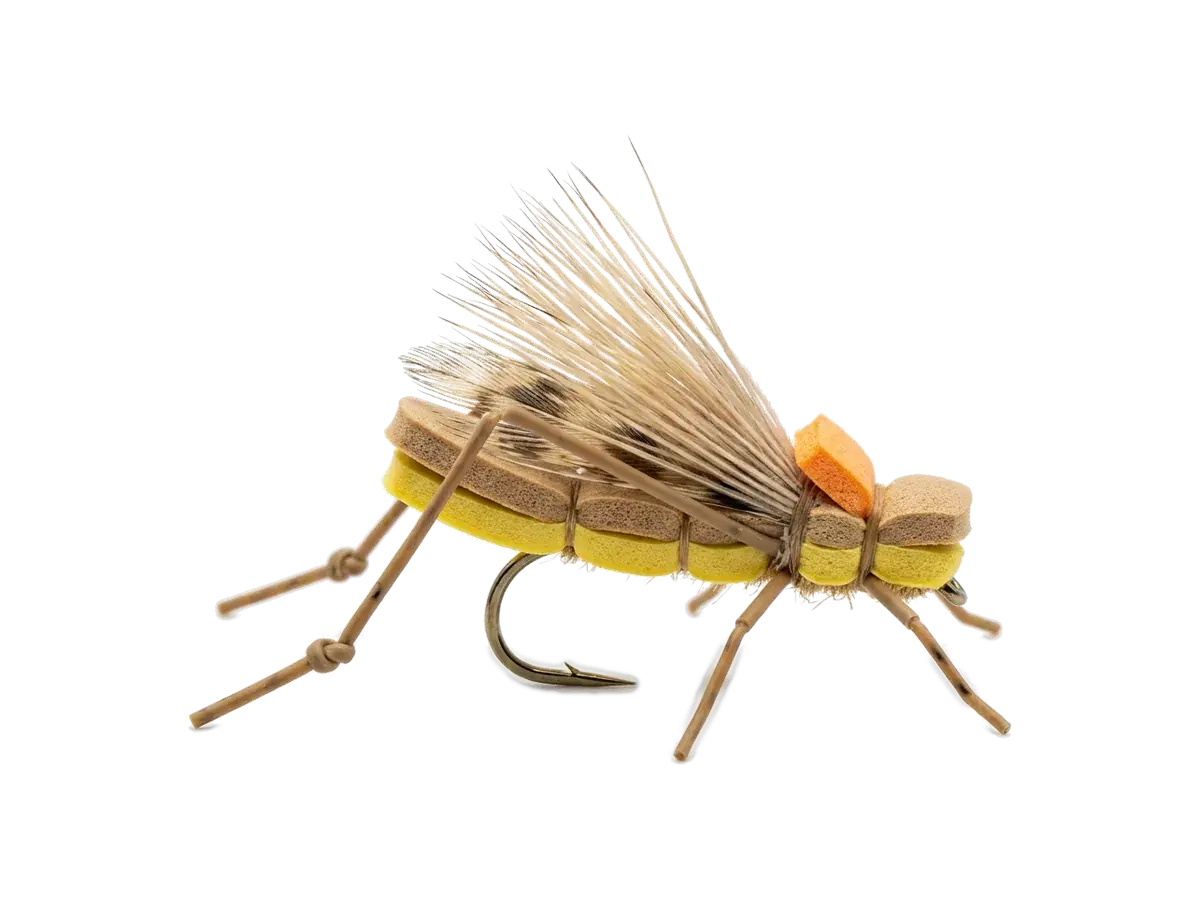
3. Foam hopper
Dry fly · Size 6–10 · January–early March
Grass to the waterline and an afternoon wind are the whole recipe. Tan, yellow or pink foam, landed with a plop tight to the bank and given a twitch, brings big brown trout up from undercut banks through the second half of summer.
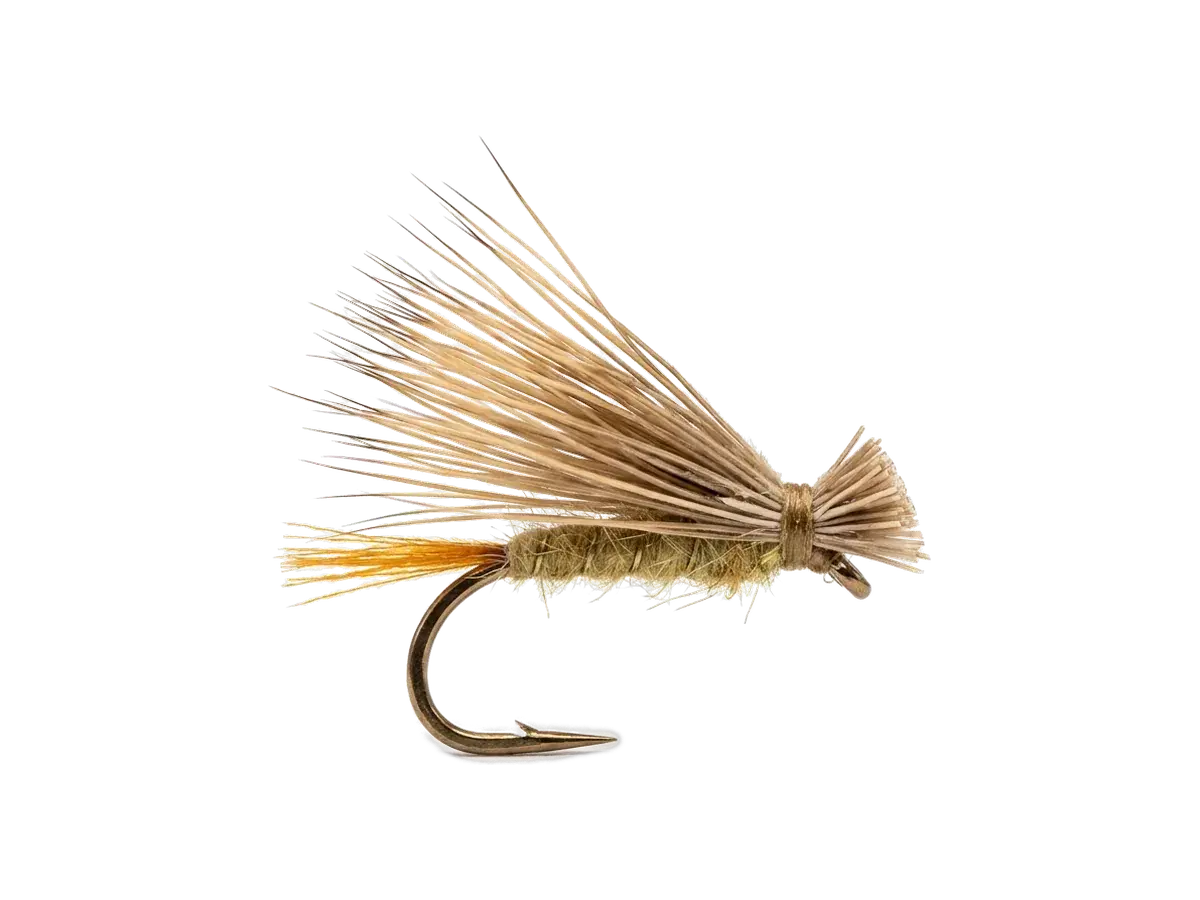
4. X-Caddis
Dry fly · Size 14–16 · December–January
In a diet study of brown trout in southern Chile, caddis were 21% of the prey items of adult fish, second only to snails. The best hatches come in December and January, often in the evening. An Aysén guide prefers this low-riding, hackle-less pattern to the classic Elk Hair Caddis.
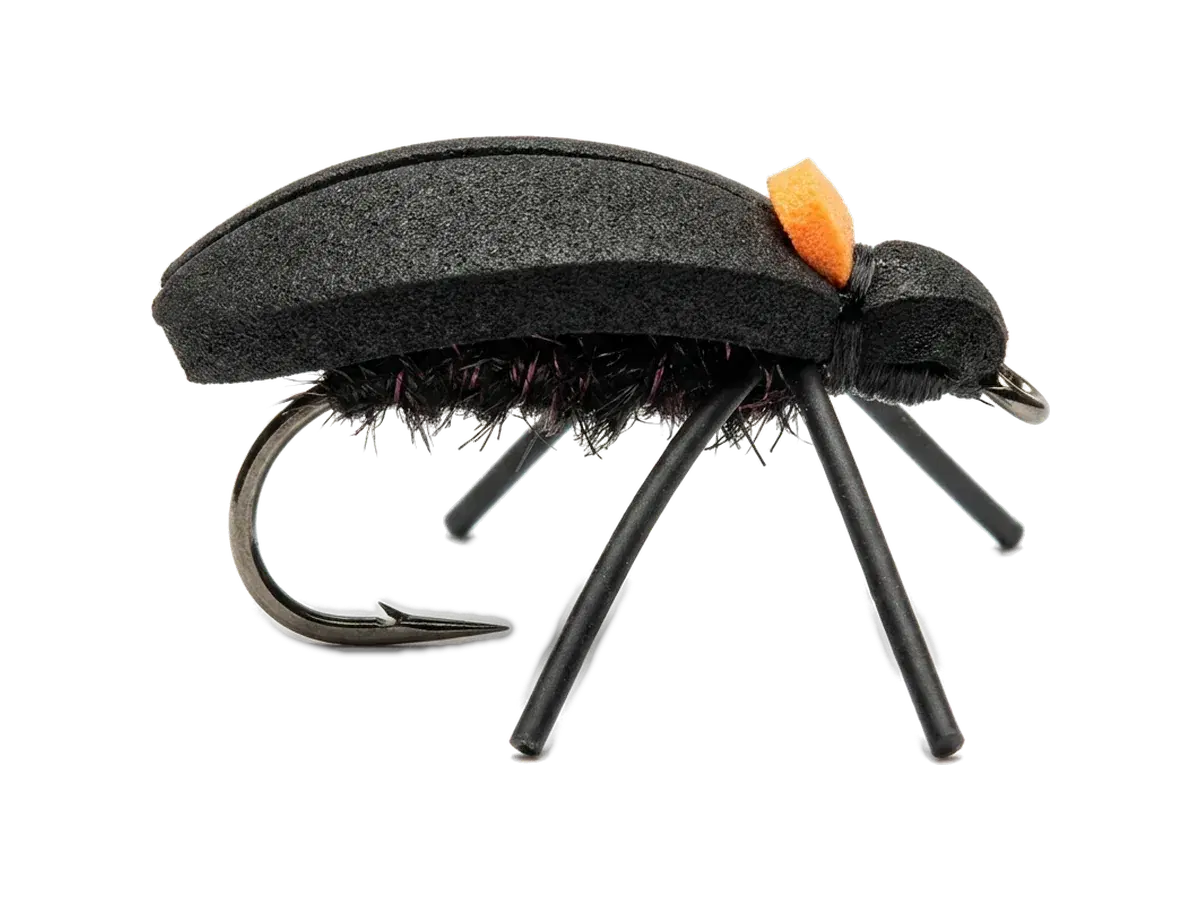
5. Foam beetle (cantaria)
Dry fly · Size 4–8 · Late December–February
The fly no other trout destination needs. The cantaria, Chiasognathus grantii, is a giant stag beetle of the southern beech forests; when warm, settled weather gets it flying and wind drops it on the water, trout treat it as the biggest surface meal of the year. Fish it black, brown or claret, with a deliberate plop near the trees.
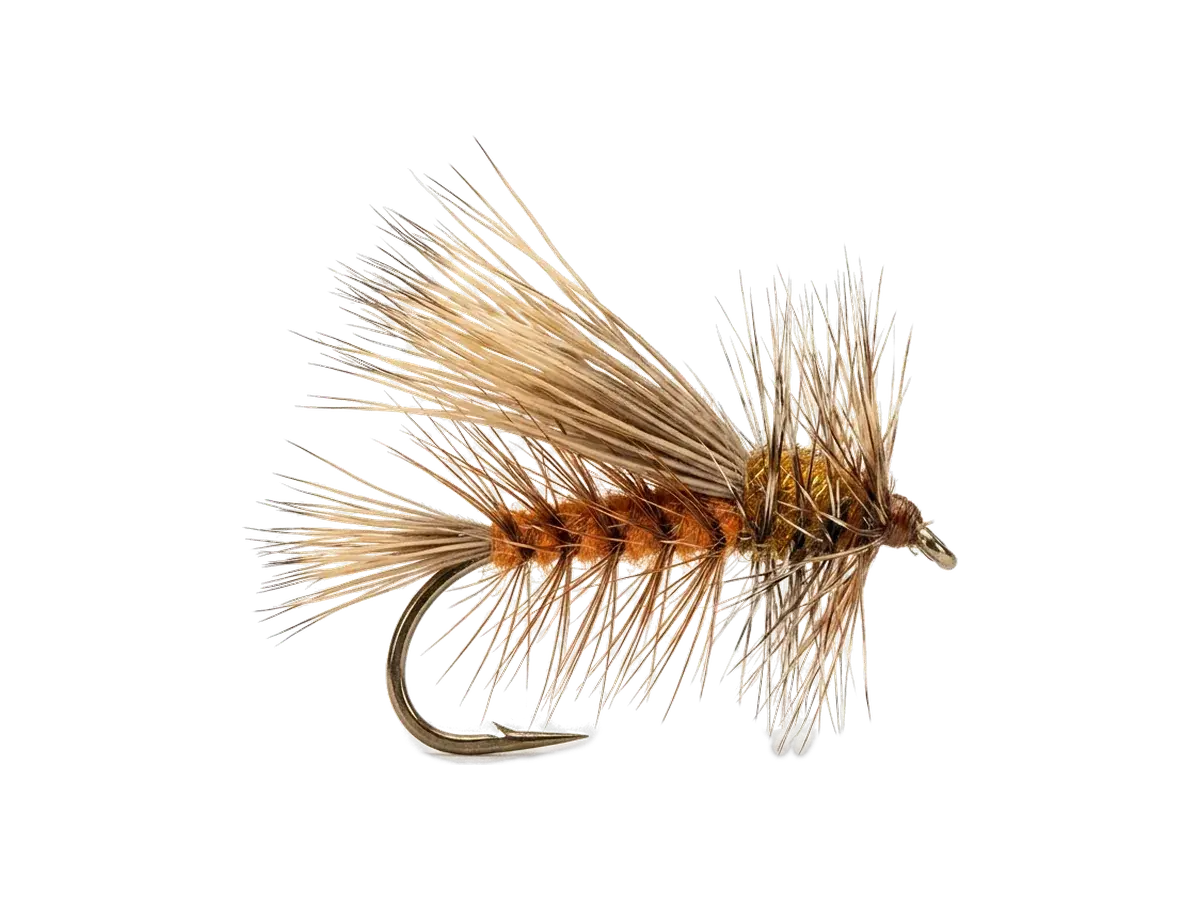
6. Stimulator
Dry fly · Size 4–10 · Most of the season
A bushy, high-floating attractor in orange, yellow or brown. An Aysén guide lists it among the terrestrials from size 4 to 10 and notes that a big Stimulator catches fish most of the season, even when nothing is hatching. It is the fly to search fast water with.
7. Beadhead Pheasant Tail
Nymph · Size 14–16 · All season
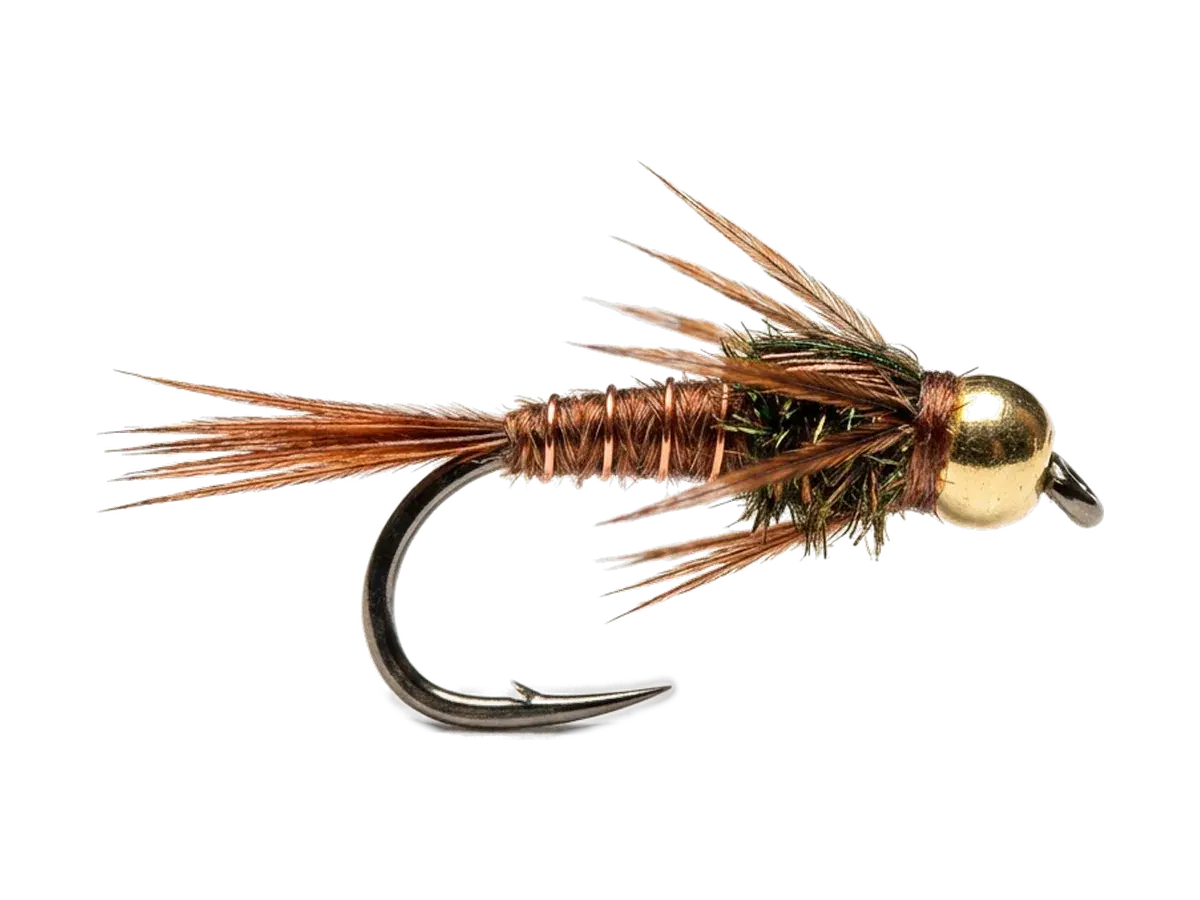
The default nymph when no trout are rising. Slim, natural and quick to sink, it is the fly guides hang under a Fat Albert or a hopper on a dry-dropper, so one cast covers the surface and the water just below it.
8. Rubber-leg stonefly nymph
Nymph · Size 6–10, long shank · All season, best in Early Season
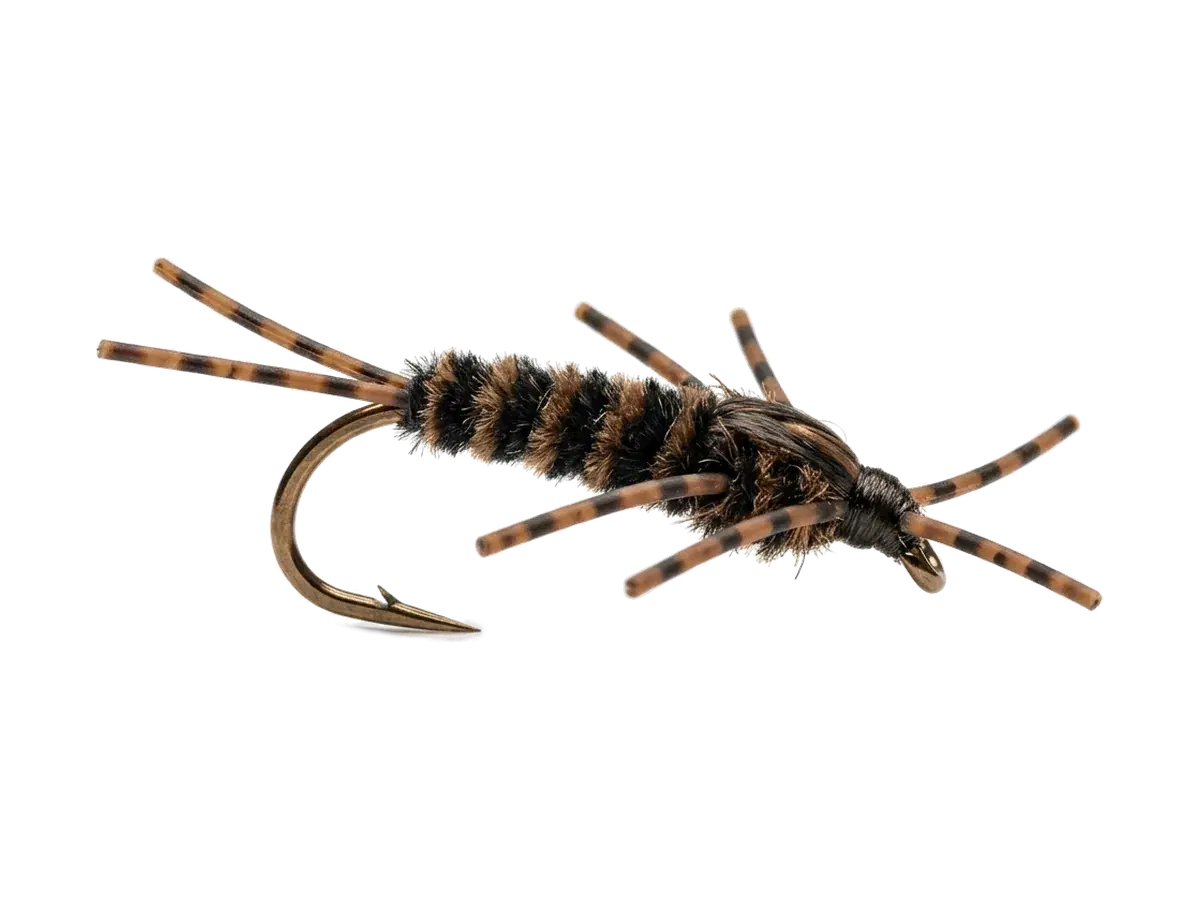
Big, heavy and buggy: a Pat's Rubber Legs, a Kaufmann Stone or a local Charly Stone. Fished on the bottom of the riffles, it is the answer to cold or high water in the Early Season, before the stoneflies hatch and the trout look up for the adults.
9. Woolly Bugger
Streamer · Size 4–8 · Early and Close Season
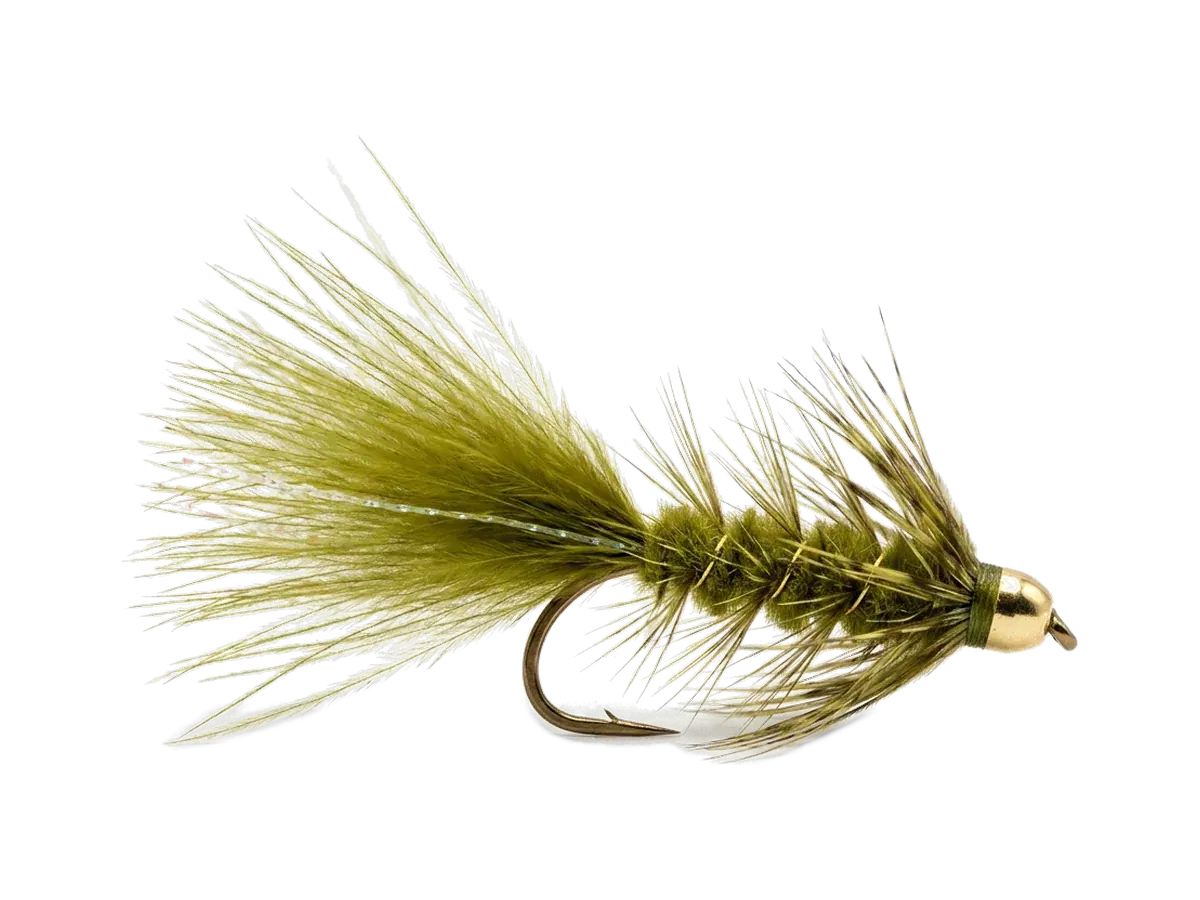
The streamer every trout angler already knows, in olive, brown or black, weighted or unweighted. Stripped or swung, it moves fish on cold, high-water days in the Early Season and again in autumn, when large brown trout turn aggressive.
10. Sparkle Minnow
Streamer · Size 4–6 · Early and Close Season
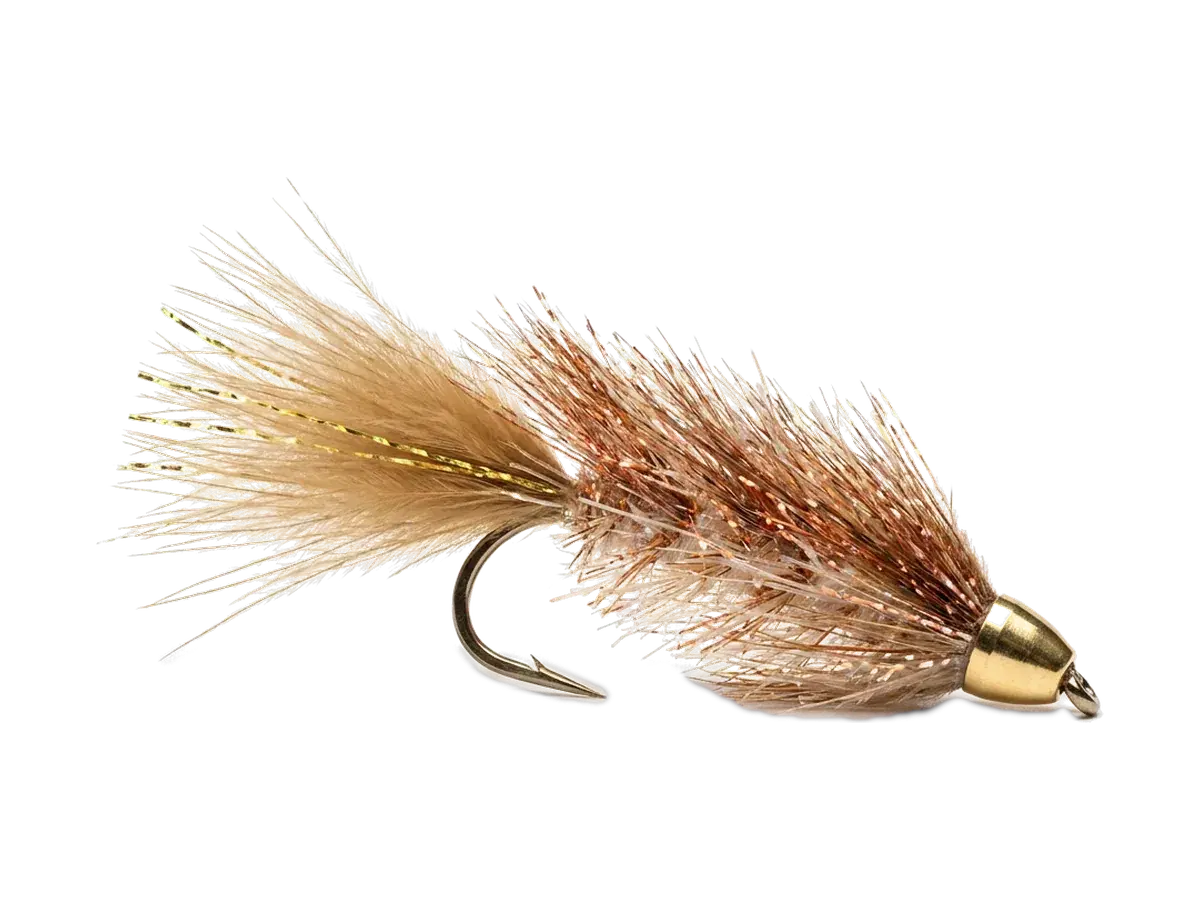
A flashy cone-head minnow on a sink-tip line for the bigger rivers. Trout here eat far fewer fish than anglers assume, so this is a fly for the largest brown trout of the year, the migratory fish of the Close Season, more than for the daily catch.
Which flies for each season?
Early Season
October 12 – November 30
Rubber-leg stonefly nymphs and Woolly Buggers when the water is cold or high; the Fat Albert, the Stimulator and other stonefly dries as the stonefly peak builds in November.
High Season
December 1 – end of February
The dry-fly months: the X-Caddis in the evenings of December and January, cantaria beetles from late December, the Parachute Adams in January and February and foam hoppers from January, with a Pheasant Tail as the dropper.
Close Season
March 1 – April 30
Hoppers and Fat Alberts carry into early March. After that the box turns to streamers, the Woolly Bugger and the Sparkle Minnow, for large migratory brown trout.
Dry fly, nymph or streamer?
Start on top. Around Coyhaique the dry fly is the reason most anglers come, and from December to February it is usually the right call. When nothing is rising, keep the dry and add a nymph: a Pheasant Tail on a short dropper under a Fat Albert or a hopper fishes the surface and the water just below it on the same cast. When the water is cold, high or colored, as it often is early in the Early Season, or when you are after the largest brown trout of autumn, go under with a rubber-leg stonefly nymph or a streamer. How to read which of the three the trout want is in how to read a trout rise.
Do you need to bring your own flies?
No. Flies are included in both of our programs, and your guide picks them for the day. If you enjoy fishing your own patterns, bring them: foam hoppers and big beetles earn their box space in summer. The full list of dry flies is in our dry-fly guide, the subsurface box in our nymph guide, and the rest of the kit in our packing list.