The short answer
- The Río Cochrane is a short, lake-fed river in the far south of the Aysén Region, Chilean Patagonia, about 18 km long.
- No official ranking of technical rivers exists. Its reputation comes from the guides and anglers who fish it.
- What makes it hard: gin-clear, slow water, weed beds, deep banks, deadfall and trout that see you first.
- It holds brown and rainbow trout. Without a hatch, a fish or two can be a good day.
- Small flies on long leaders: mayflies, caddis, terrestrials, soft hackles, small nymphs and a small streamer.
- Season in Aysén: 12 October to 6 May. Cochrane is about 330 km south of Coyhaique on the Carretera Austral.
Where is the Río Cochrane?
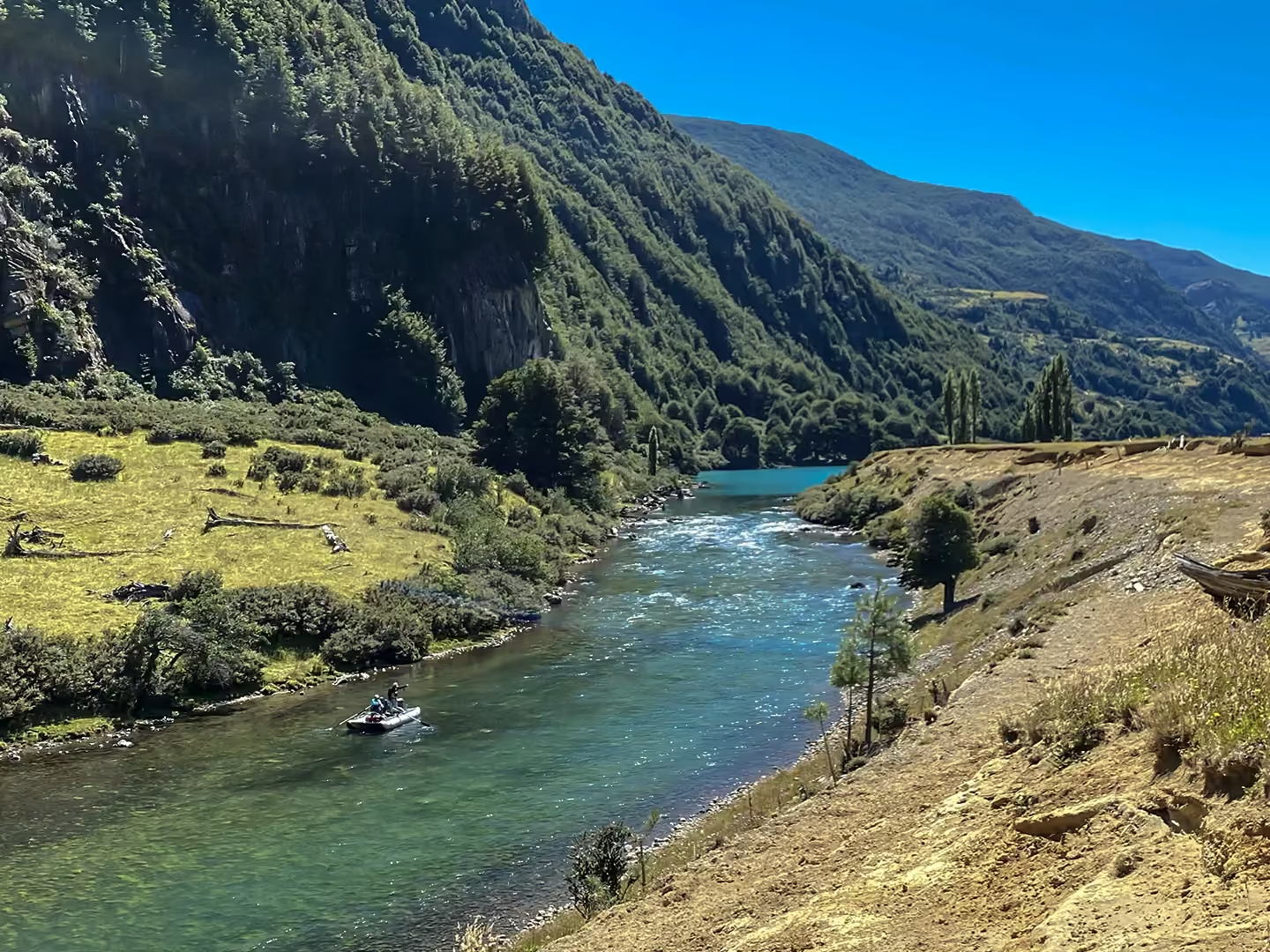
The Río Cochrane drains Lago Cochrane, a deep glacial lake shared with Argentina, where it is called Pueyrredón. The river runs about 18 km past the town of Cochrane and joins the Río Baker. A few kilometers from town, the Tamango sector of Patagonia National Park (Parque Nacional Patagonia), a conservation area for the huemul deer, looks out over the river.
Cochrane is a small town of about 3,500 people at the southern end of the Aysén Region, about 330 km south of Coyhaique on the Carretera Austral. It has fuel, an ATM and a CONAF office, the agency that runs Chile's national parks.
Why is the Río Cochrane so clear?
Because it starts in a lake. Lago Cochrane works as a settling basin: sediment drops out before the water reaches the outlet, so the river leaves the lake clear. Guides who fish it say it looks like a spring creek even though it is fed by distant waters, and they call it a summer creek.
That clarity is the attraction and the problem. You can watch a trout from a long way off, judge its size and see it turn to the fly. The trout can see just as well: a rod flash, a shadow on the bank or a leader landing hard. No official visibility figure is published; descriptions use words like gin-clear, crystal clear and crystalline.
What makes the Río Cochrane so technical?
No river can be proven the most technical in the world, because no one ranks them. What the Cochrane has is every trait that makes fly fishing hard, in the same water. Outfitters who guide it call it a technical fishery that demands a high level of skill, and one compares its sight fishing to New Zealand's best.
Gin-clear, slow water
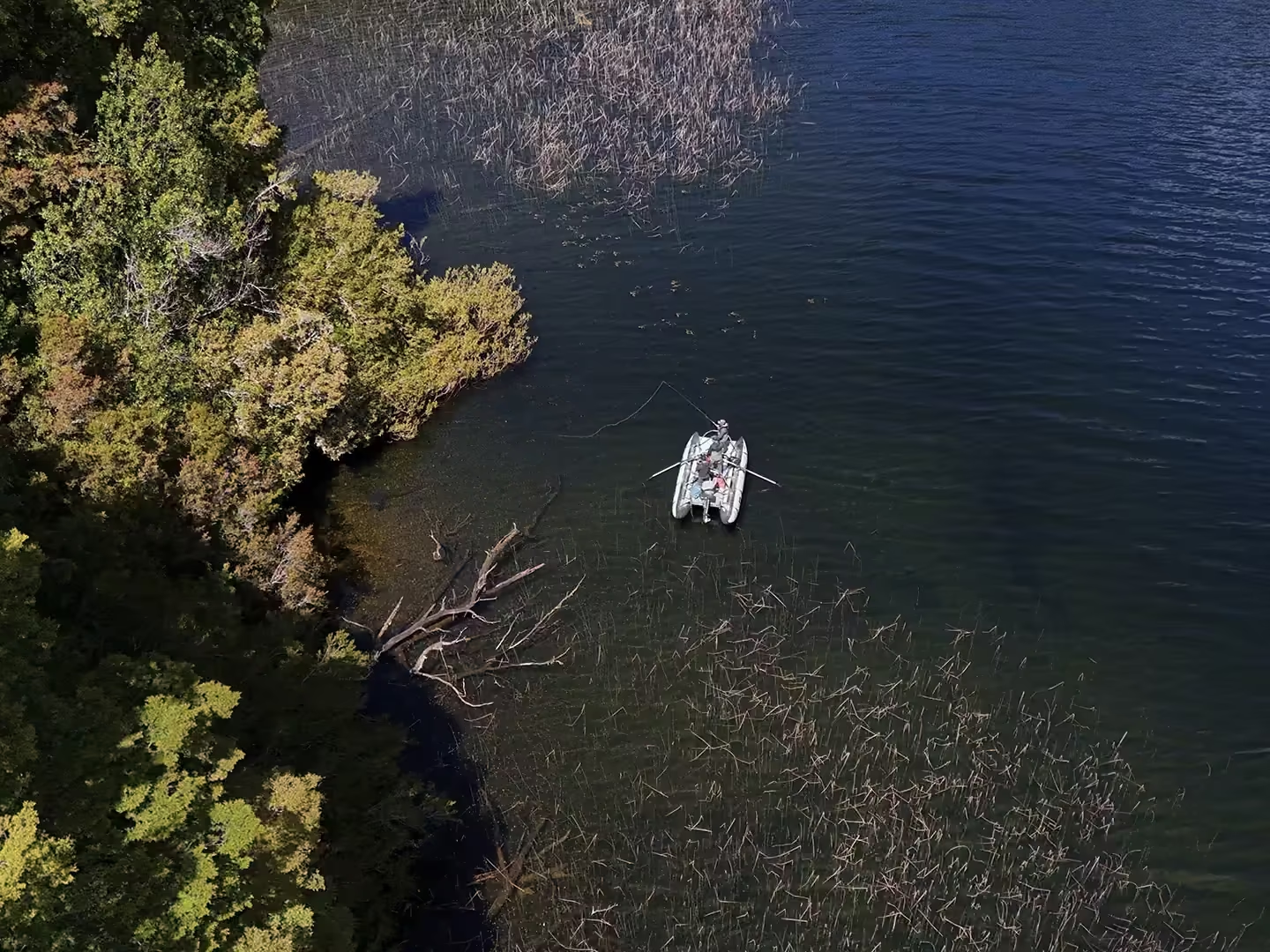
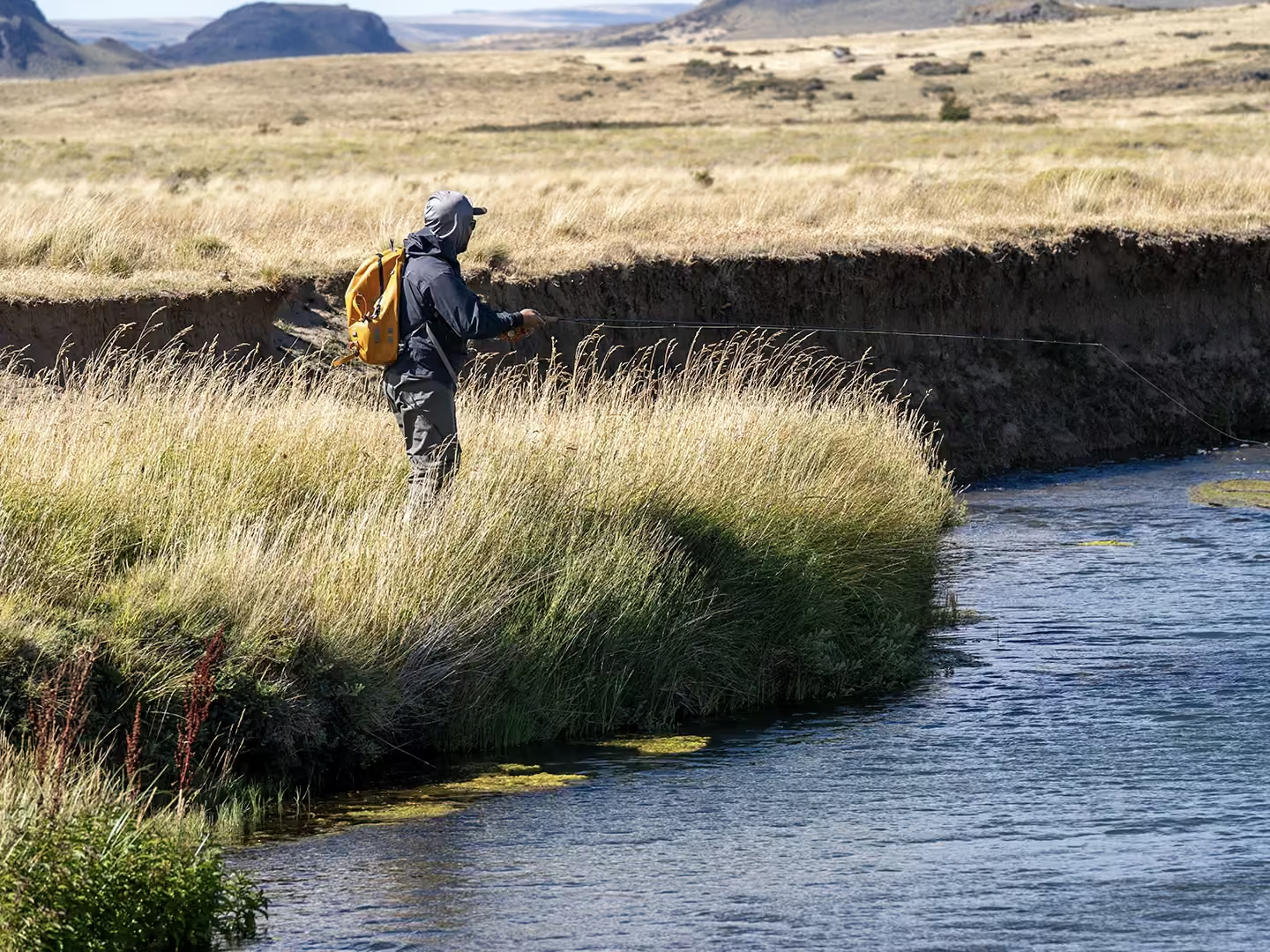
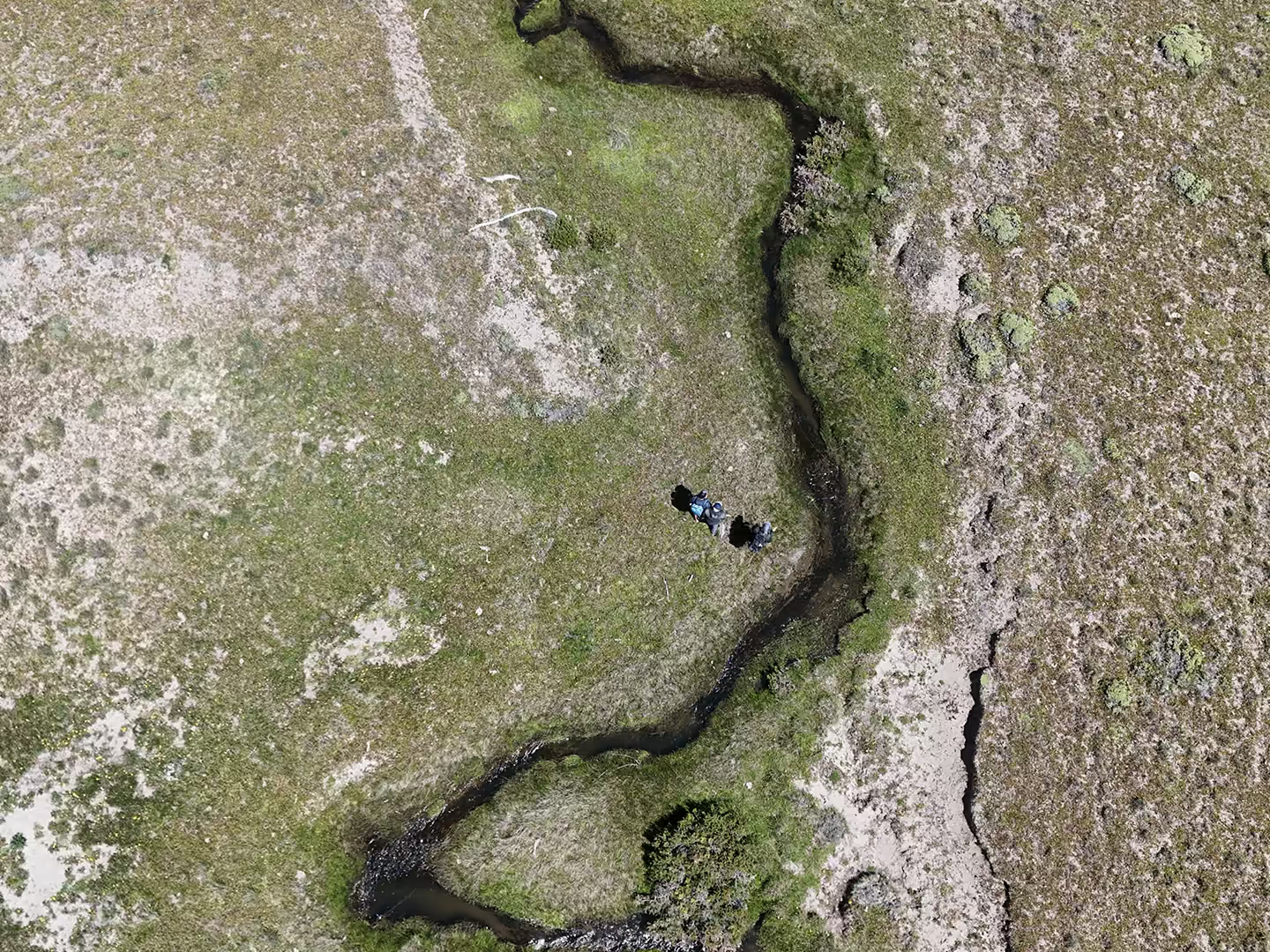
Outfitters describe a river that looks like a giant spring creek. Flat, slow and clear water lets you see the trout, and lets the trout see you, your line and your leader.
Weed beds and undercut banks
Heavy weed beds and deep undercut banks give trout cover a few feet from the food. A fish that feels the line or sees a bad drift slides back under the bank.
Deadfall pools
Gray's Sporting Journal described pools tangled with fallen timber, perfect brown trout habitat that may call for a bow-and-arrow cast of about 30 feet.
Deep banks, brushy edges
A US outfitter describes a U-shaped channel where the water often drops to 4 to 6 feet right at the bank, which makes much of it nearly impossible to wade. Willow and calafate along the banks leave little room for a backcast.
Wind, some days
A 2009 Globe and Mail story describes fishing it in the wind, though other reports describe calm days. When it blows, it ruffles the surface you need to see through and pushes a light leader off line.
Few fish, hard earned
A 2024 trip report from a US outfitter put it plainly: without a hatch, a fish or two for a day's solid effort. Big trout here are earned, not given.
Put together, that means stealth, patience and precision. You spot the fish before you cast, move slowly along the bank, keep your shadow off the water and make the first cast count, because there is rarely a second one. If that sounds like your kind of fishing, our guide to reading a trout rise is the place to start.
Which trout live in the Río Cochrane?
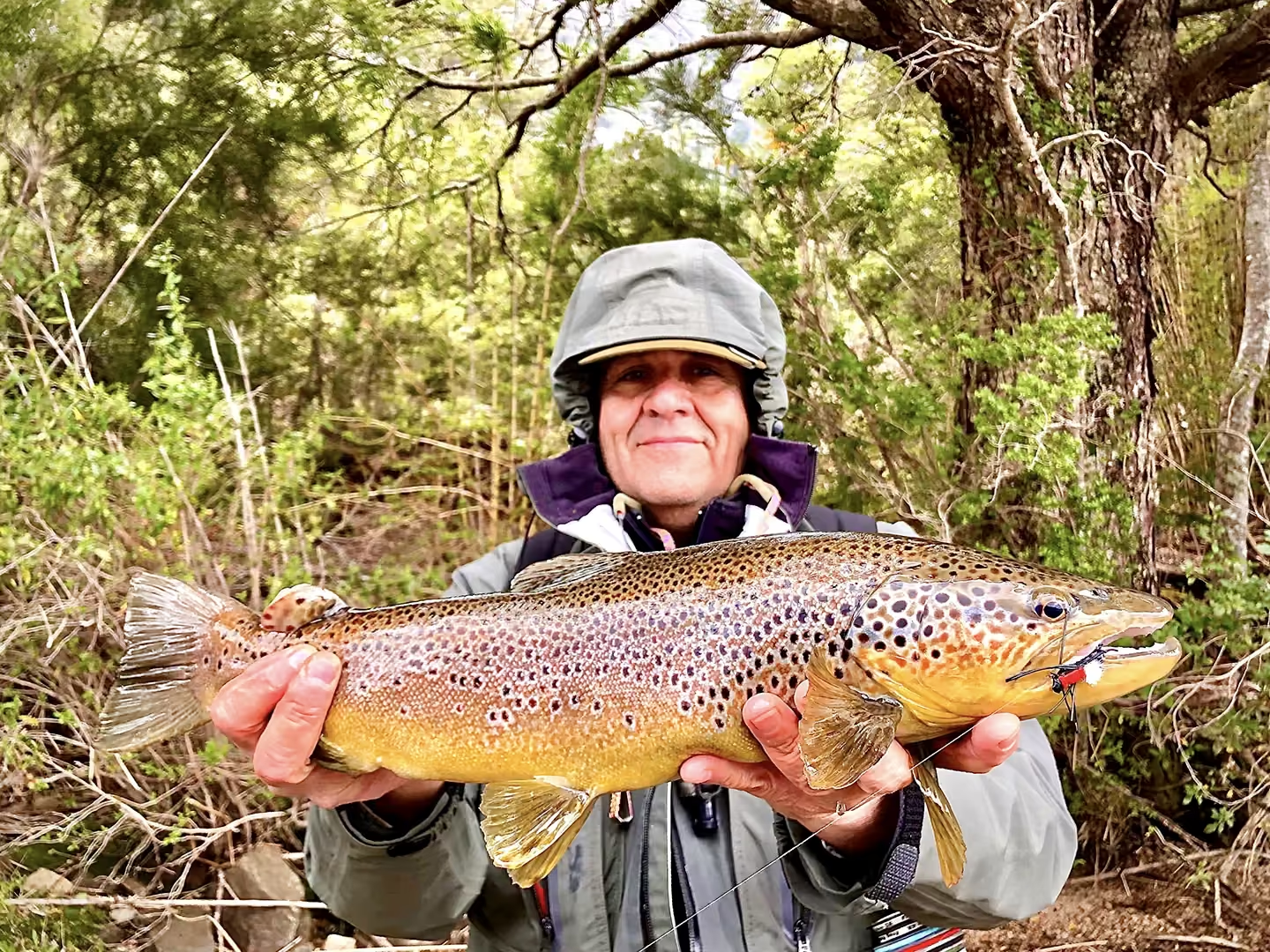
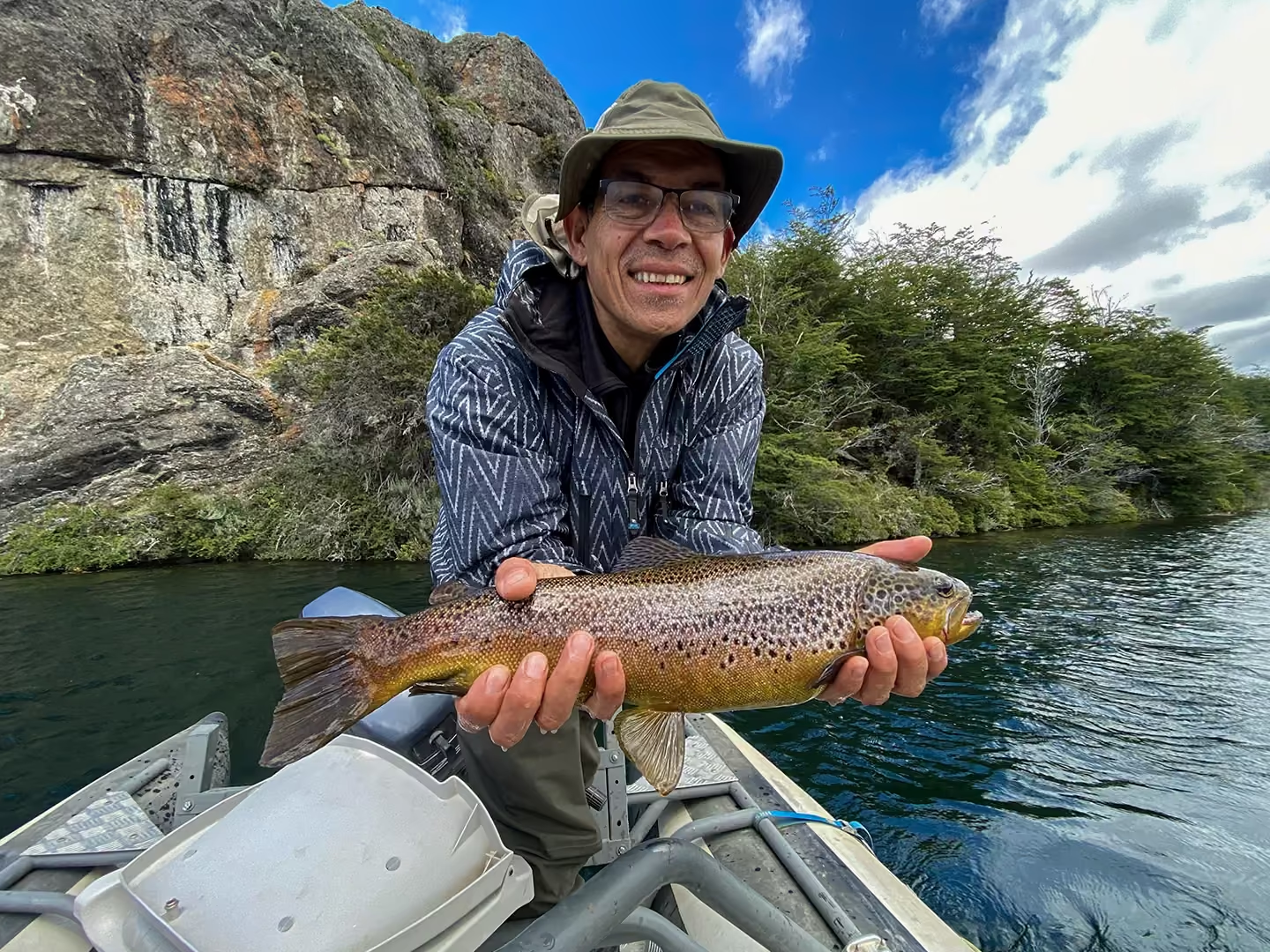
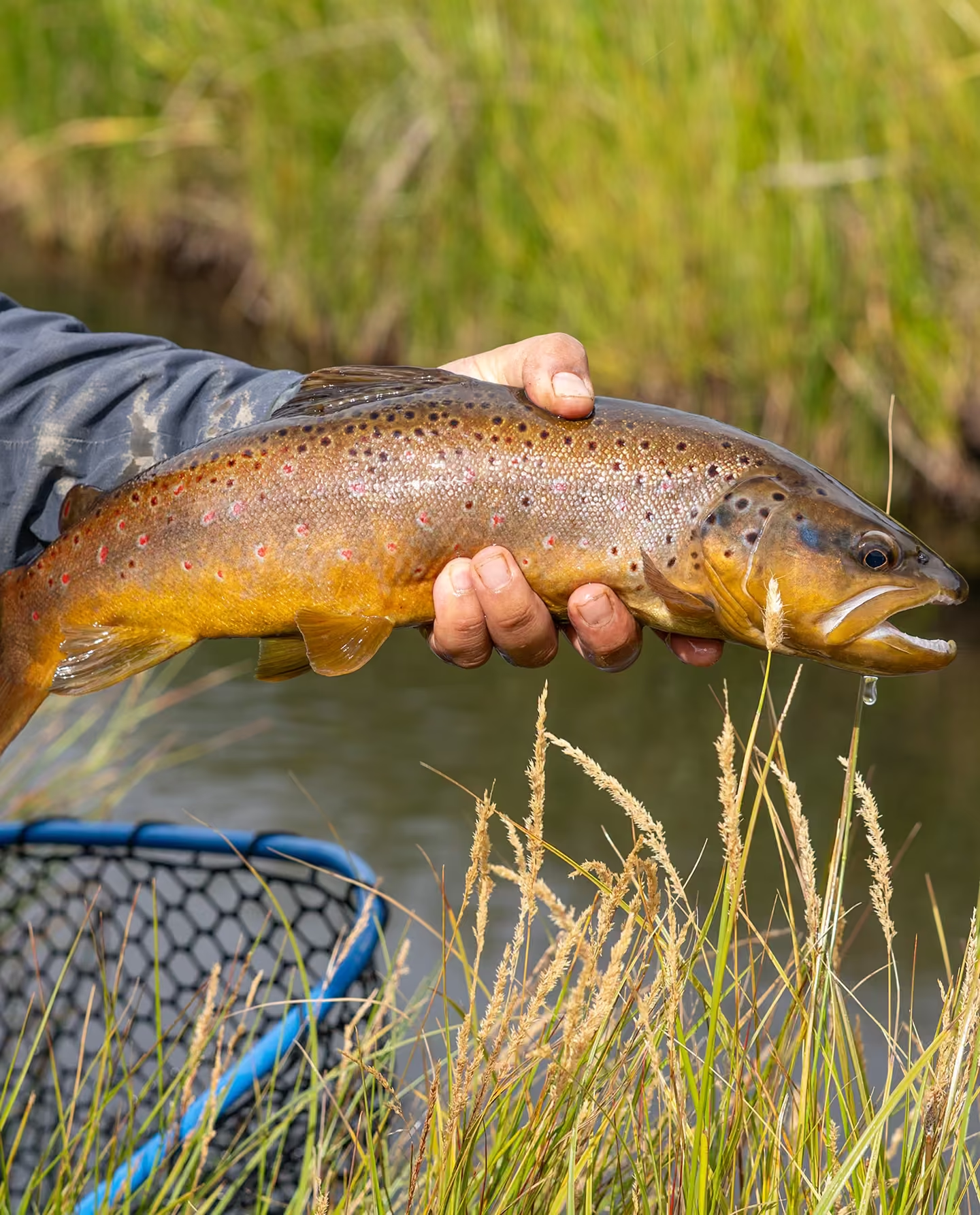
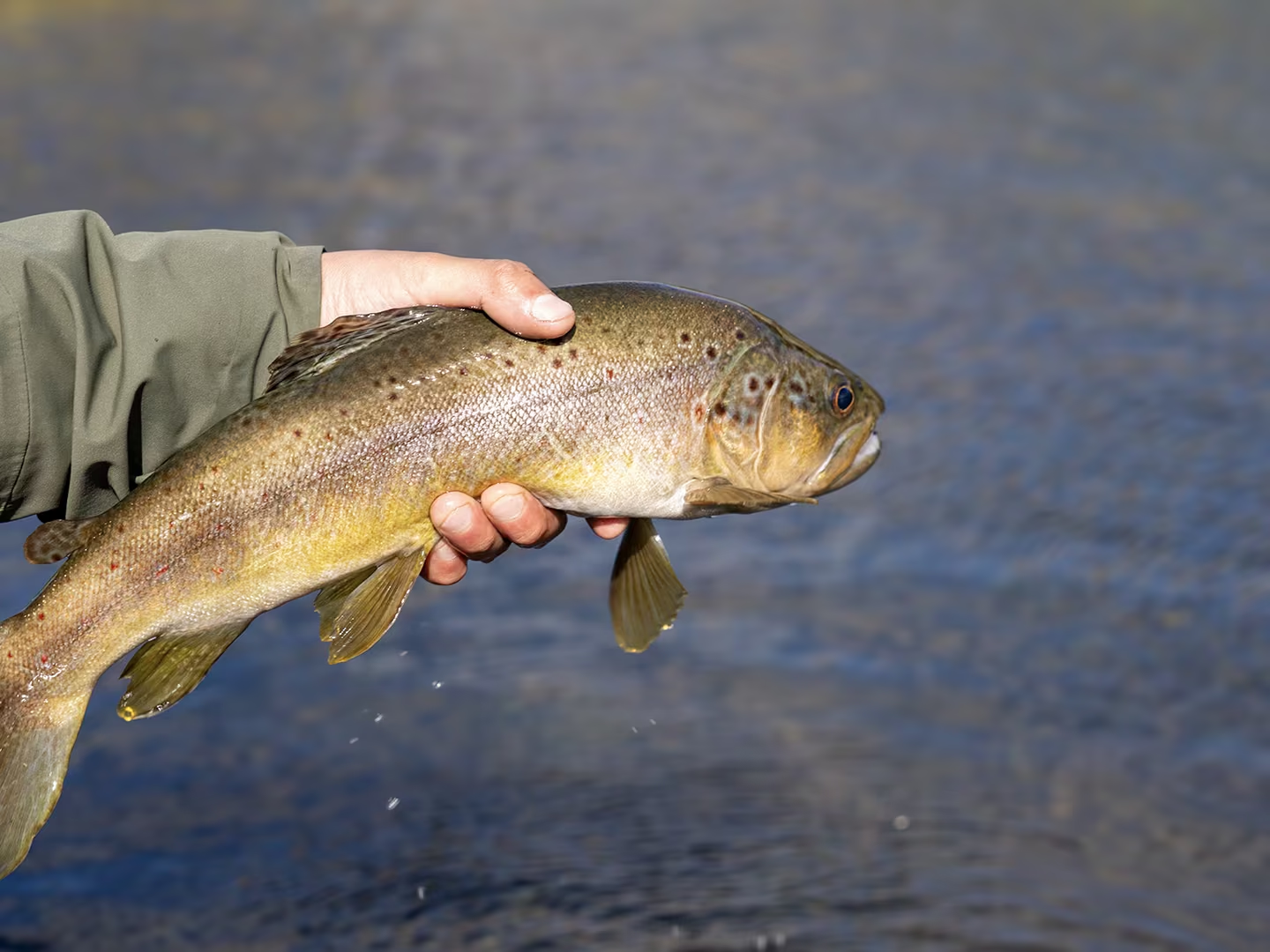
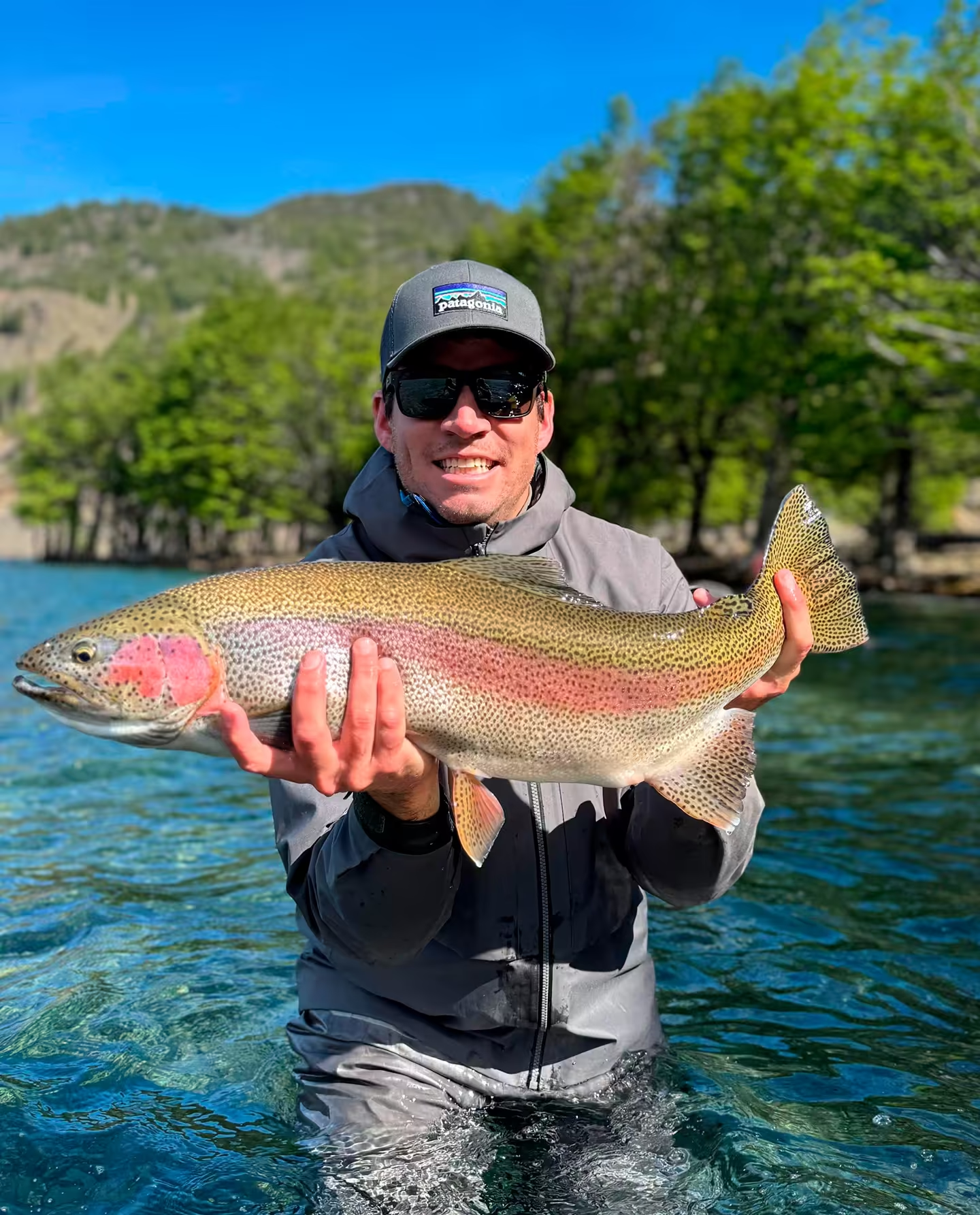
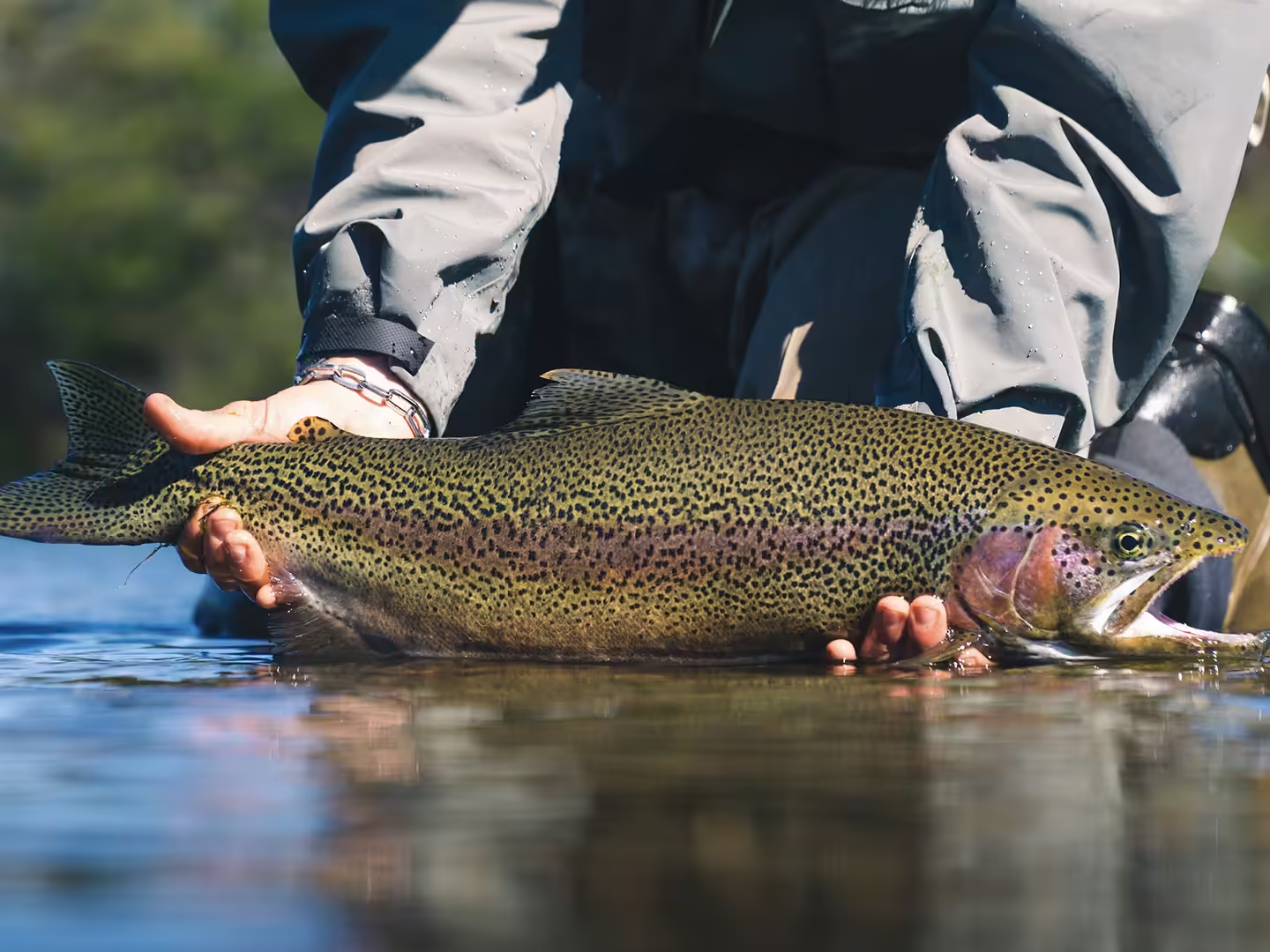
Brown trout and rainbow trout. Outfitters describe big browns hunting over the weed beds when insects hatch, and that is when the river is at its most generous. One lodge advertises browns of 4 to 8 pounds and more, but that is a marketing figure, not measured averages. A US outfitter's April 2024 report found mostly small rainbows and one big brown they could not catch. Size is never guaranteed on a wild river.
What flies work on the Río Cochrane?
Small flies and long leaders. We found no fly list published for the Cochrane alone, but one outfitter lists what trout eat there: caddis, mayflies, terrestrials and forage fish. This box follows those foods, with the patterns and hook sizes guides use in the clear water of the Aysén Region. In a Gray's Sporting Journal story, dries and droppers failed and a streamer saved the day, so carry both.
| When you see | Fly | Hook size |
|---|---|---|
| Mayflies on the surface | Parachute Adams or Comparadun | #12–18 |
| Caddis on the water | X-Caddis | #14–16 |
| Rises, but no adults taken | Soft hackle or emerger, unweighted | The size of the natural |
| Grasshoppers along grassy banks | Foam hopper | #6–10 |
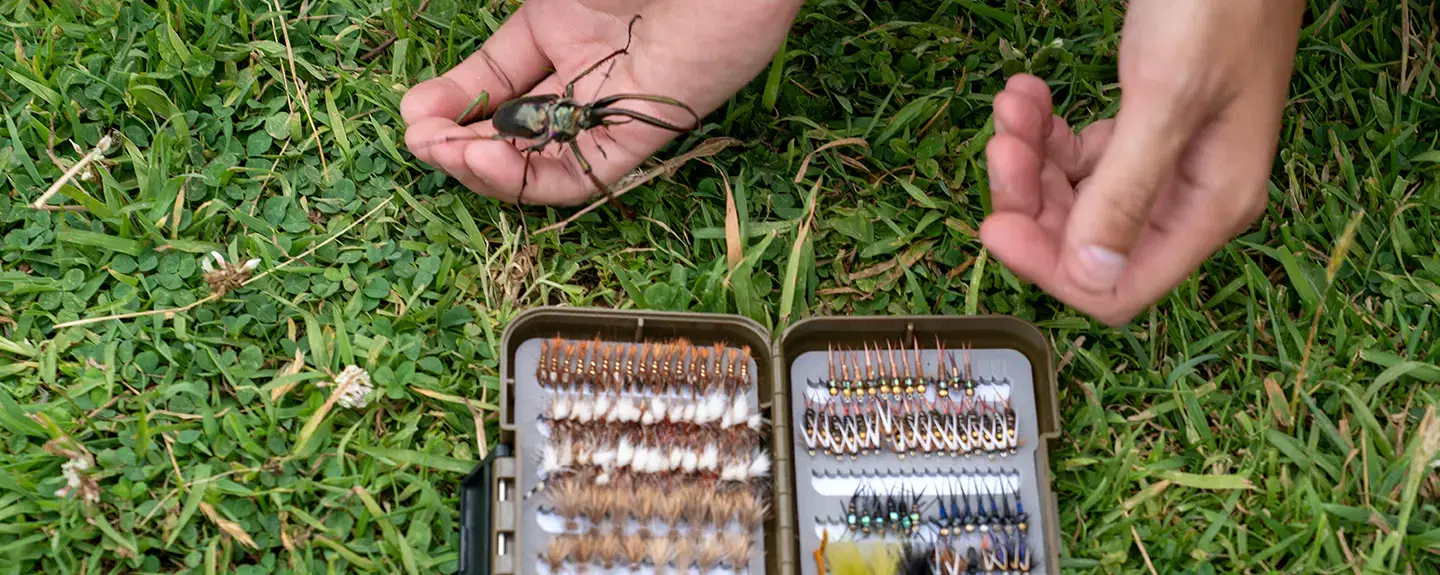
| Summer beetles | Dark foam beetle for the cantaria | #4–8 |
| Nothing showing, trout holding deep | Pheasant Tail or Hare's Ear nymph | #14–16 |
| Browns hunting along weed beds and deadfall | A small streamer that imitates a forage fish | Match the baitfish |
Patterns and hook sizes come from our guides to dry flies and nymphs for the Aysén Region, not from a Cochrane-only list. What is on the water decides.
What gear do you need for the Río Cochrane?
- A 9-foot rod for a 4- to 6-weight line, the range a local outfitter recommends.
- A weight-forward floating line for dries, emergers and nymphs.
- Leaders of 9 to 12 feet, with tippet from 4X for small flies to 0X for streamers.
- Polarized glasses and muted clothing: on clear water you spot the fish first.
- Care at the edge: much of the river is too deep to wade, with 4 to 6 feet of water right at the bank.
- Clean, dry gear before you arrive. Sernapesca asks anglers to avoid felt soles because of didymo.
The full list, from rods to rain gear, is in our packing list for Chilean Patagonia, and the cleaning protocol is in our didymo guide.
When can you fish the Río Cochrane?
Trout season in the Aysén Region runs from 12 October to 6 May and is closed from 7 May to 11 October. On rivers, release is mandatory from 12 October to 30 November and again from 1 March to 6 May. From 1 December to 28 February an angler may keep up to 3 fish or 15 kg a day. The Cochrane is not on the list of spawning areas closed all year; the rules and the list are in our guide to Aysén fishing regulations.
Outfitters who guide the Cochrane usually fish it from November to April. Early in the season the water is cold: a 2009 Globe and Mail story reported water of about 10 °C in late November. Hatches, and the big browns that follow them, are what change a slow day.
Every angler needs a recreational fishing licence from Sernapesca, which can be bought online at pescarecreativa.sernapesca.cl. If you plan to fish near Patagonia National Park, ask CONAF in Cochrane about any extra rules first.
How do you get to the Río Cochrane from the US?
The route runs through Coyhaique, the capital of the Aysén Region. Our guide to getting to Coyhaique covers flights, connections and rod cases.
| Leg | What to expect |
|---|---|
| US to Santiago (SCL) | International flight to Chile's capital. |
| Santiago to Balmaceda (BBA) | About 2.5 hours on LATAM or Sky Airline. |
| Balmaceda to Coyhaique | A 45–50 minute drive to the regional capital. |
| Coyhaique to Cochrane | About 330 km south on the Carretera Austral, Ruta 7. Traveller reports describe pavement to Villa Cerro Castillo and long gravel sections beyond. |
With long gravel sections reported, treat Coyhaique to Cochrane as a full travel day, not a day trip, and check the road with Chile's highway authority, Vialidad, before you leave.
Where does Chile Fly Fishing fit in?
We do not guide the Río Cochrane. Our operation runs out of Coyhaique, about 330 km north, and the technical water we fish is closer to home: groundwater-fed spring creeks and clear lakes where the game is the same. Spot the trout, stay out of sight, and make one good cast with a small fly on a long leader.
Our spring creek guide covers the presentation that water demands, our clear-lake dry-fly story shows a client’s Full Day of it, and our spring sight-nymphing guide explains why rainbows group in clear water early in the season. If the Cochrane is on your list, Coyhaique is the natural first stop on the way south.